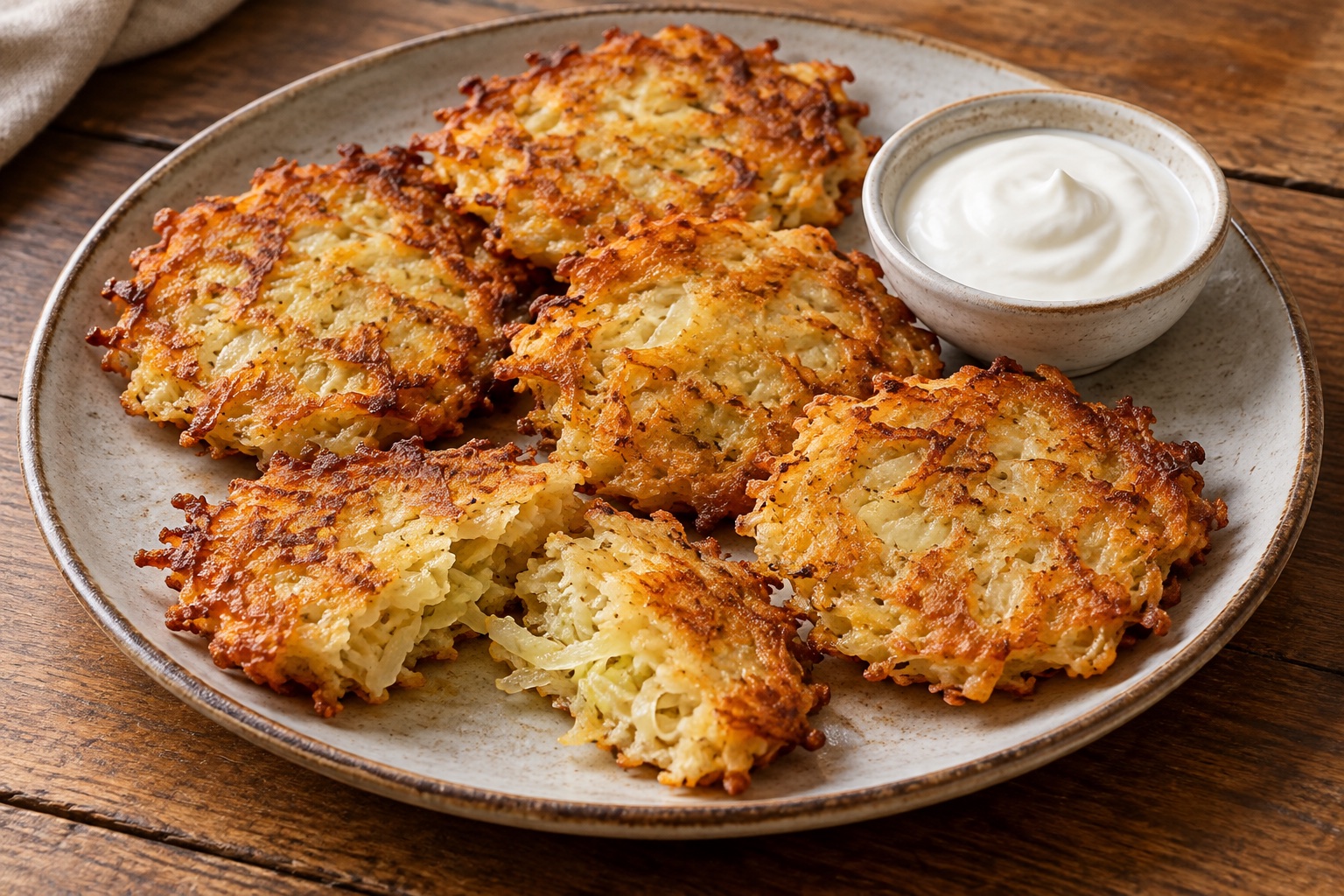
Fuczki – Łemko-style Sauerkraut Pancakes
Golden pancakes made from finely chopped sauerkraut. With measurements after squeezing, a test pancake, and tips on frying the center without burning the edges.

Tried and tested recipes, including the ones brought from home. For the ingredients we tell you what to use instead abroad.
Golden pancakes made from finely chopped sauerkraut. With measurements after squeezing, a test pancake, and tips on frying the center without burning the edges.
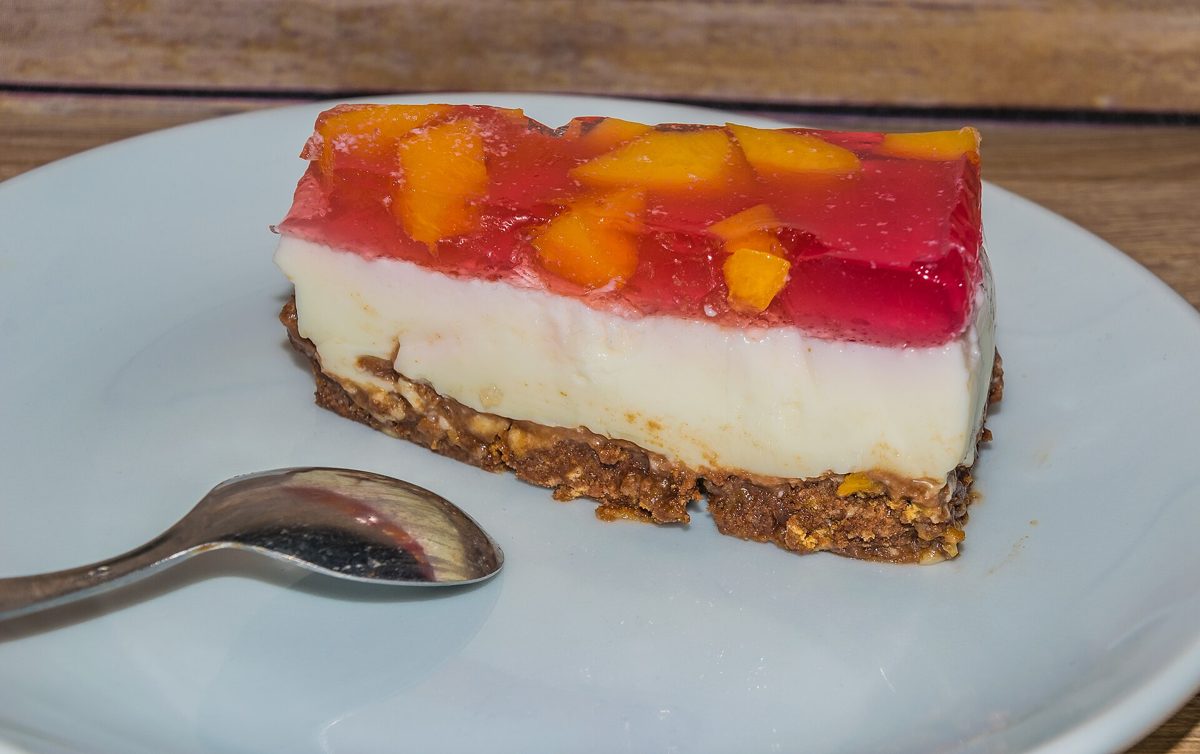
No-bake cheesecake: a base made of cookies, a smooth cheese filling set with gelatin, strawberries, and a layer of jelly, in a 24 cm (9½ inch) springform pan for 12 pieces. With explanations on how to avoid lumps in gelatin, when to pour the jelly, and what to substitute for cheese, jelly, and cookies abroad.
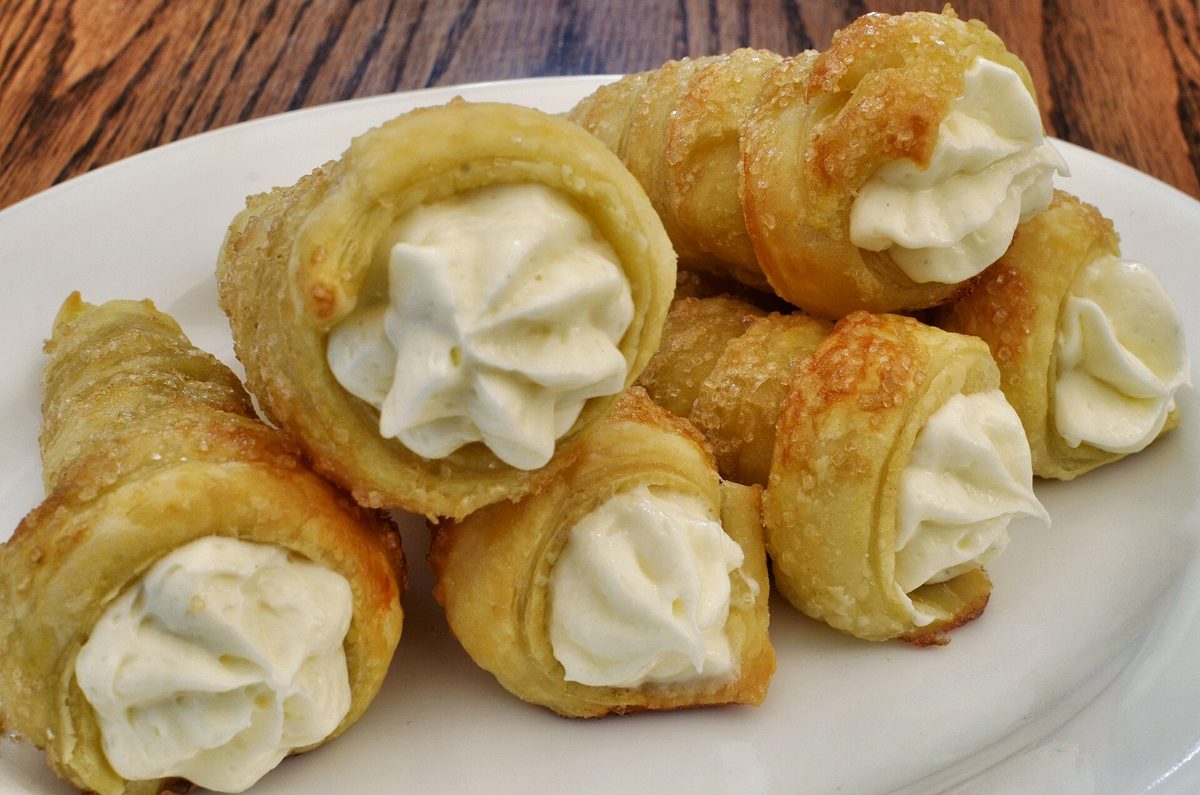
Crispy tubes made from ready-made puff pastry, wrapped around metal molds, baked, and filled with whipped cream or cooked protein cream. This includes tips on how to wrap the strips so they don't unravel, how to remove the tubes from the molds, and what to buy abroad.
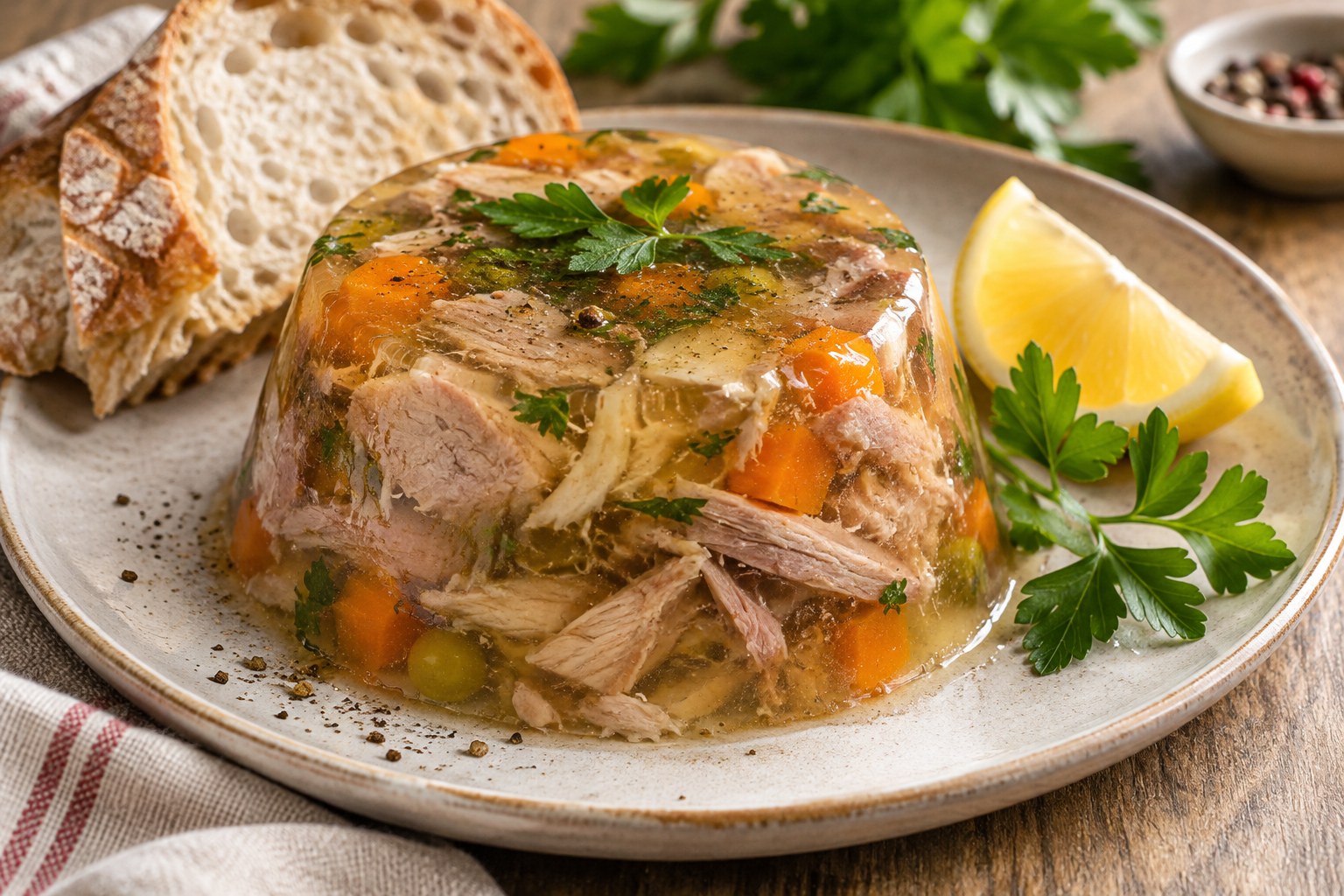
Homemade meat jelly made from pig trotters and pork hock, cooked with vegetables and spices. The trotters give the broth the right strength, allowing the jelly to set without gelatin. Serve it with lemon or vinegar. After cooking, it needs a few hours to cool.
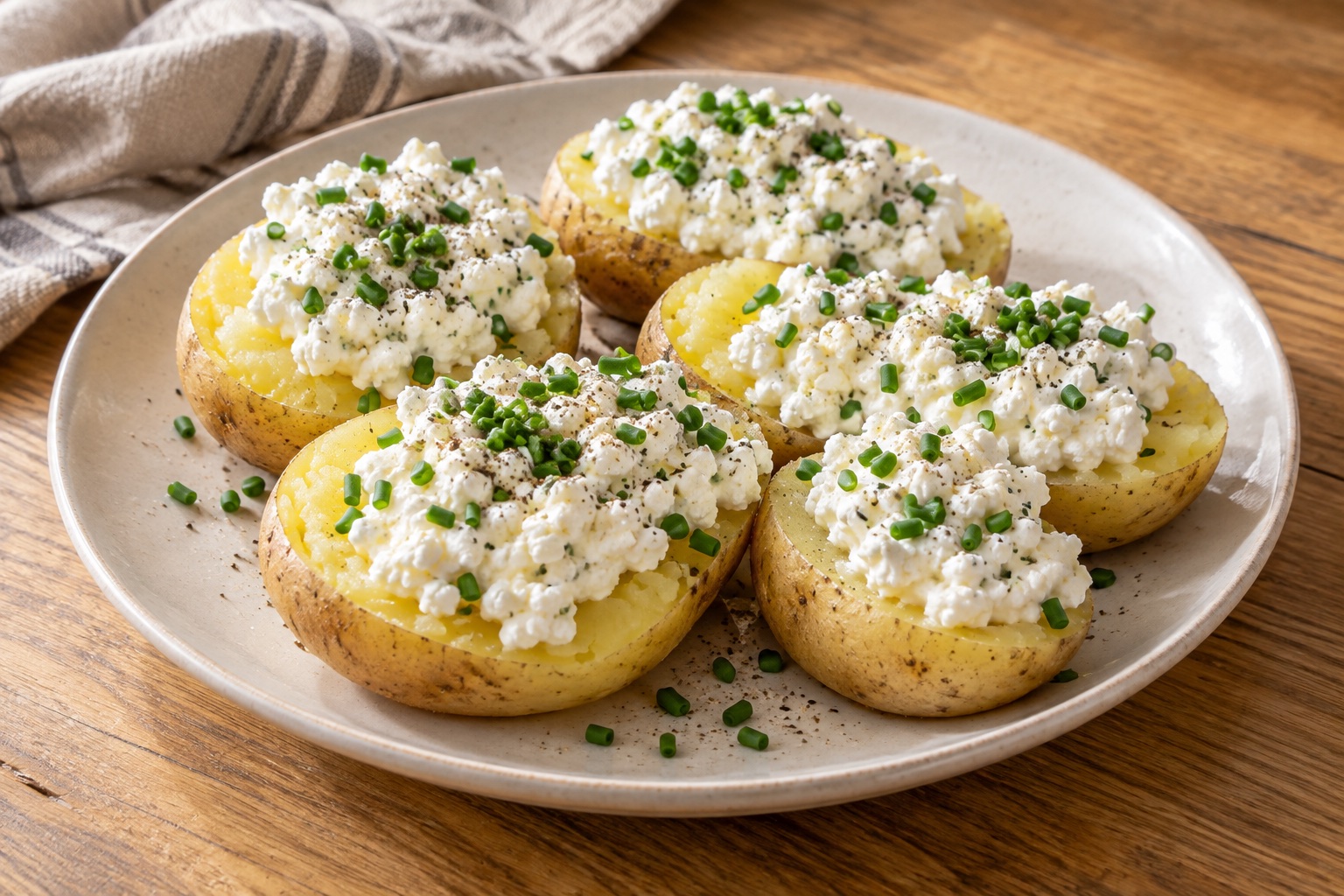
Boiled potatoes in their skins served with cool cottage cheese, sour cream, and chives. A meatless dish from Greater Poland: with instructions for making thick gzik and tips on choosing cheese abroad.
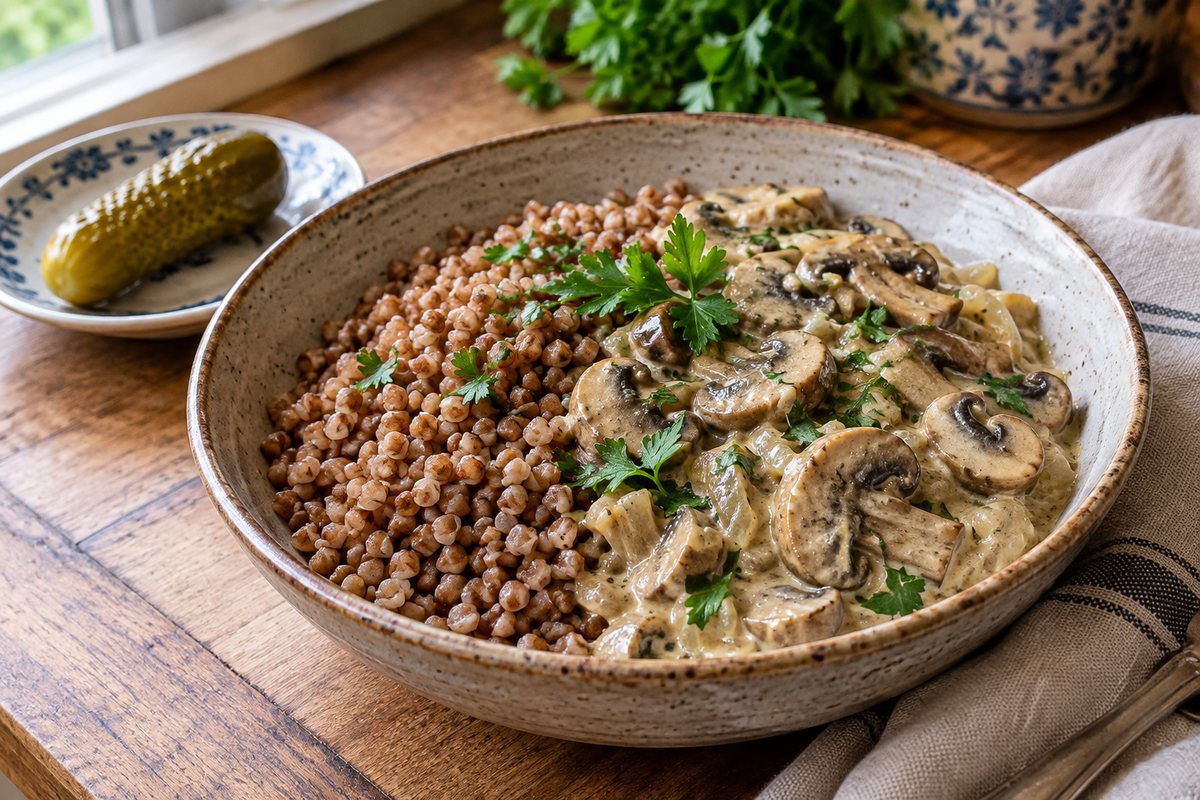
Fluffy roasted buckwheat and creamy sauce made from sautéed brown mushrooms, onions, and cream. A complete meatless meal, with tips for cooking buckwheat and thickening the sauce.
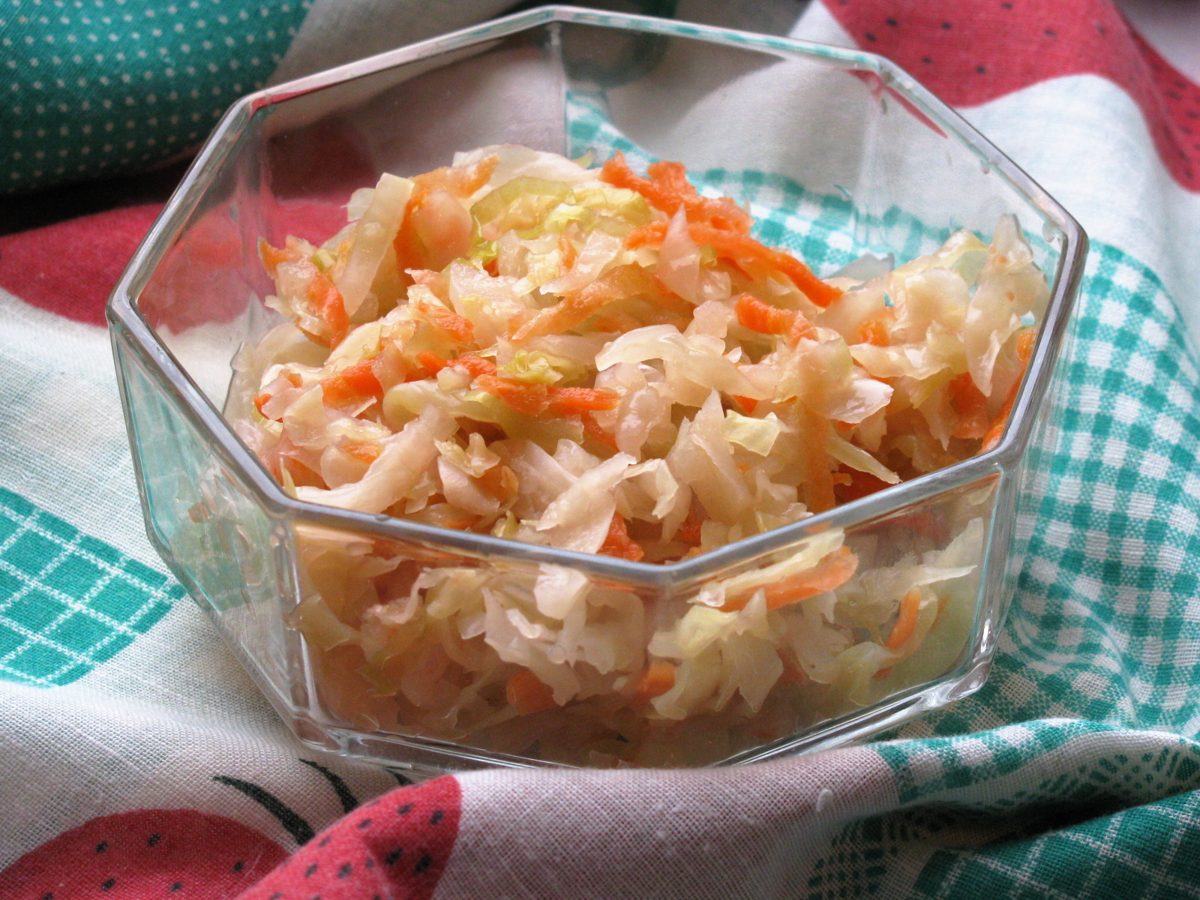
Sauerkraut made from white cabbage, carrots, salt, and caraway, pressed in a fermentation crock or jars so that it remains submerged in its own juice. This includes guidance on how much salt to use for 5 kg of cabbage, how to release gases, what to do with scum, and what containers to buy abroad.
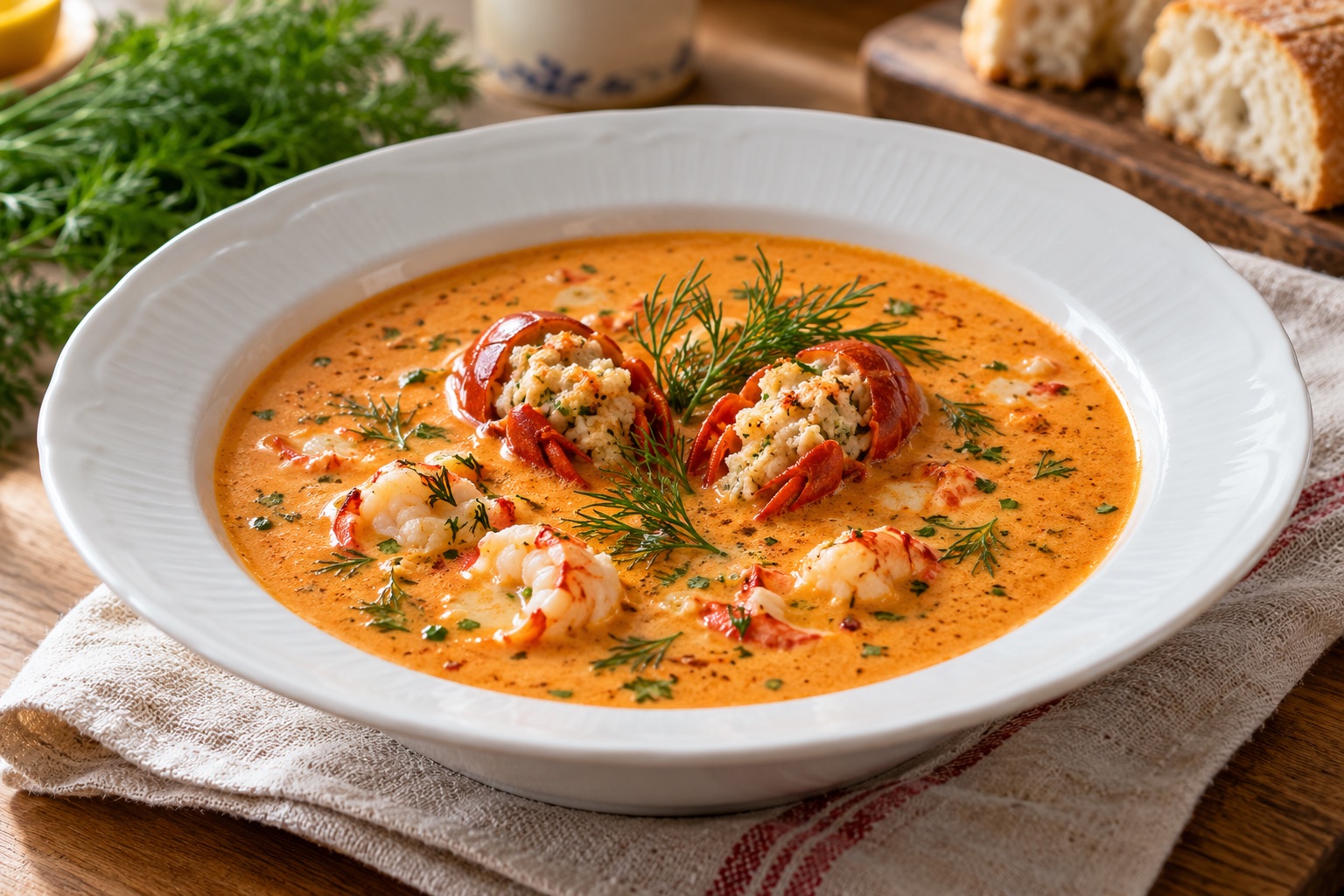
An old soup with an orange color obtained from crayfish butter. It involves separating the meat, straining the broth, and baking the filling in cleaned shells.
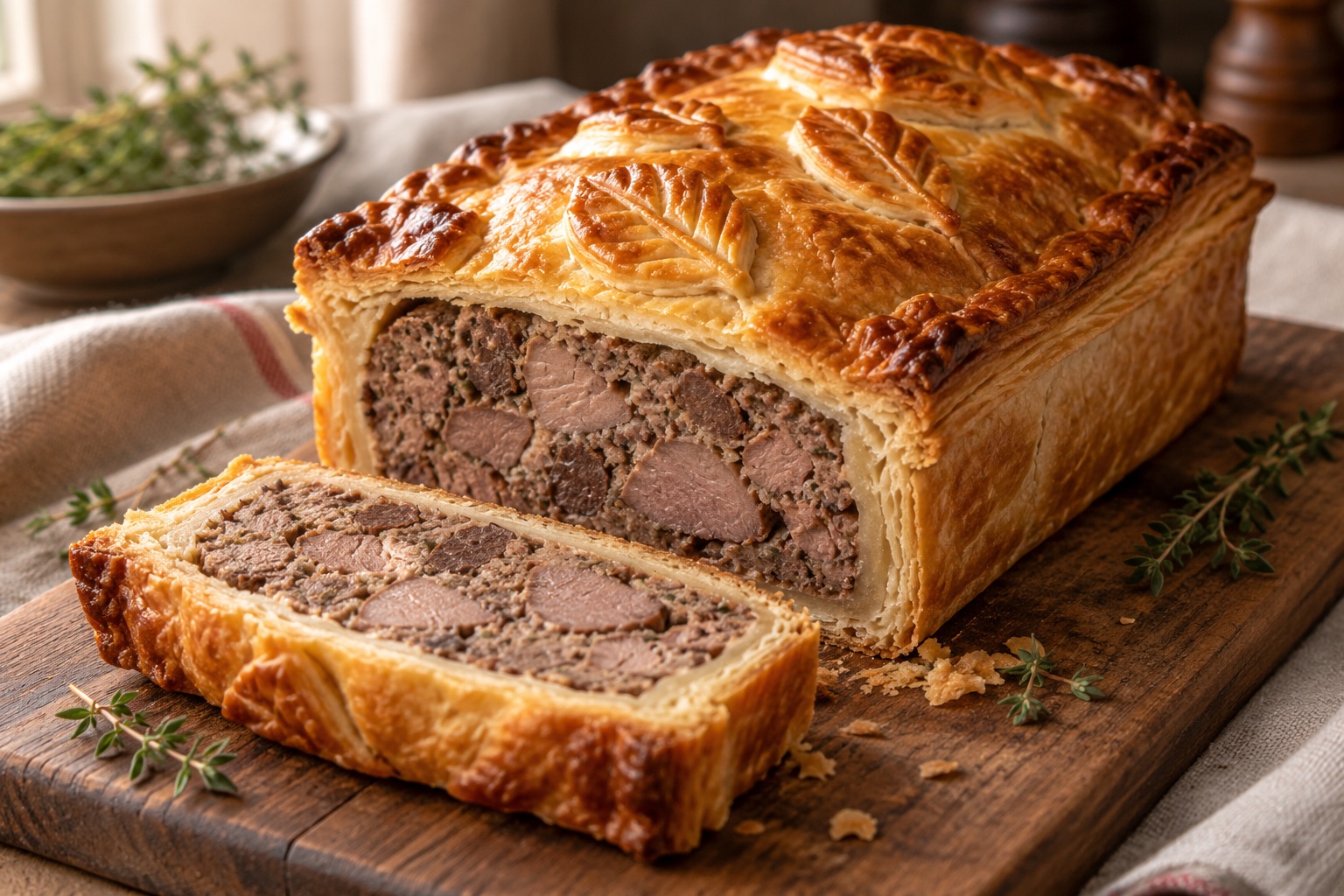
Pâté with pieces of braised hare, pork, and liver under a crispy puff pastry. With a plan for folding the dough, cooling the filling, and baking.
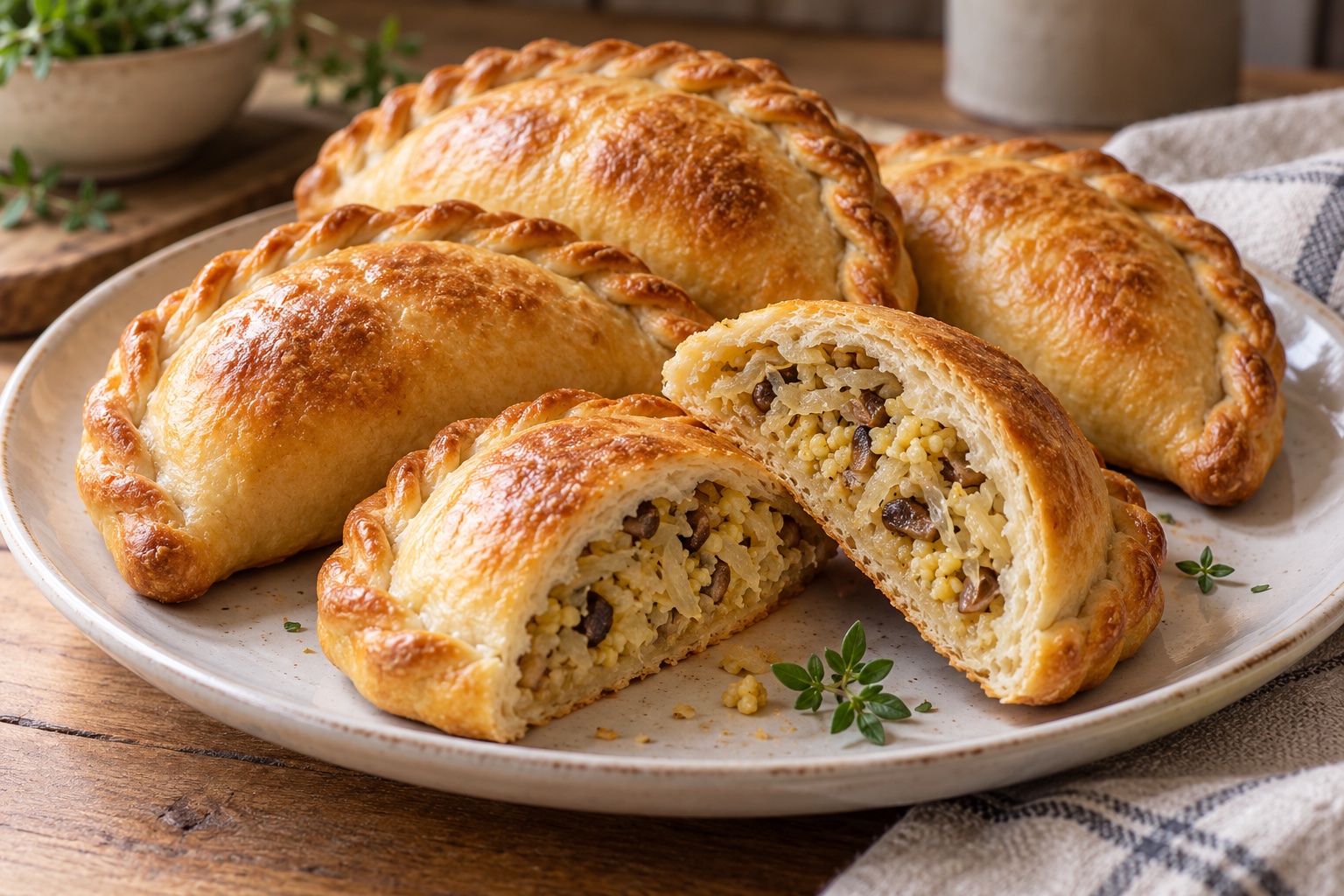
Large baked yeast dumplings filled with sauerkraut, millet, and dried mushrooms. A meatless version with a decorative edge sealing.
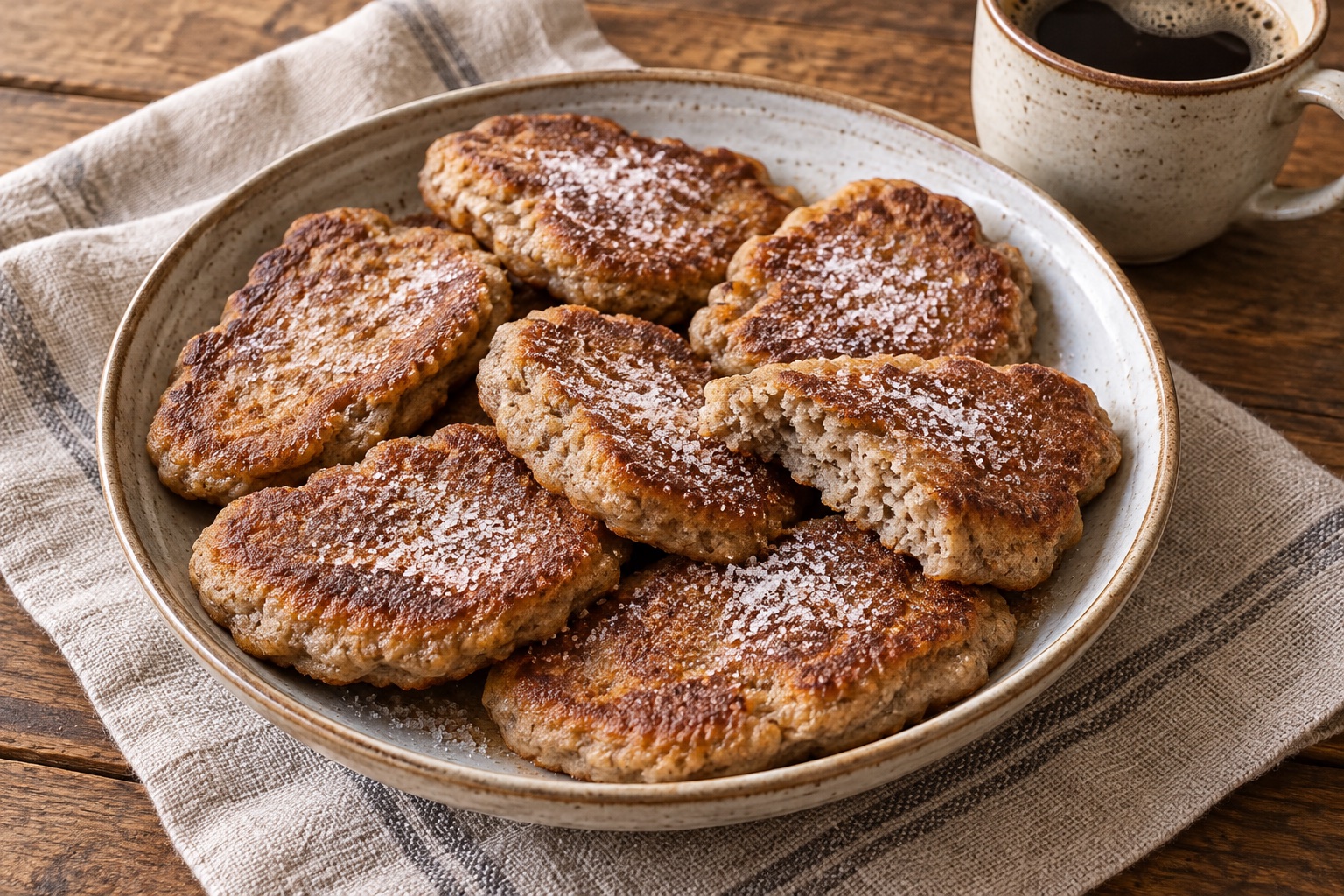
Small fried pancakes made from rye bread dough, served with sugar. An egg-free version, using active sourdough and a clearly defined fermentation time.
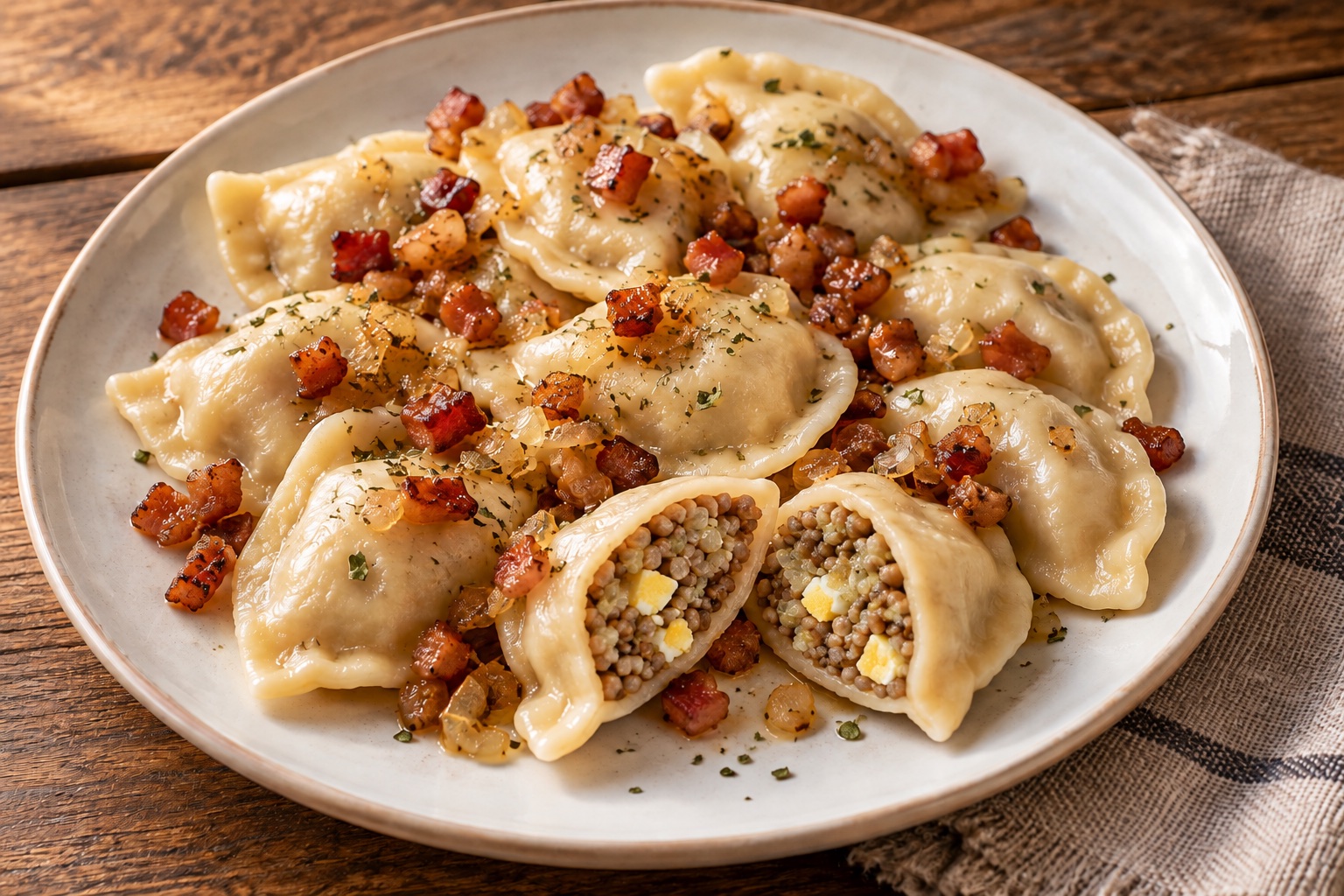
Small dumplings with buckwheat, bacon, onion, and egg, served with cracklings. With thin dough, cooked in batches, and tips for the buckwheat filling.
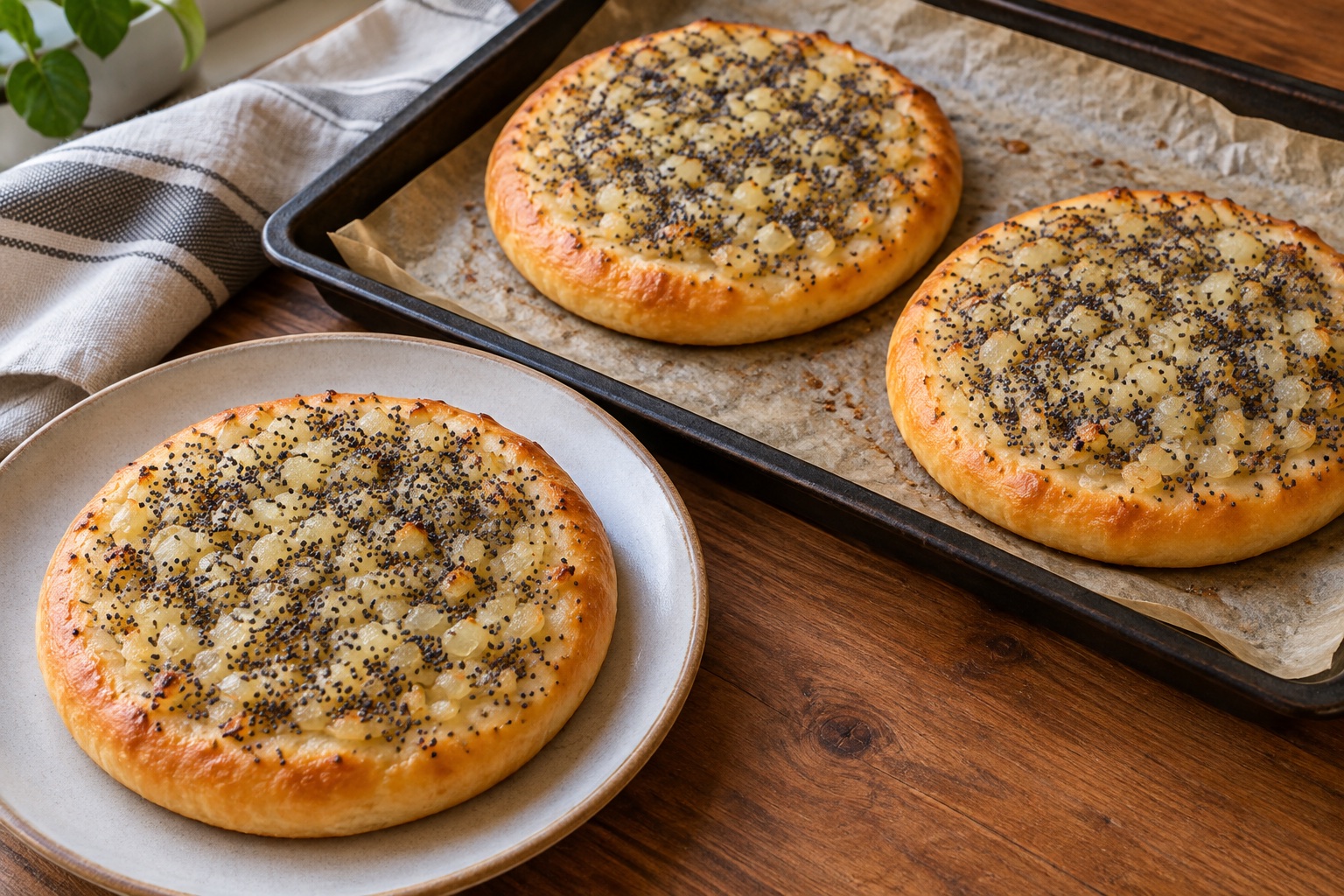
Flat yeast cakes with onion and unground poppy seeds. Involves blanching the onion, two rising stages, and a method for a well-baked bottom.
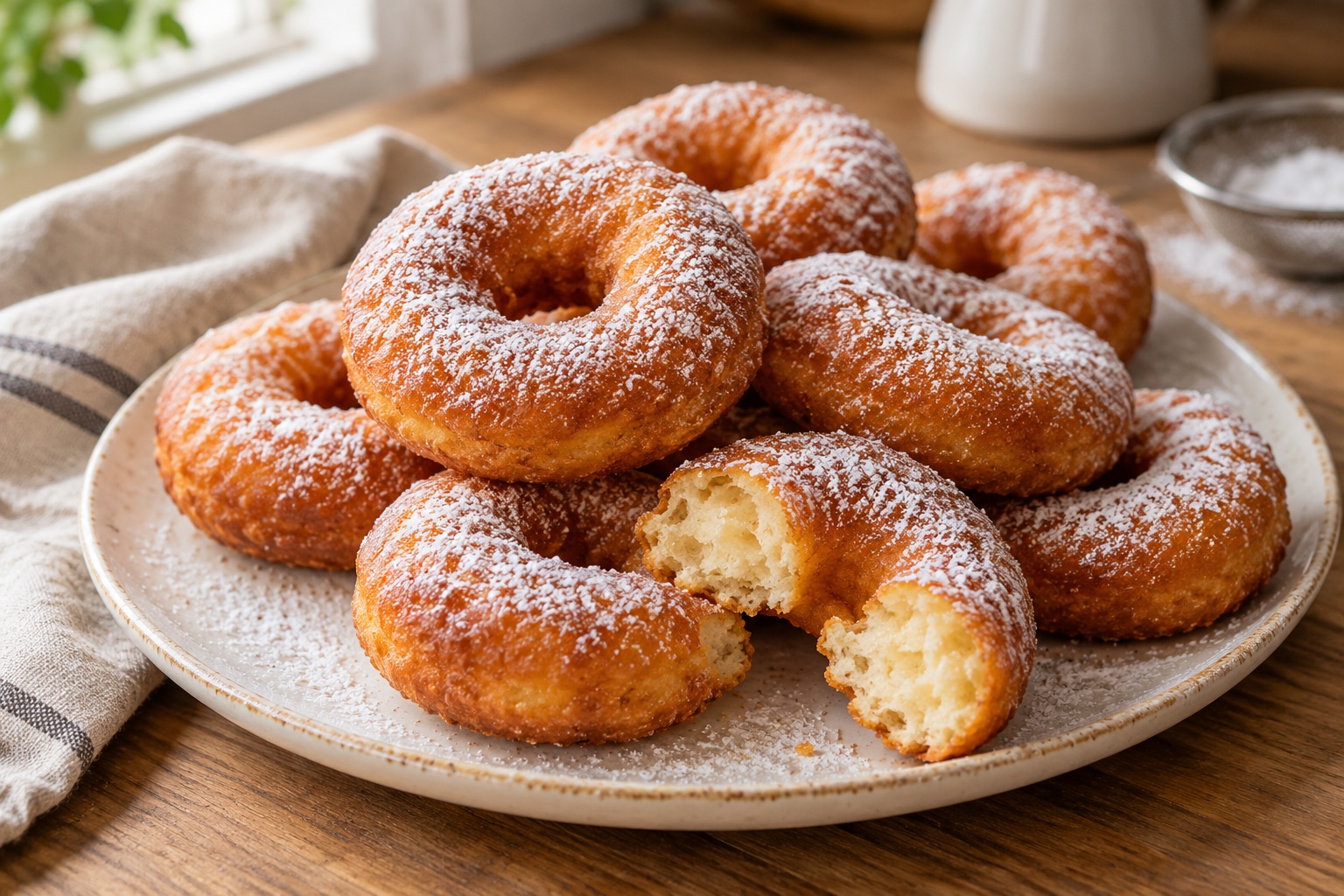
Golden rings made from curd dough without yeast, dusted with powdered sugar. With instructions for quick kneading, cutting, and frying without a raw center.
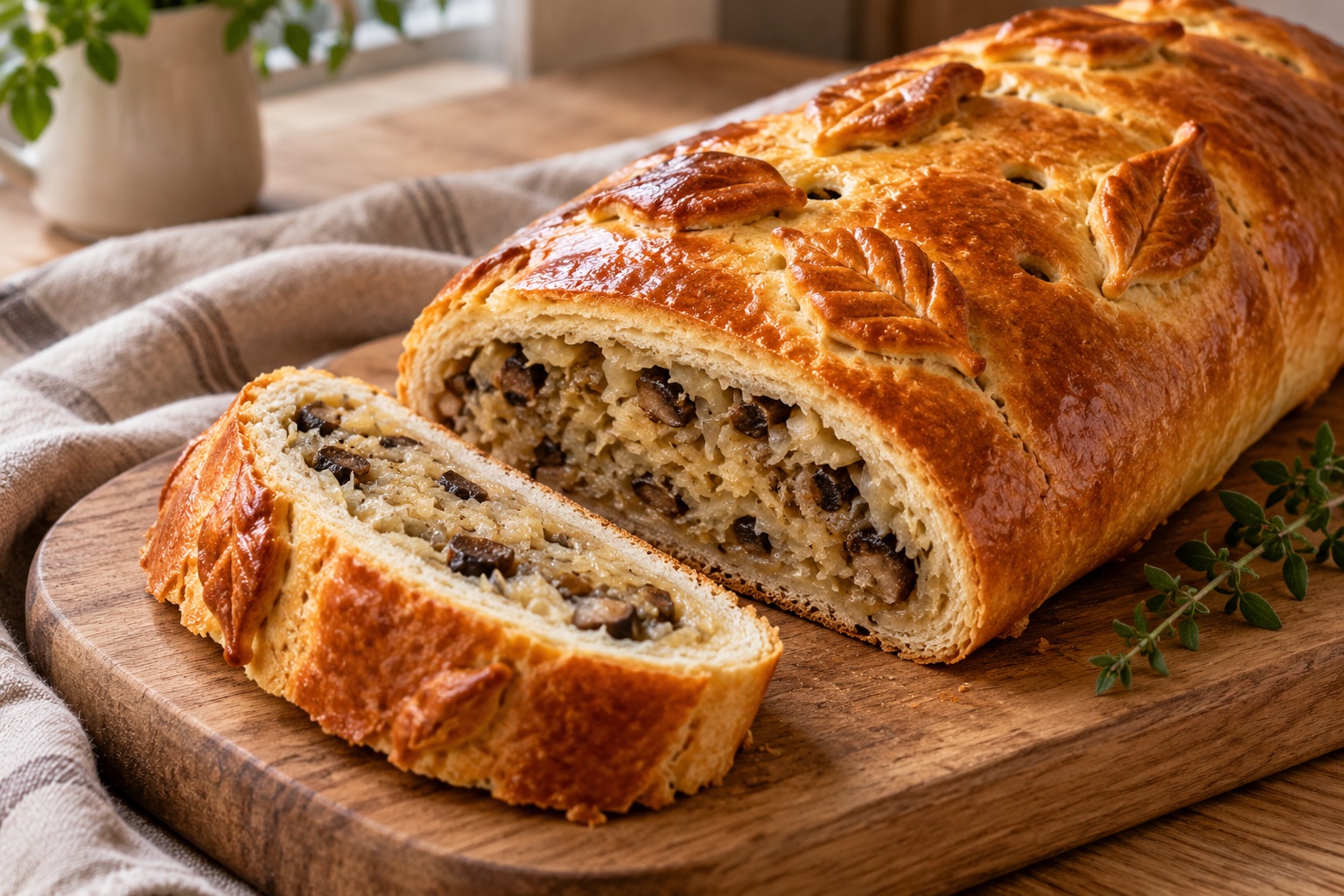
A large, golden-brown strudel made from soft yeast dough, filled with sauerkraut and dried mushrooms. Best sliced into thick pieces and served with borscht.
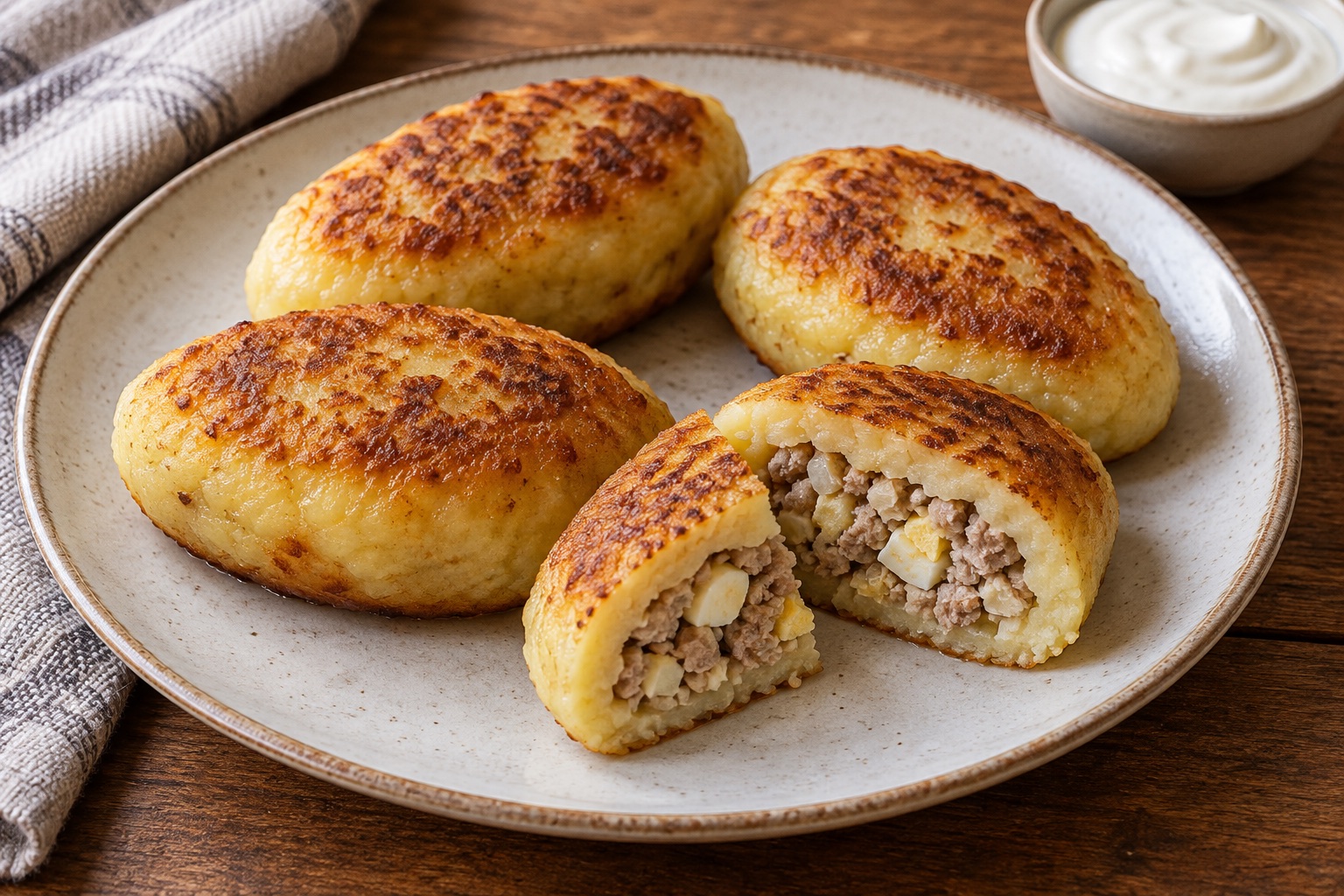
Fried patties made from cooked potatoes, filled with cooked pork and egg. Includes instructions for preparing the dry potato mixture and securely sealing the filling.
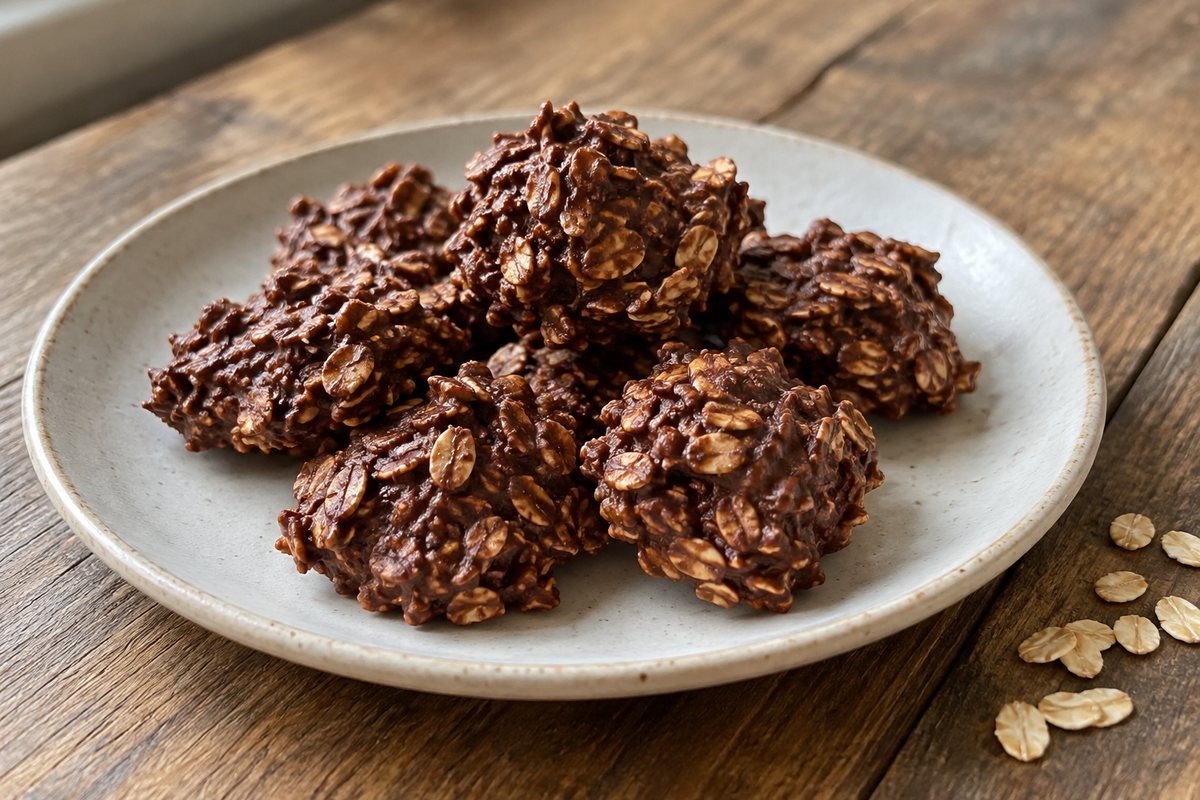
Simple mounds made from oats, cocoa, butter, milk, and sugar. A homemade recreation of a school treat: one pot, spooning, and chilling instead of baking.
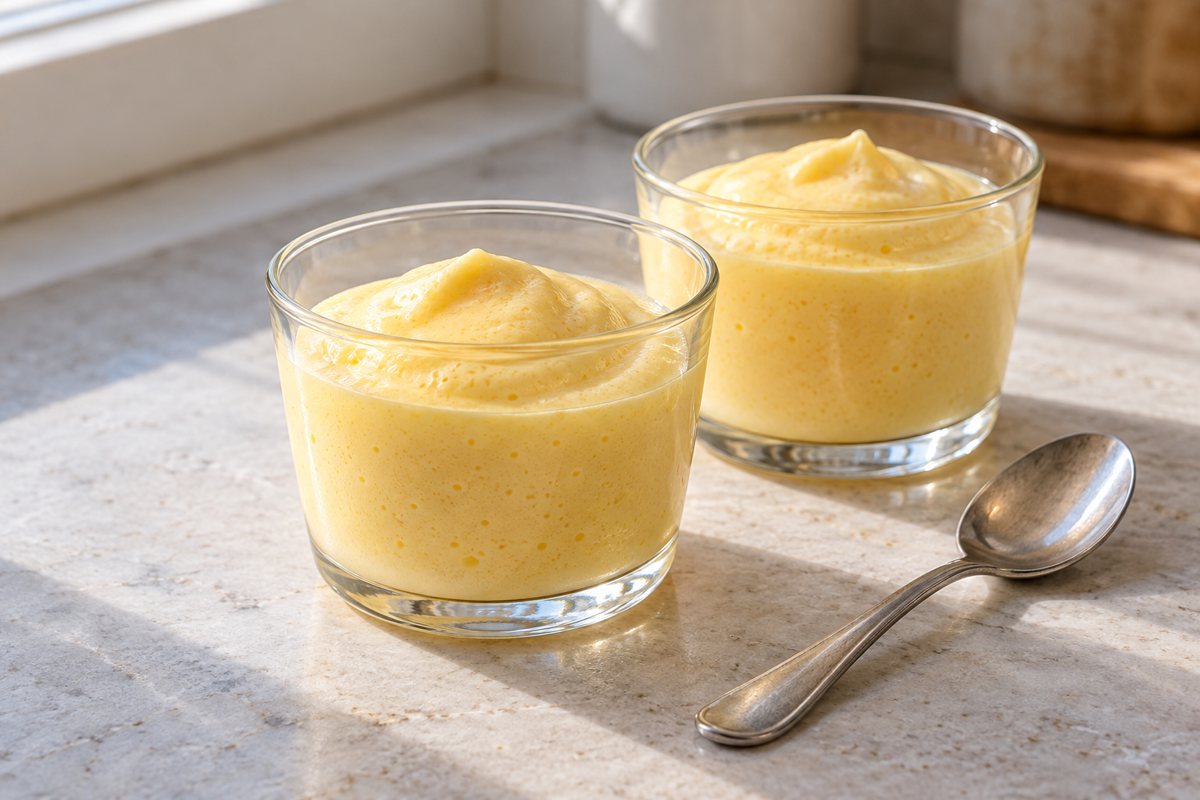
A light, fluffy cream made from egg yolks and sugar, whipped as it used to be. The modern version uses pasteurized yolks suitable for no-cook desserts.
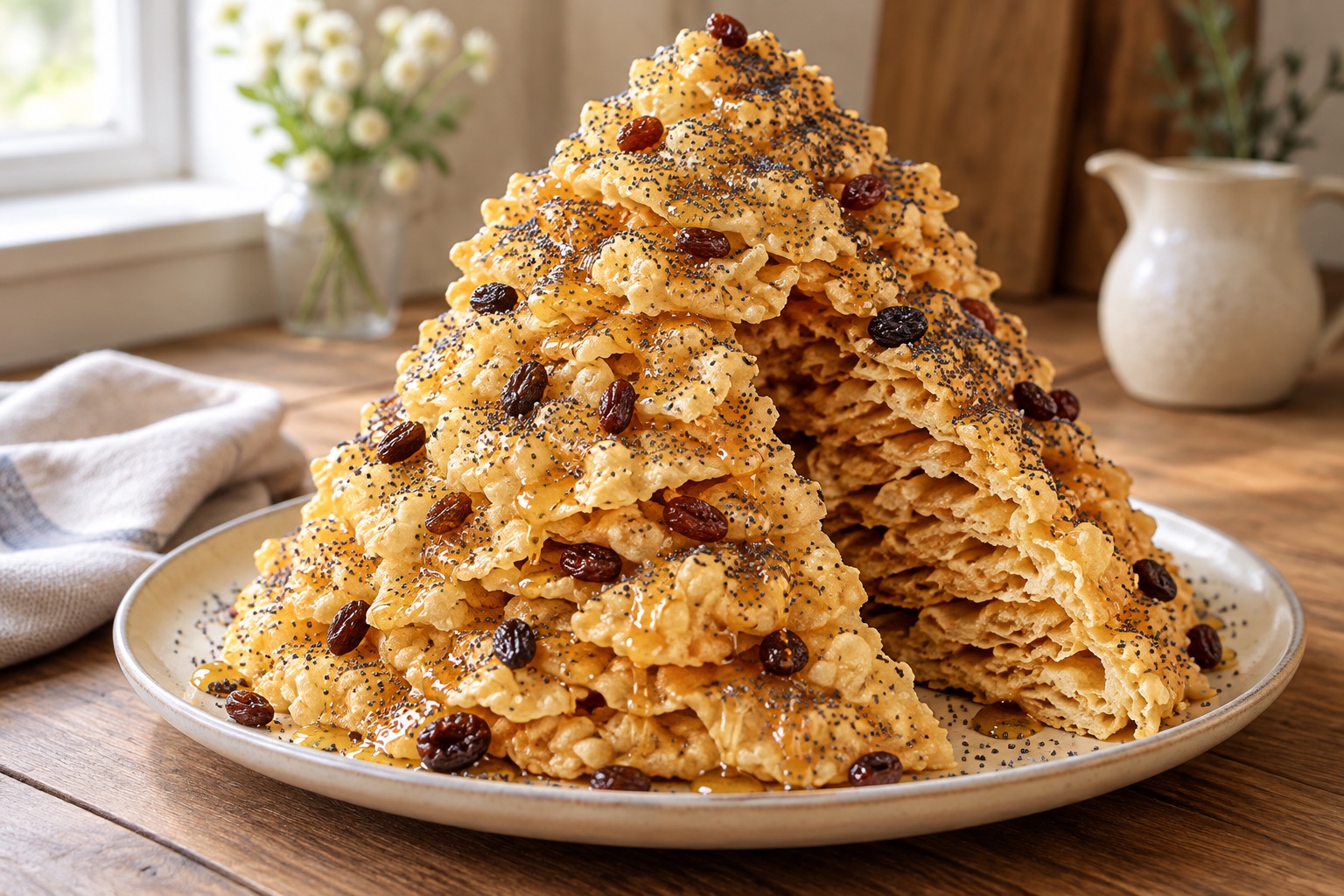
A decorative mound made of thin, crispy pieces of fried dough, combined with a honey glaze. A delicacy from the Sejny region with Lithuanian roots.
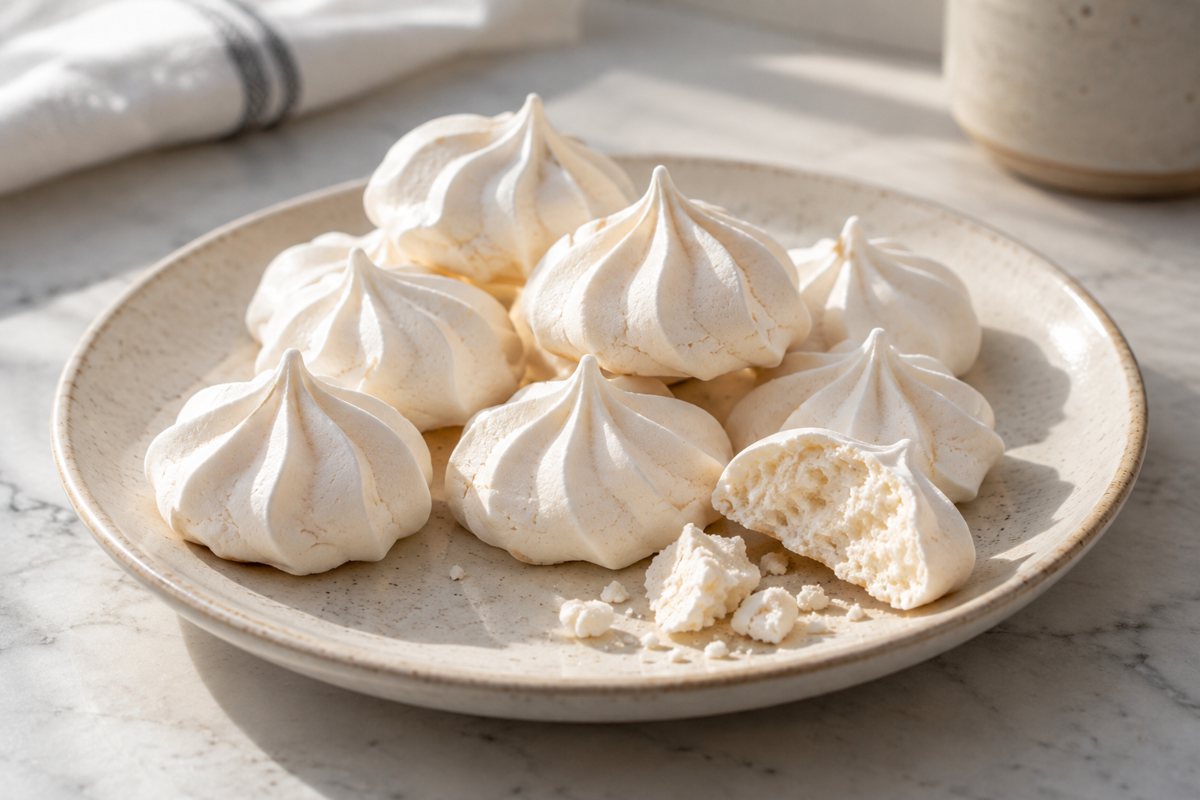
Crispy meringues made from egg whites and caster sugar. Learn how to achieve a glossy meringue, form even portions, and recognize when the centers are dry before storing the meringues in a box.
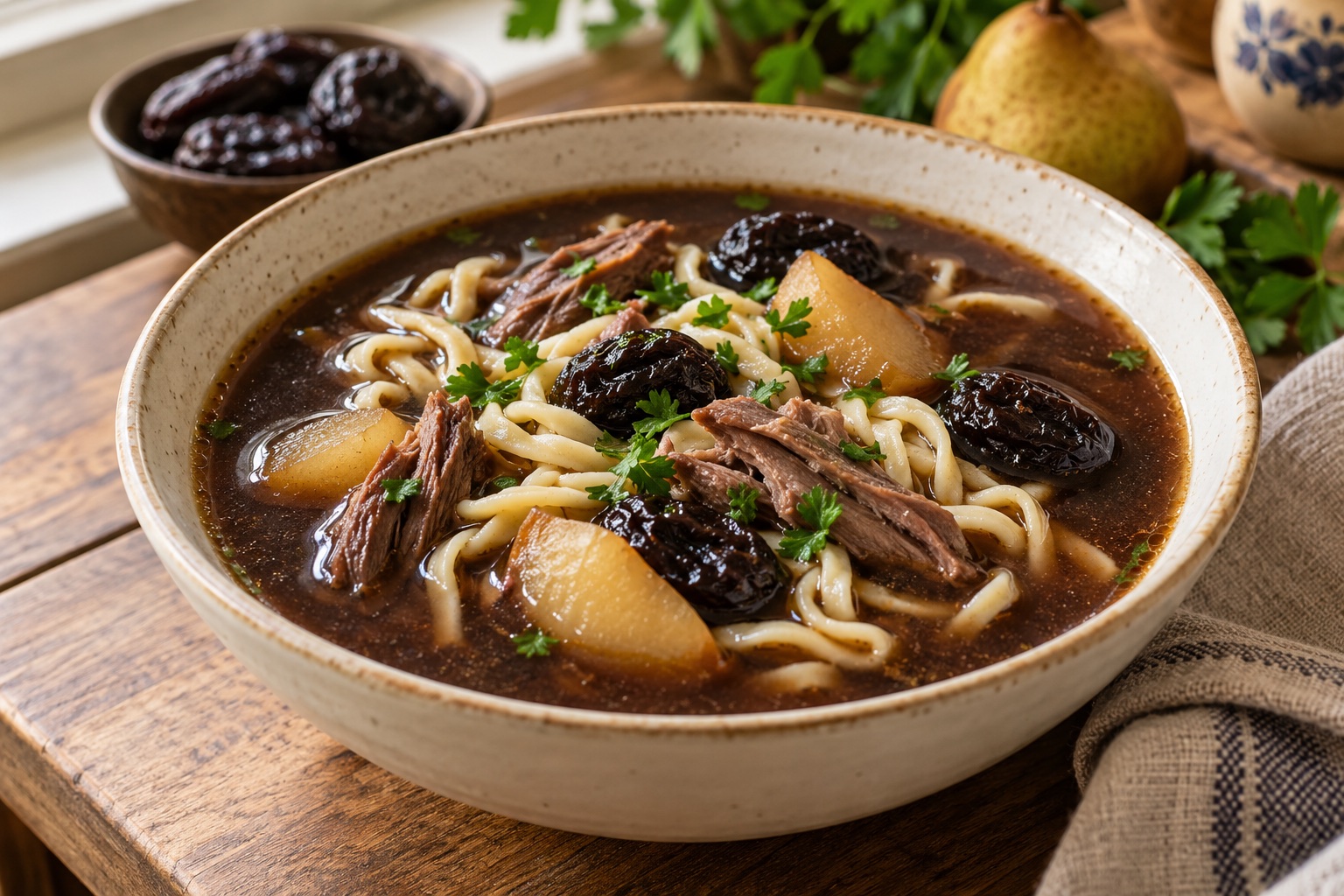
A traditional black soup made with duck, dried plums, and pears, along with thin egg noodles. It requires careful tempering and gentle heating of the soup.
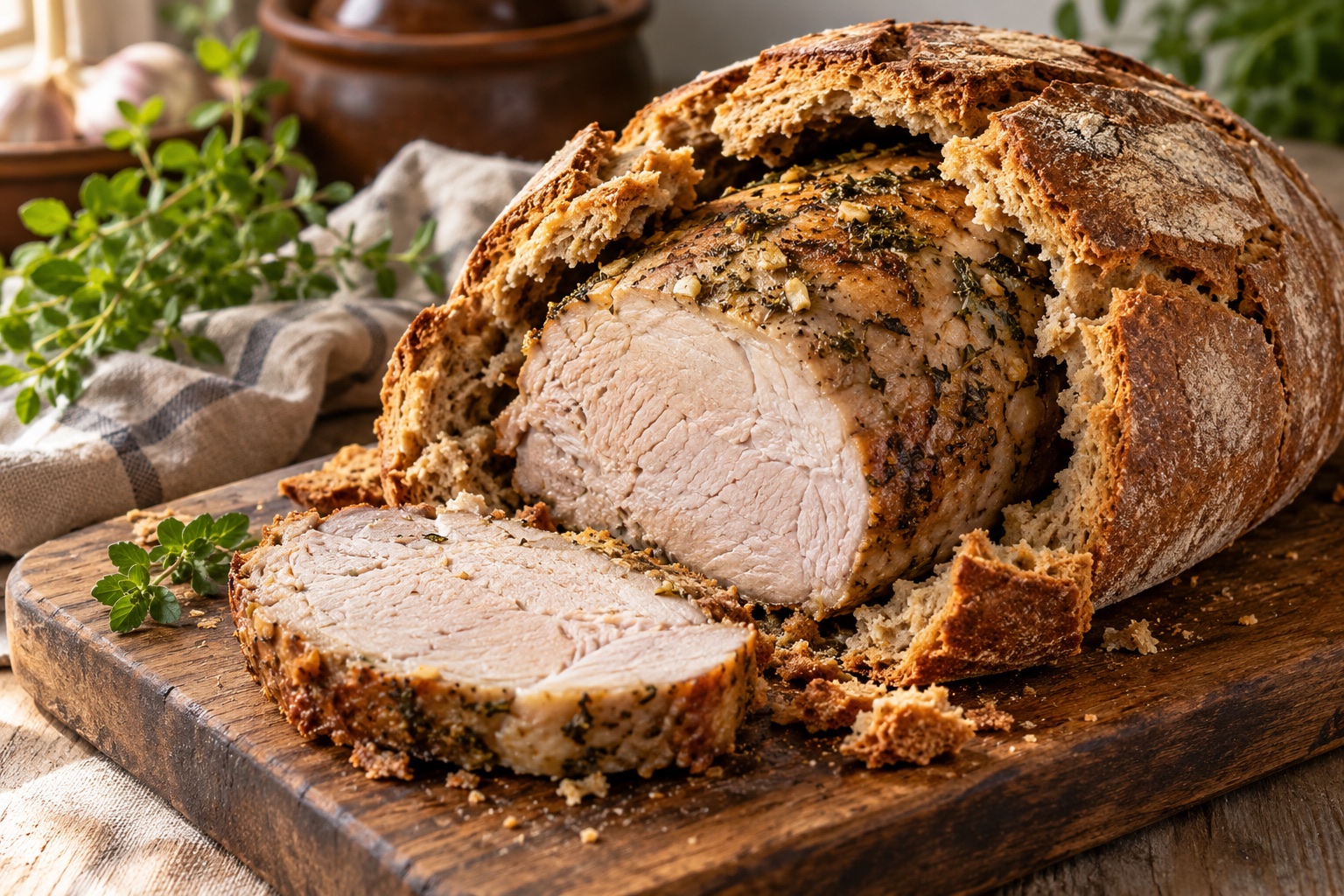
Fresh pork ham enclosed in a thick rye-wheat crust. With a precise sealing of the dough, measuring the center, and opening after resting.
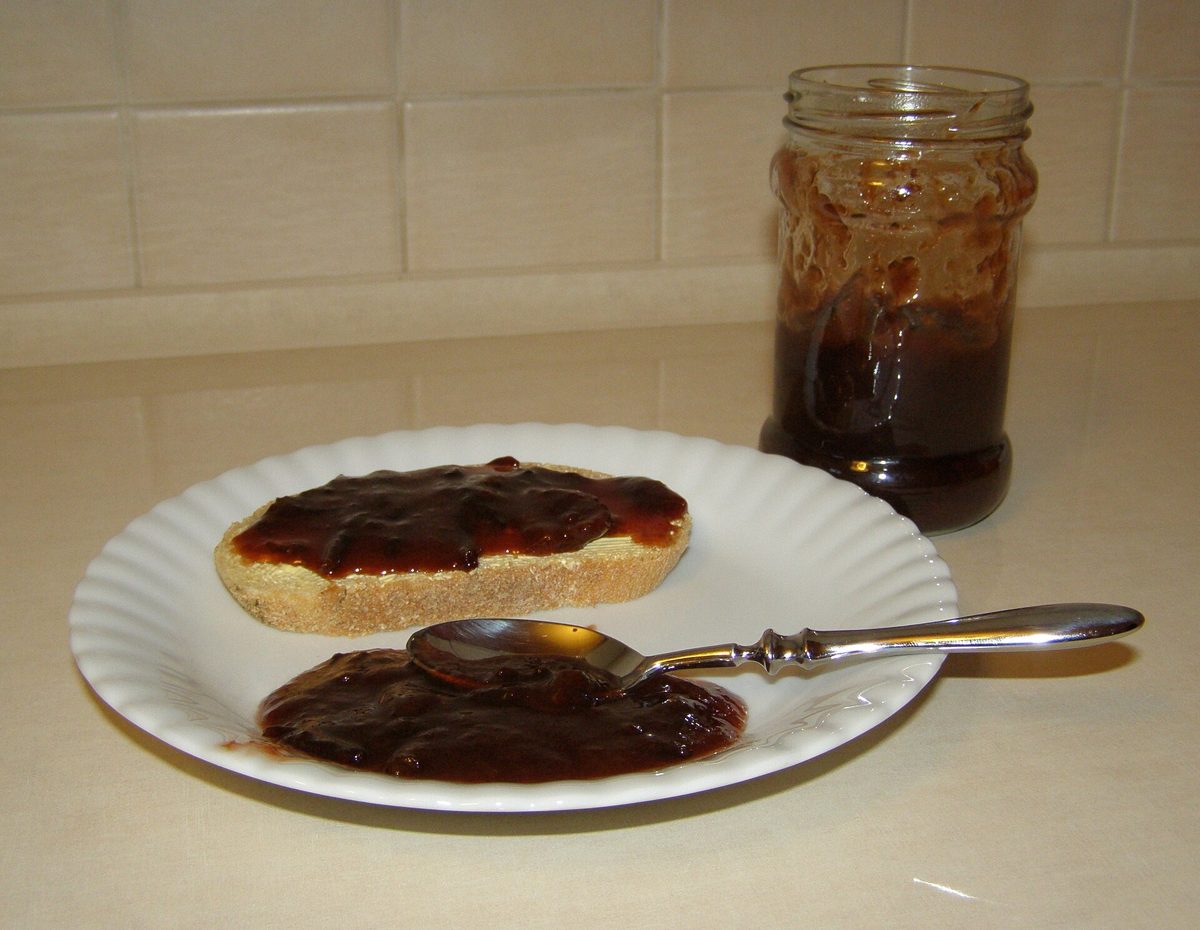
Thick, dark preserves made from ripe plums, slowly cooked for three days without sugar or with just a bit, and then sealed in jars. Learn how powidła differ from jam, how to avoid burning, and what plums to buy abroad.
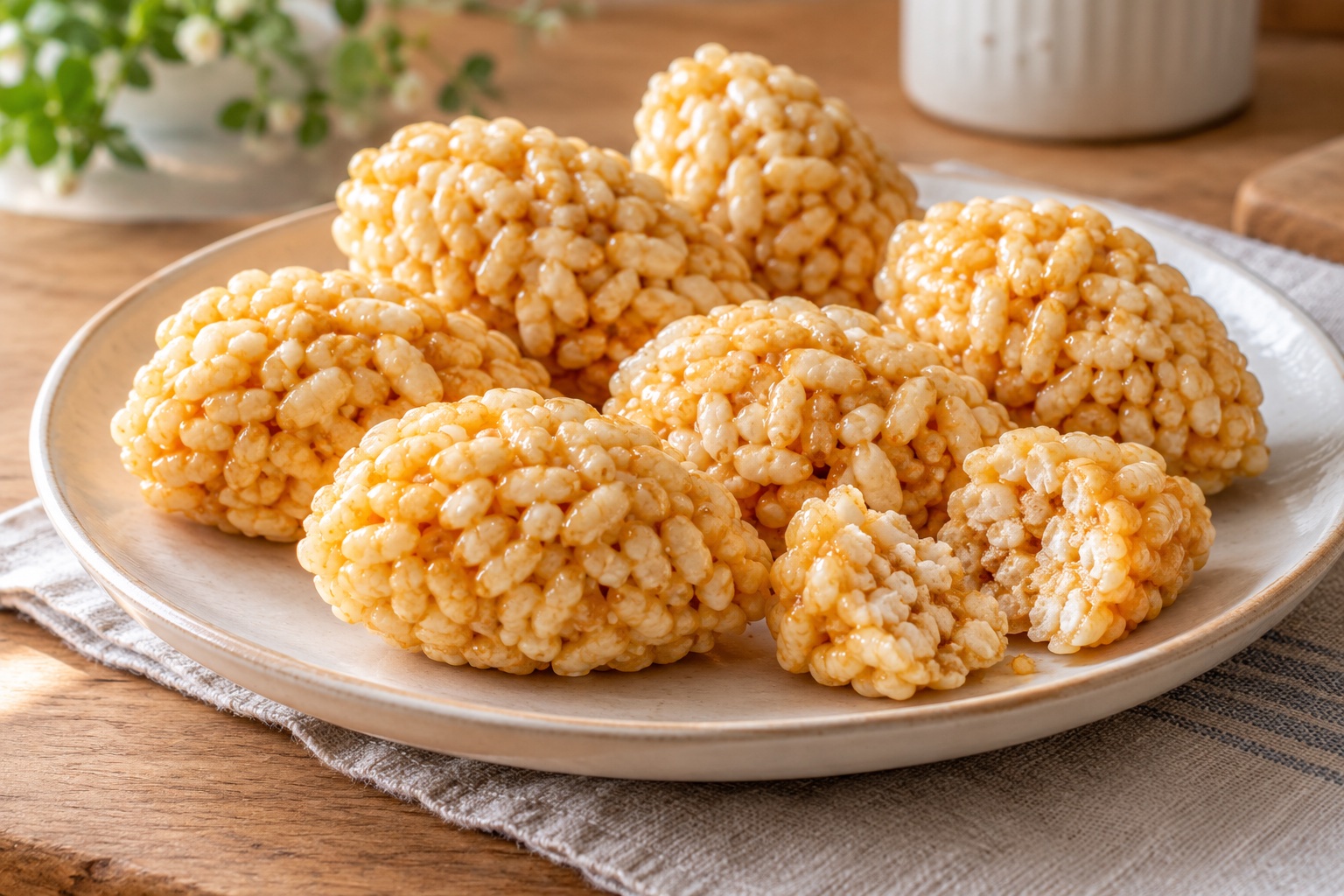
Homemade clusters without baking: crispy puffed rice in a creamy caramel mixture. A simple treat that we shape only after it has cooled safely.
Family recipes, cooked at home for years and written down step by step.
Homemade meat jelly made from pig trotters and pork hock, cooked with vegetables and spices. The trotters give the broth the right strength, allowing the jelly to set without gelatin. Serve it with lemon or vinegar. After cooking, it needs a few hours to cool.
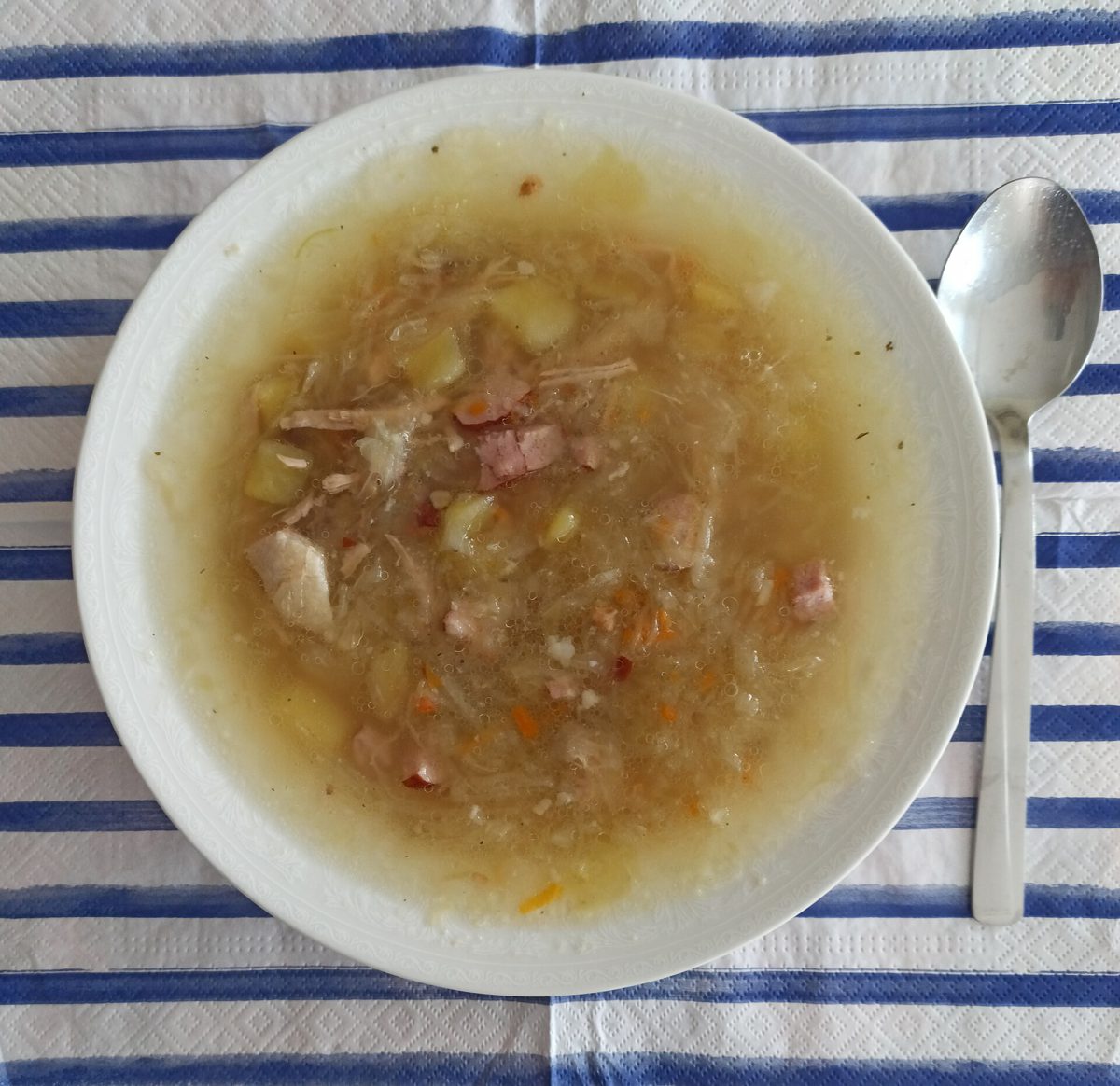
A thick soup made from sauerkraut, pork ribs, potatoes, smoked bacon, caraway seeds, and marjoram. Includes tips on rinsing the cabbage, how to avoid oversalting the soup, and what sauerkraut to buy abroad.
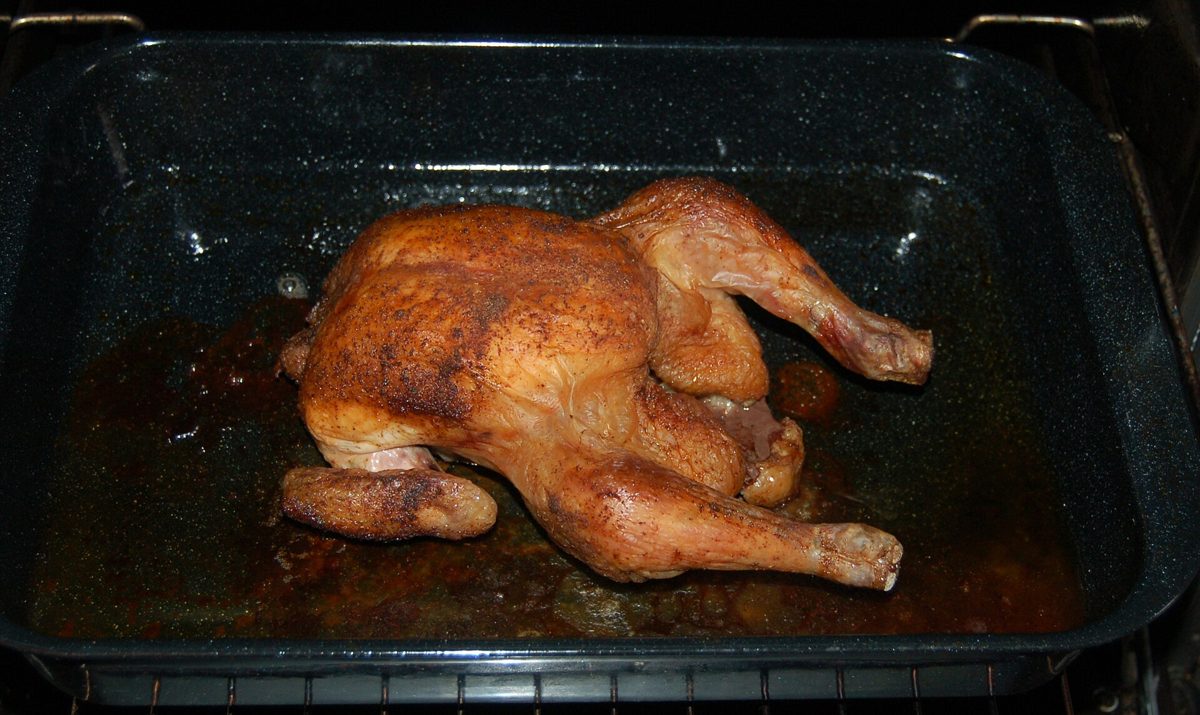
A whole chicken rubbed with salt, pepper, sweet paprika, garlic, and marjoram, roasted in a pan and basted with its own fat, with a stuffing of bread and liver if desired. Here’s how to roast it step by step, how to check with a thermometer if it’s ready, and what kind of chicken to buy abroad.
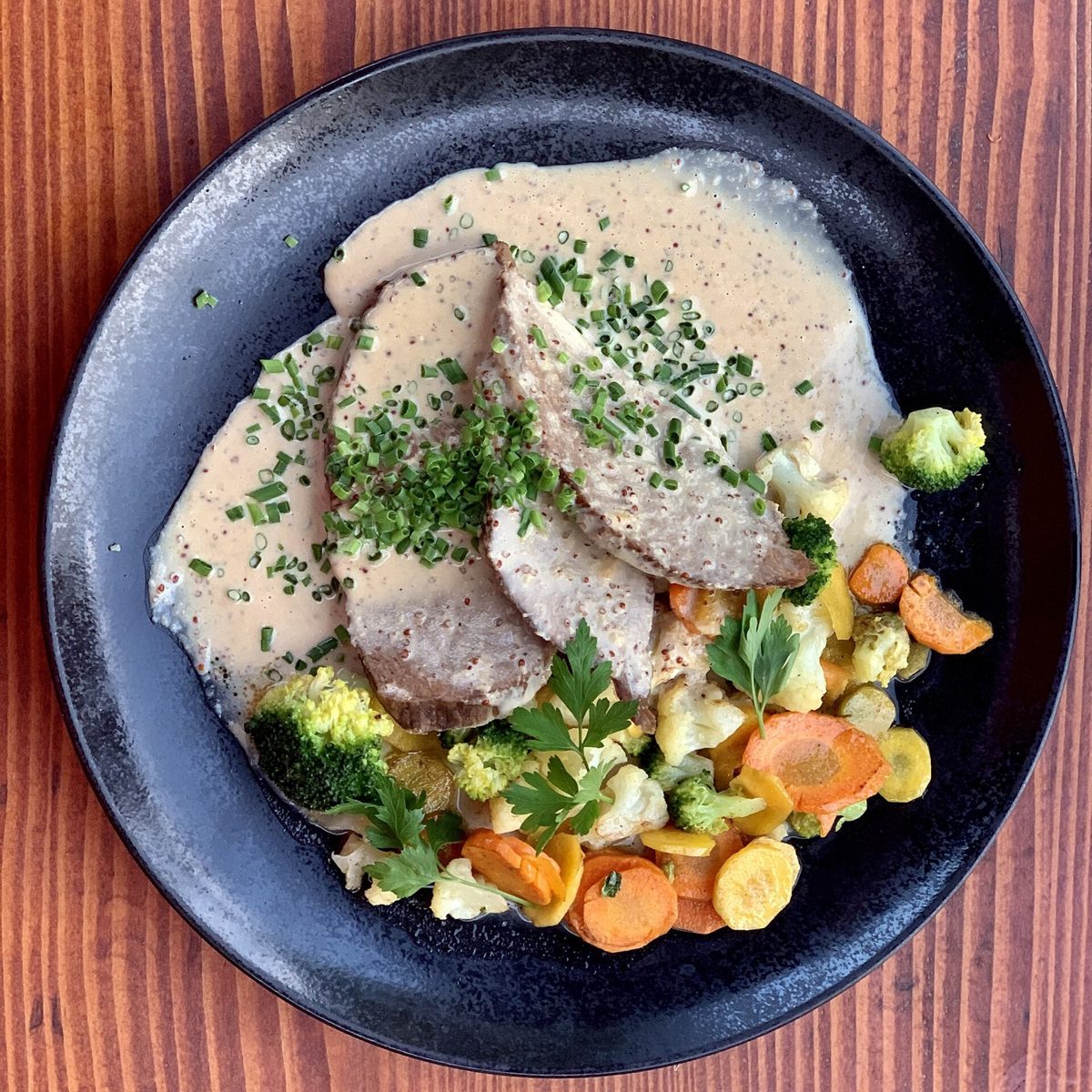
A piece of beef slowly cooked with root vegetables until tender, sliced against the grain, and topped with a light sauce made from roux, broth, cream, and horseradish. This includes tips on which cut of beef to buy in Poland and abroad, how to avoid losing the sharpness of horseradish, and the differences between 'prepared horseradish' and American 'horseradish sauce.'
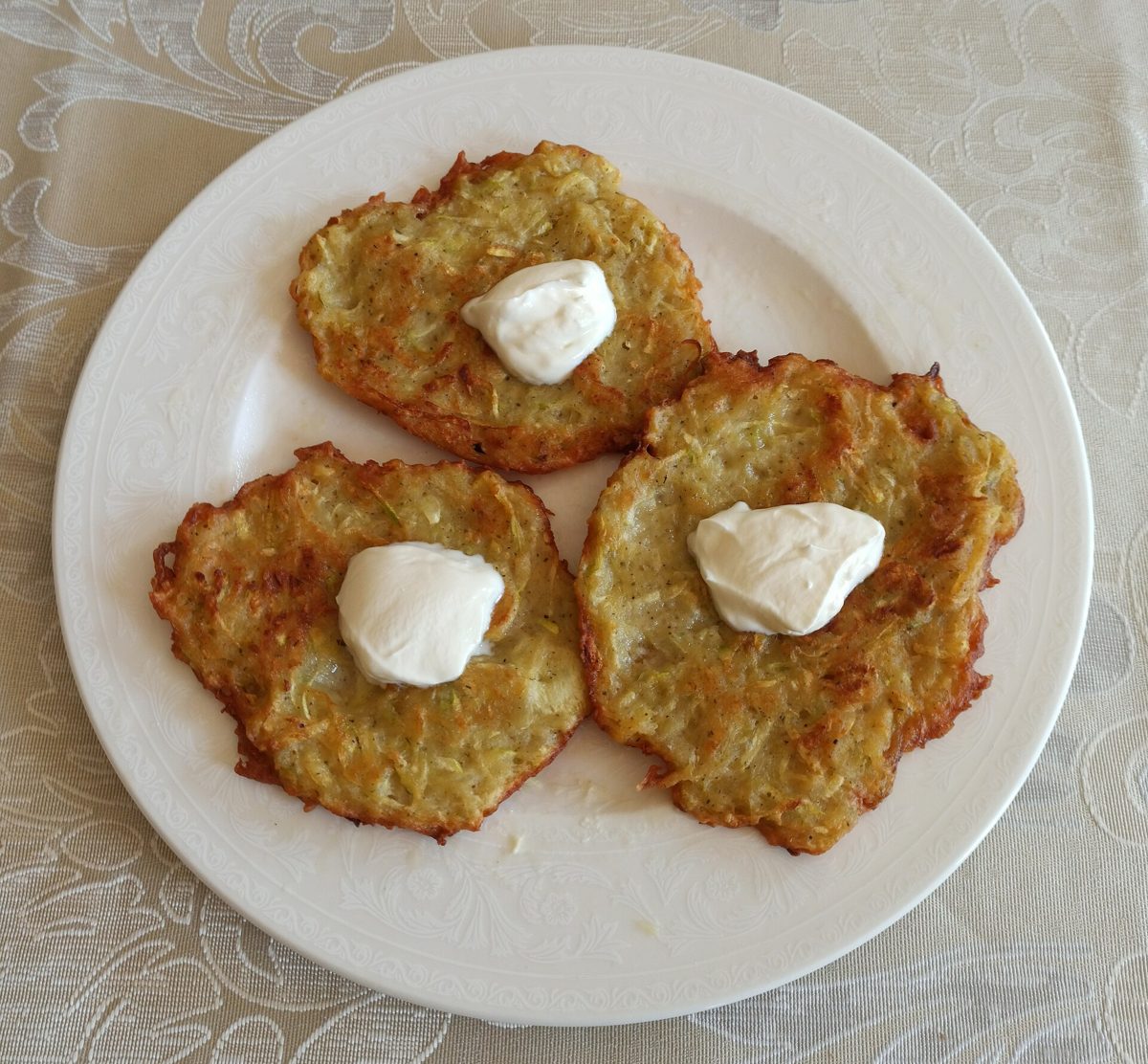
Homemade zucchini fritters made with grated zucchini, eggs, flour, garlic, and dill, fried in a pan and served with garlic yogurt sauce or sour cream. Tips on how to remove water from zucchini to prevent the fritters from falling apart, and what to buy abroad.
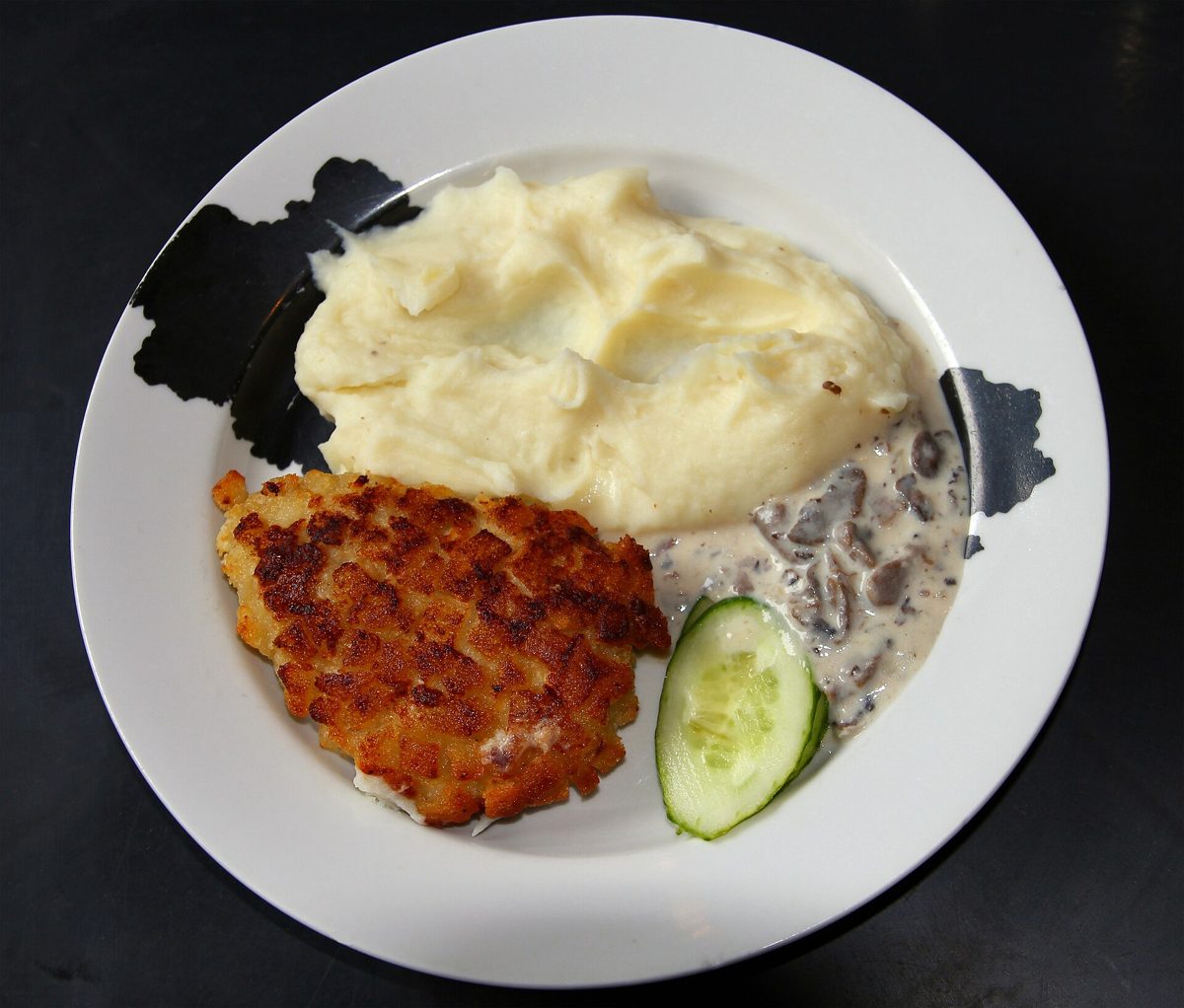
Delicate minced chicken cutlets with a lot of butter and soaked bread, coated in small bread cubes, briefly fried and then baked in the oven. This is what distinguishes them from regular meatballs and where their name comes from.