
The story behind the recipe
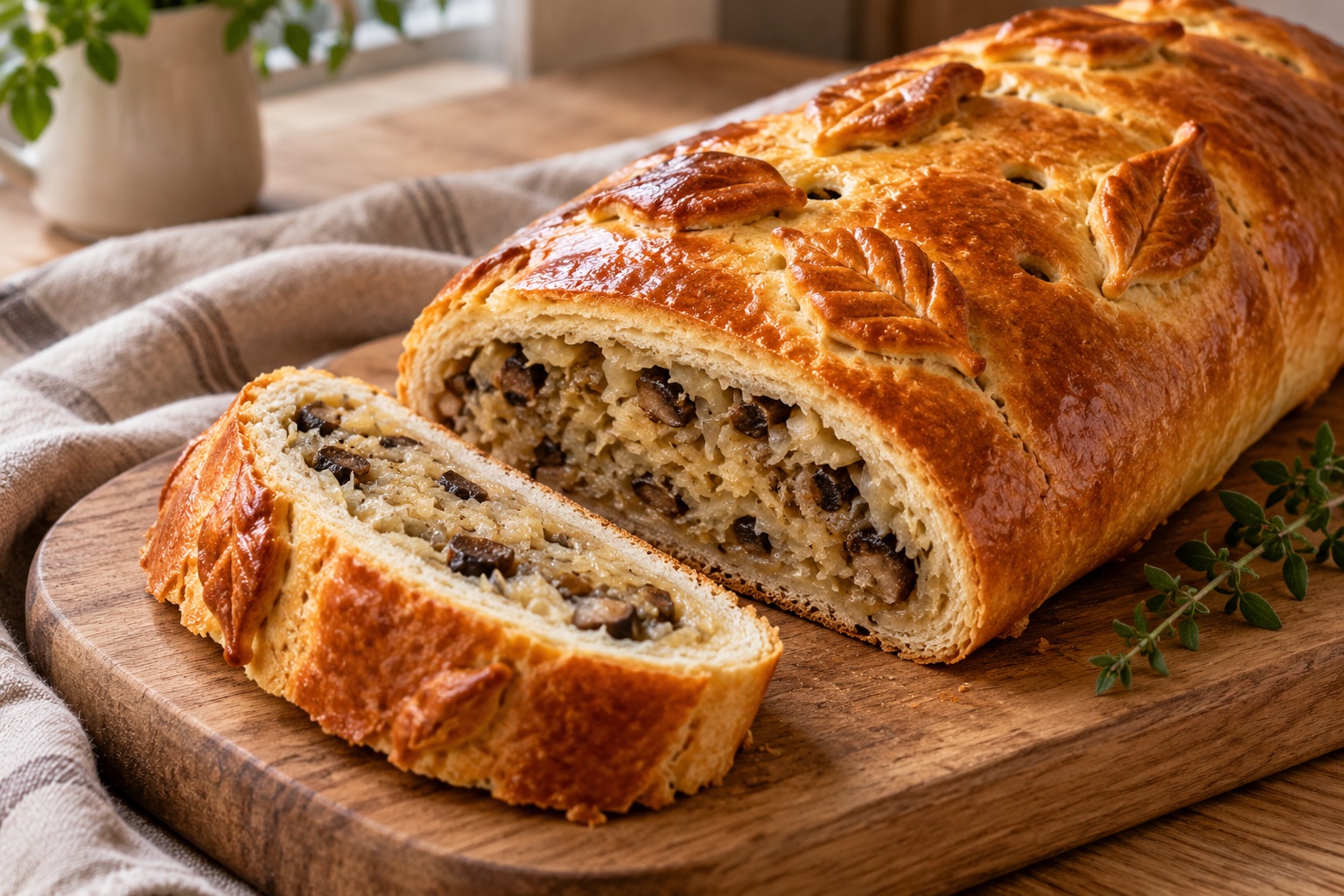
Kulebiak is part of the shared tradition of Eastern European and borderland cuisine, and in Poland, it has numerous home and regional variations. Ministerial descriptions of kulebiaks document various doughs and fillings: cabbage, mushrooms, grains, fish, or meat. There is no single mandatory recipe for all regions.
We prepare a simple, large yeast kulebiak with cabbage and dried mushrooms, without meat or fish. This is a contemporary home recipe, not a specific protected product from a locality. The most important aspects are the steamed, cooled filling and a tight bottom. The finished strudel is best sliced after a short rest, when the dough is no longer very delicate.
Ingredients
Dough
- 450 g all-purpose flour
- 220 ml milk (warm)
- 20 g fresh yeast
- 1 pc egg
- 60 g butter (melted and cooled)
- 10 g sugar
- 7 g salt
Filling
- 700 g sauerkraut (after squeezing)
- 30 g dried mushrooms
- 200 g onion
- 40 ml rapeseed oil
- 2 pcs bay leaf
- 3 pcs allspice
- salt and pepper (to taste)
Top
- 1 pc egg (for brushing)
Method, step by step
-
Rinse the mushrooms and soak them in about 500 ml of water for 30–60 minutes. Cook until soft for about 25–30 minutes. Drain, reserving the strained broth, and chop finely. While soaking, start preparing the dough according to the following steps: the filling and rising can be done simultaneously.
-
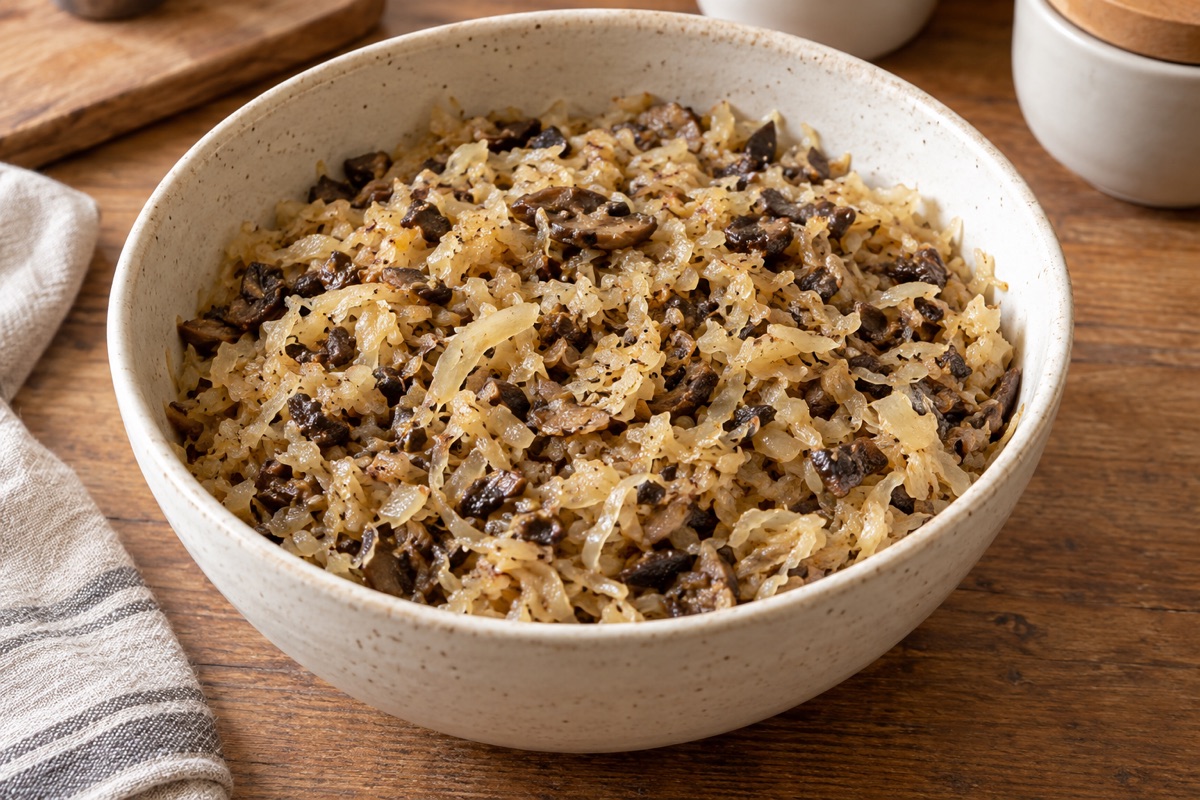
Chop the sauerkraut. In a pot, add about 200 ml of mushroom broth, the sauerkraut, bay leaves, and allspice. Simmer for 35–45 minutes until soft, then evaporate uncovered. Remove all spices whole.
-
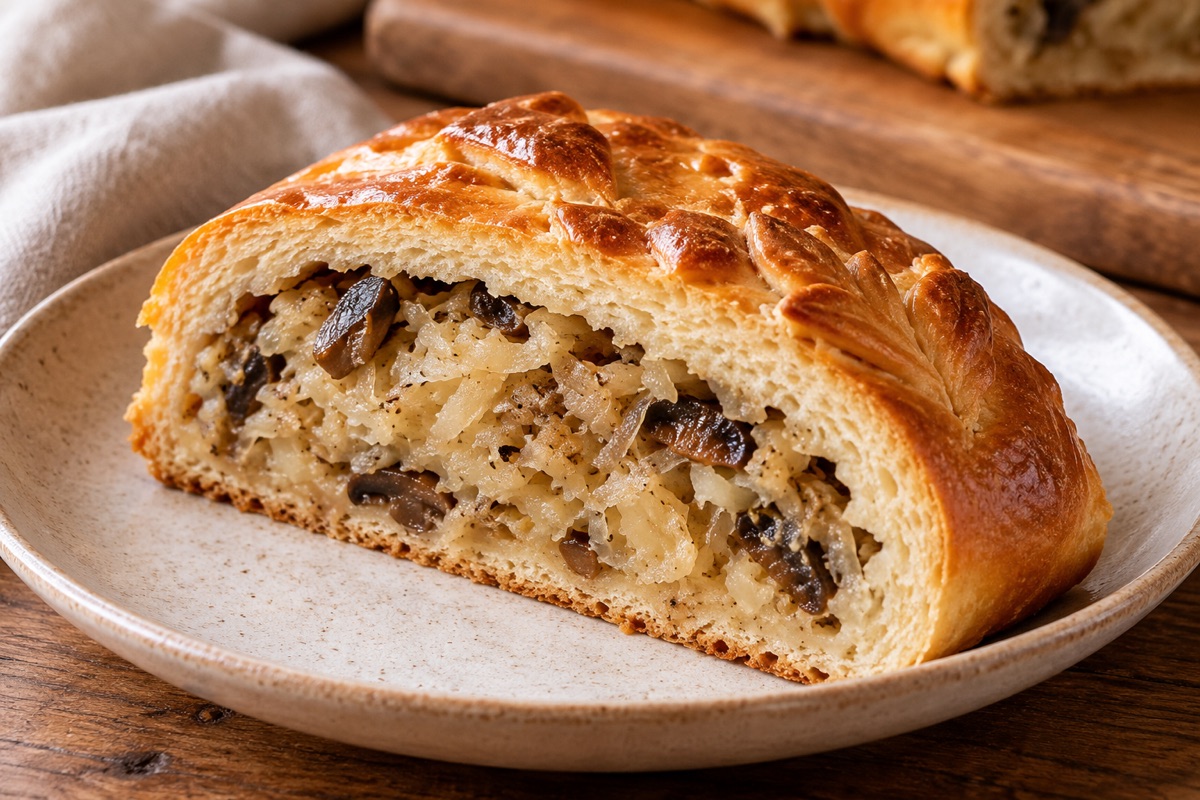
Chop the onion and sauté it in oil until translucent. Add the mushrooms, fry for 3 minutes, then combine with the sauerkraut. Season with salt and pepper. Spread the filling in a shallow dish and let it cool completely.
-
Crush the yeast with sugar, 50 ml of warm milk, and a tablespoon of flour taken from the total. Set aside for 10–15 minutes to foam.
-
From the remaining flour, salt, egg, milk, and the yeast mixture, knead a soft dough. After a few minutes, add the butter and continue kneading until elastic, for a total of about 10 minutes. Cover and let rise until doubled in volume, usually 60–75 minutes.
-
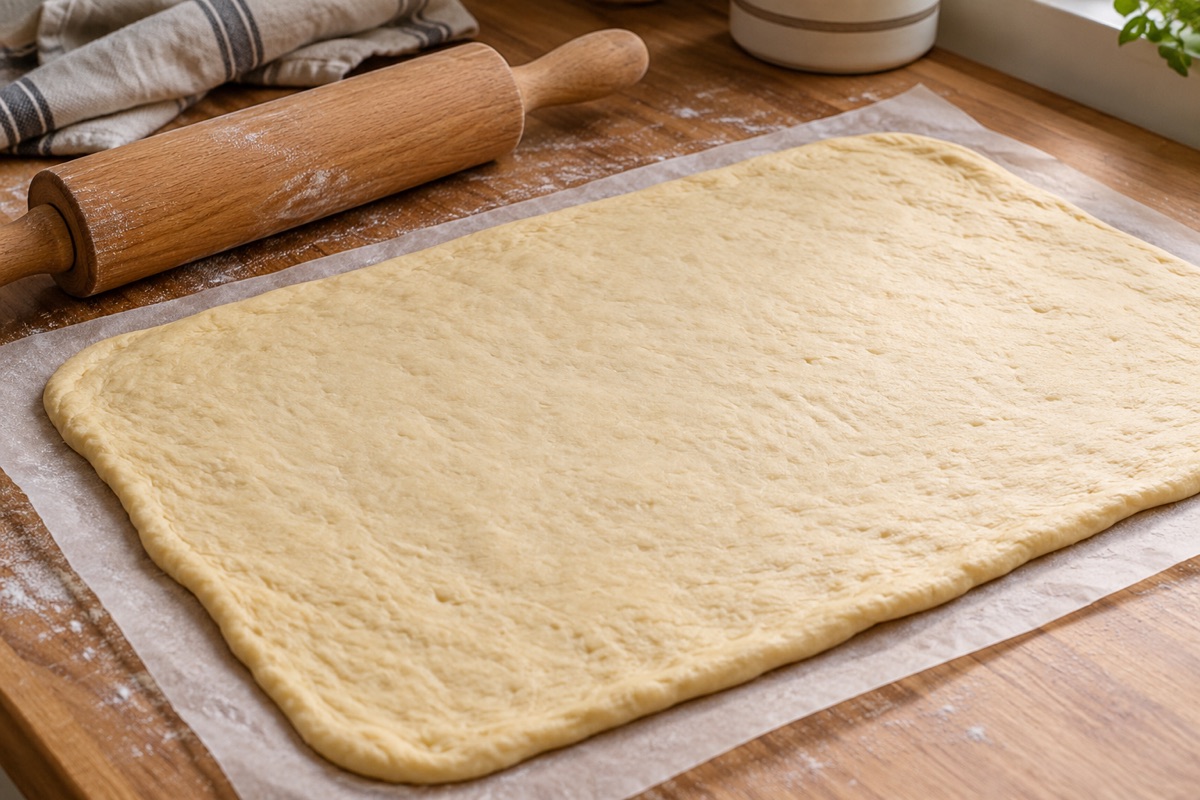
Roll out the dough on paper into a rectangle about 35×40 cm, about 6 mm thick. You can cut a narrow strip for decoration. Do not dust with a thick layer of flour.
-
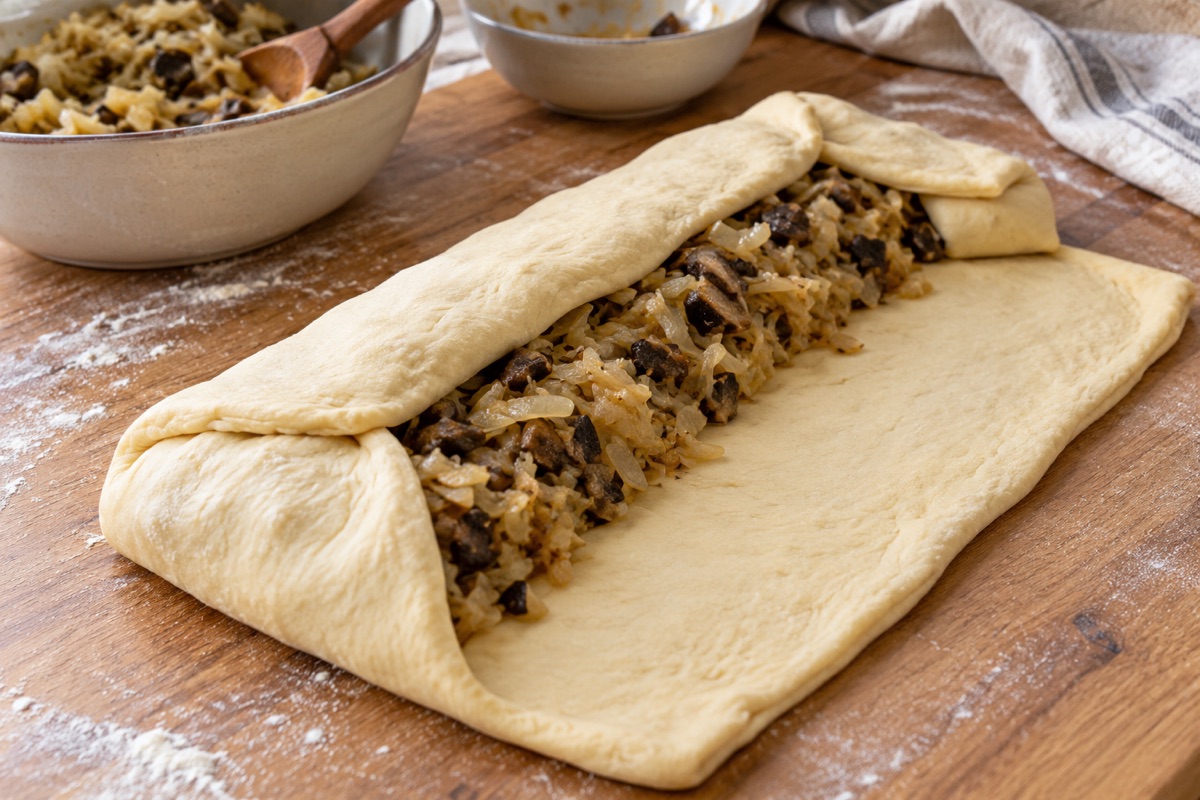
Along the center, place the cold filling, leaving the ends and edges free. Fold the shorter ends inward, then close the longer sides over the filling. Carefully seal the seam.
-
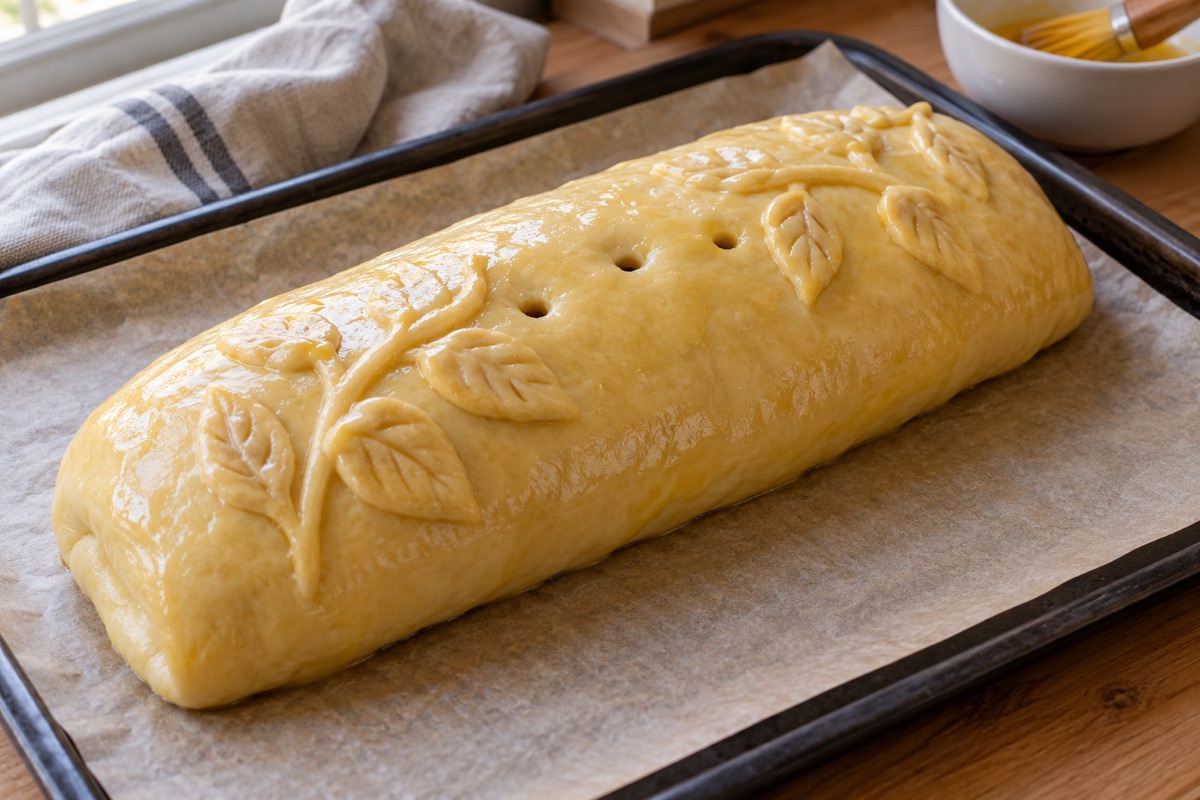
Using the paper for assistance, turn the strudel seam side down and transfer it to the baking sheet. Attach decorations with a bit of water. Leave covered lightly for 25 minutes until it puffs up slightly.
-
Preheat the oven to 185°C, top and bottom heat. Brush the top with egg and make 3–4 small steam holes, without cutting through the entire dough.
-
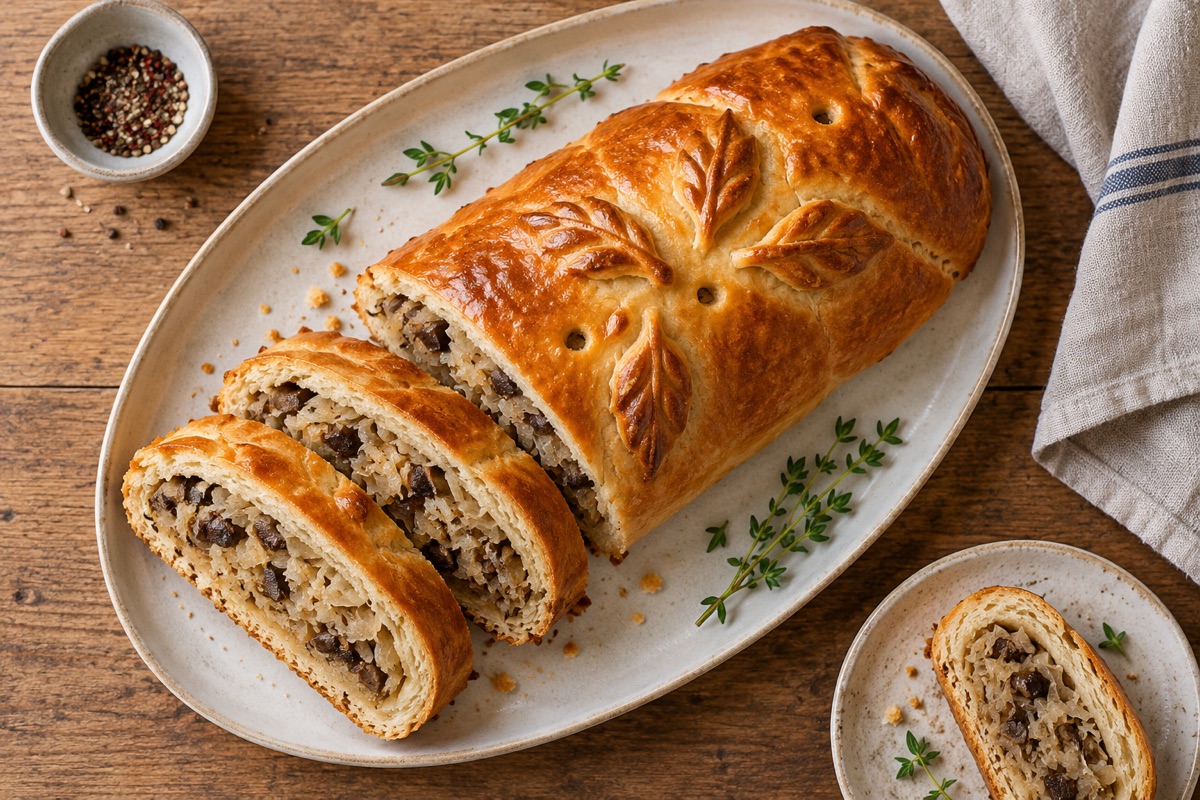
Bake for 35–45 minutes until evenly golden brown. If the top browns too early, loosely cover with foil. The bottom should be baked through, and the dough near the filling should not be wet or undercooked.
-
After removing from the oven, wait 15–20 minutes. Cut with a sharp serrated knife into thick slices, without pressing down too hard on the entire strudel. Serve with hot borscht.
Photos
Comments (0)
No comments yet. Be the first!