
The story behind the recipe
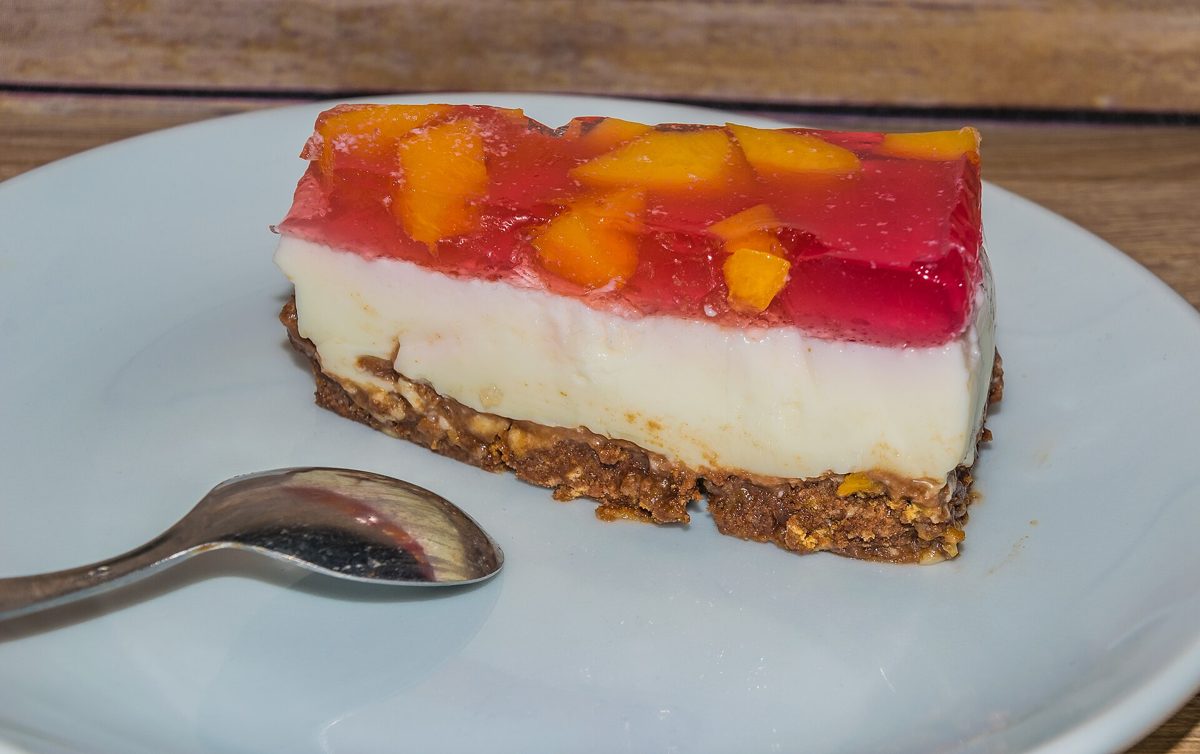
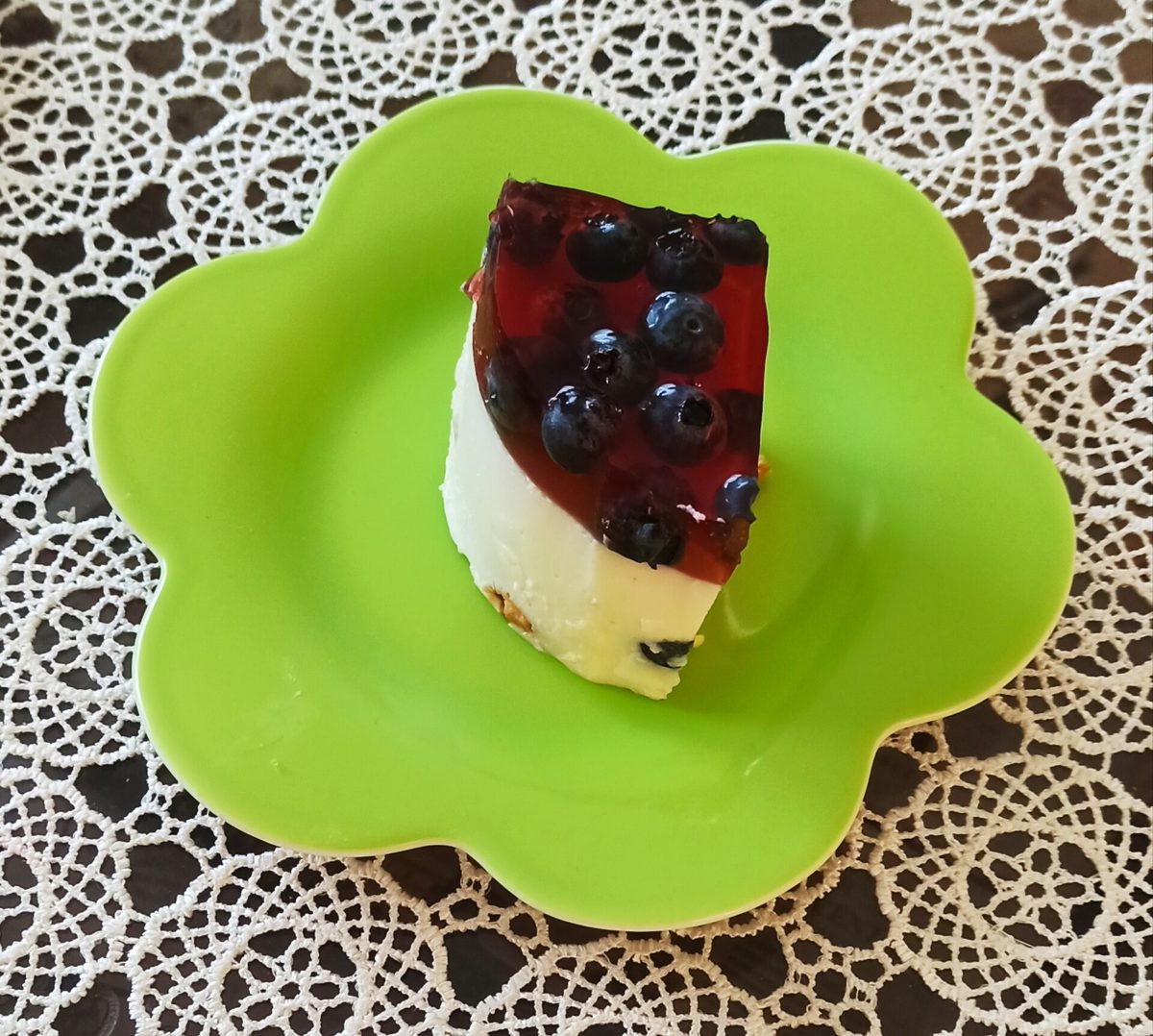
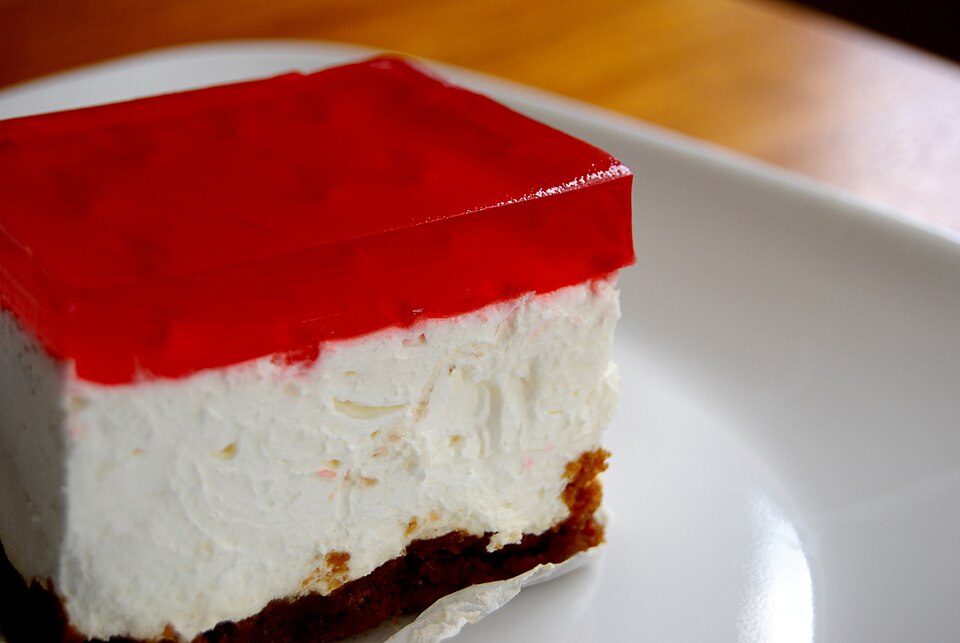
Sernik na zimno is a cheesecake prepared without thermal processing: on a base of cookies or sponge cakes lies a cheese mass set with gelatin, egg yolks, or agar, and on top is a layer of jelly, often with fruit. The filling is made from ground twaróg or homogenized cheese, whipped cream, sugar, and gelatin. The same encyclopedia, citing Zofia Maciesowicz's book "Dobra kuchnia: żywienie w rodzinie" (fifth edition, Watra, 1976), also provides a variant without gelatin: made from butter creamed with egg yolks, sugar, and ground twaróg.
It is unclear when sernik na zimno with jelly became popular in Poland: we have not found a source that provides a date or describes its history. Recipe authors write about it more as a family tradition. Kwestia Smaku calls it a classic no-bake cheesecake and recommends it at the end of a barbecue, for a summer garden party, or as a Sunday dessert for the whole family. Ania Gotuje serves it for birthdays, name days, and coffee gatherings. The author of the blog Polish Your Kitchen mentions that her mother made it for her birthdays, and Lois Britton from the blog Polish Housewife, who lived in Poznań, writes that she saw it in many pastry shop displays.
Sources differ regarding the cheese. Polish Your Kitchen states that no-bake cheesecake is made with homogenized cheese, Dr. Oetker allows vanilla cheese instead of twaróg, while Kwestia Smaku, Ania Gotuje, and Moje Wypieki use twaróg. They also differ in what holds the filling: some use pure gelatin, others melted jelly. We chose twaróg with gelatin because the filling remains white and has a cheese flavor, while the jelly with fruit is only on top. On the website, you will also find baked "Sernik krakowski" and the dessert "Galaretka z owocami i bitą śmietaną."
Ingredients
Base (24 cm springform pan, or 9½ inches)
-
250 g butter cookies (or 70–120 g of sponge cakes)
Abroad: digestives, graham crackers, vanilla wafers or shortbread; France: Petit Beurre; Germany: Leibniz-Keks -
120 g butter (melted and cooled)
Abroad: unsalted butter
Cheese filling
-
1 kg twaróg cheese (ground, from a bucket, or fatty or semi-fat twaróg ground twice; at room temperature)
Abroad: unsalted farmer’s cheese, pot cheese or thick, drained Quark; in the UK, twaróg can be found in Polish shops -
120 g powdered sugar
Abroad: powdered sugar / icing sugar / Puderzucker -
1 package vanilla sugar (about 16 g)
Abroad: Germany: Vanillezucker; USA and UK: 1 teaspoon vanilla extract -
250 ml 30% or 36% cream (well chilled)
Abroad: whipping cream or heavy cream; Germany: Schlagsahne -
25 g powdered gelatin
Abroad: USA and Canada: unflavored gelatin, about 3½ packets of Knox at 7 g each; Germany: Gelatine gemahlen - 100 ml water (cold, for soaking gelatin)
Fruits and jelly
- 500 g strawberries (washed and thoroughly dried; or raspberries, blueberries, canned peaches)
-
1 package strawberry jelly (about 75 g, for 500 ml of water according to the package)
Abroad: USA and Canada: Jell-O; UK: jelly; Australia: jelly crystals; Germany: Götterspeise - 400 ml boiling water (less than the jelly package states)
Method, step by step
-
Take the twaróg out of the fridge earlier so that it reaches room temperature; leave the cream in the fridge. Line the bottom of a 24 cm (9½ inch) springform pan with baking paper and fasten the ring. Line the sides with strips of paper, greasing them with a bit of butter to hold. If the mold is not leak-proof, wrap it from the outside with plastic wrap.
-
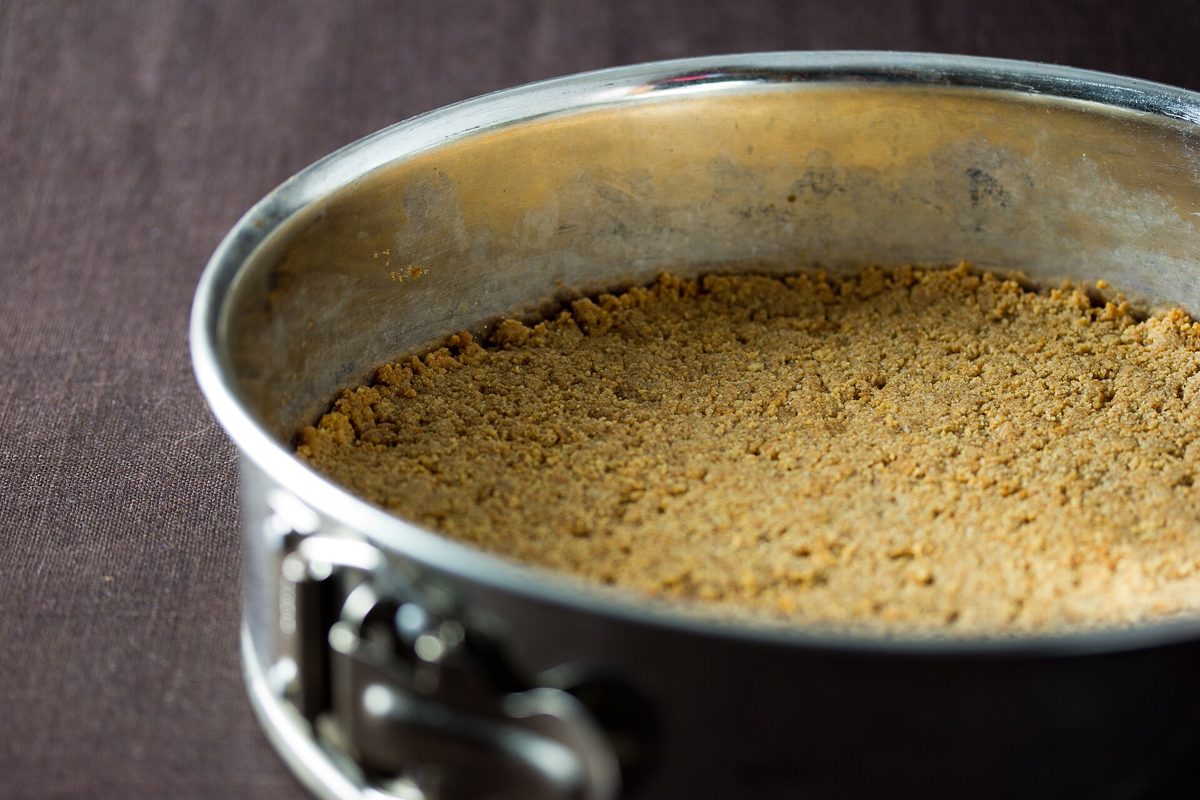
Crush the cookies in a food processor or with a rolling pin in a bag until almost powdery, mix with the melted butter and spread it on the bottom of the mold. Press them down firmly and evenly, for example with the bottom of a glass. Place the mold in the fridge to let the base harden.
-
Pour the strawberry jelly into a bowl with 400 ml of boiling water and stir until completely dissolved. Set aside to cool. It should be cold but still liquid; it will be needed at the end.
-
Sprinkle the gelatin into 100 ml of cold water, mix, and let it sit for 10 minutes until it swells. Then heat it in a water bath or briefly in the microwave, stirring until it becomes completely transparent and liquid. Do not let it boil.
-
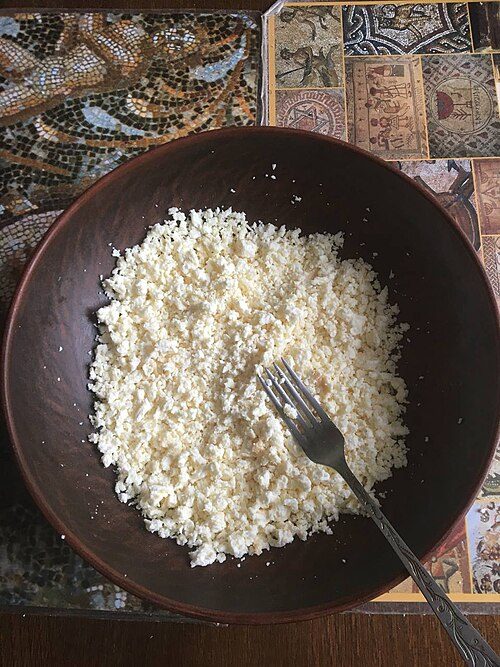
If you have twaróg in a block, mash it with a fork and grind it twice in a meat grinder; the twaróg from a bucket is ready. Blend it briefly with powdered sugar and vanilla sugar until smooth.
-
To the still warm gelatin, add a spoon or two of the cheese mixture and mix thoroughly with a whisk. Add another two or three tablespoons and mix again, checking for lumps. Repeat once more, then pour the gelatin into the rest of the cheese and immediately blend into a uniform mass.
-
Whip the chilled cream until soft and gradually add it to the cheese mixture, mixing with a mixer on low speed or with a spoon until everything is combined.
-
Pour the mixture onto the chilled base and smooth the surface. If the mixture is very runny, first pour a few tablespoons, set the mold in the fridge for 10 minutes, and then add the rest. Chill for 2–3 hours until the mixture sets.
-
Remove the stems from the strawberries and cut them in half. Arrange them on the set mixture. When the jelly is cold and starts to thicken like jelly, pour it with a spoon over the fruit, filling all the gaps. Runny or warm jelly will leak out, and the fruit will float up.
-
Place the cheesecake in the fridge until the jelly is completely set, preferably overnight. Remove the ring, peel off the paper from the sides, and cut into 12 pieces with a sharp knife dipped in hot water. Store in the fridge, covered.
Photos
Comments (0)
No comments yet. Be the first!