
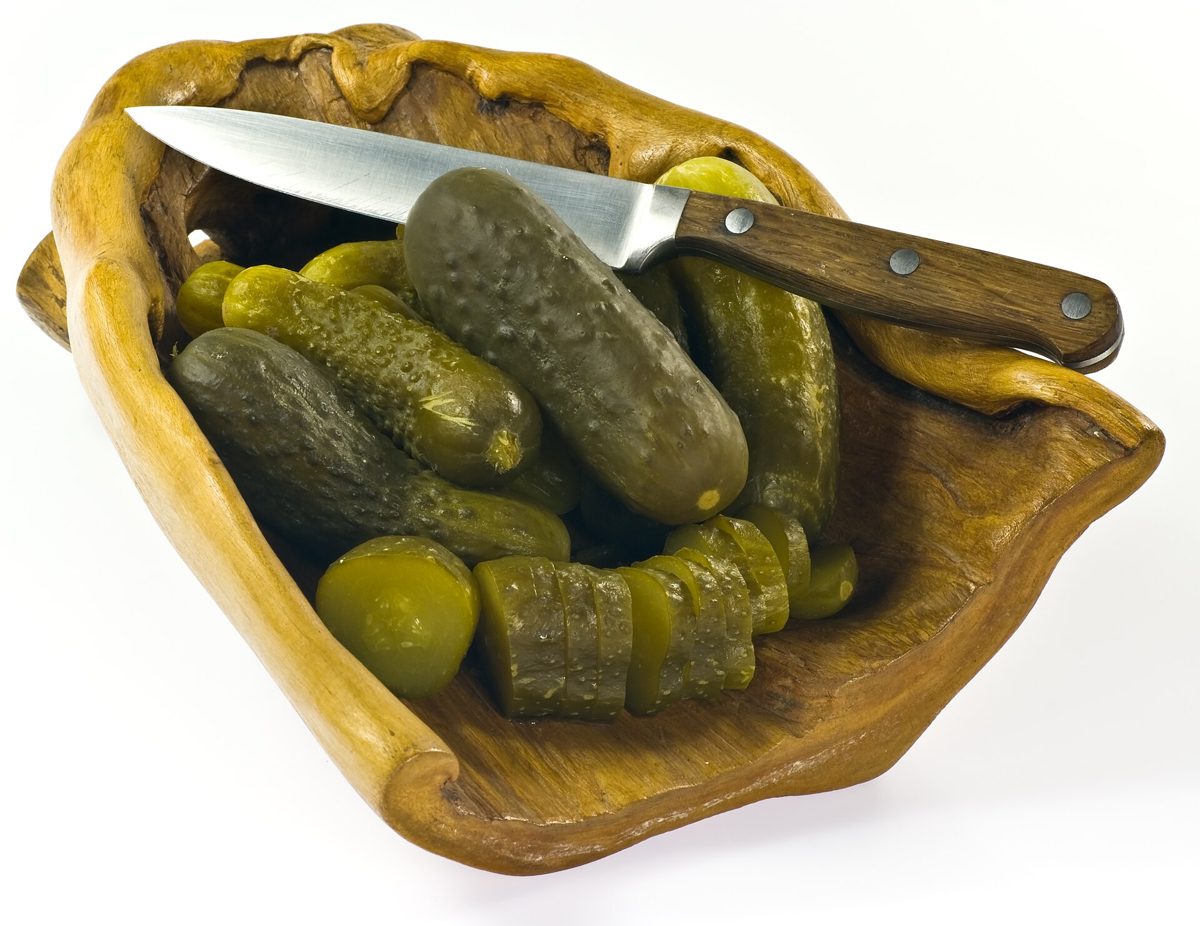
The story behind the recipe
Fermentation is lactic acid fermentation: lactic acid bacteria convert sugars from vegetables into lactic acid, which preserves cucumbers and gives them flavor. According to a brochure from the Institute of Biotechnology of the Food Industry from 2024, cucumbers, alongside cabbage, are among the most popular pickled vegetables in Poland. The same brochure reminds us that "pickled cucumbers" and "fermented cucumbers" refer to the same product, and both names are correct. Pickled cucumbers even have their own Polish Standard, PN-A-77701:1997.
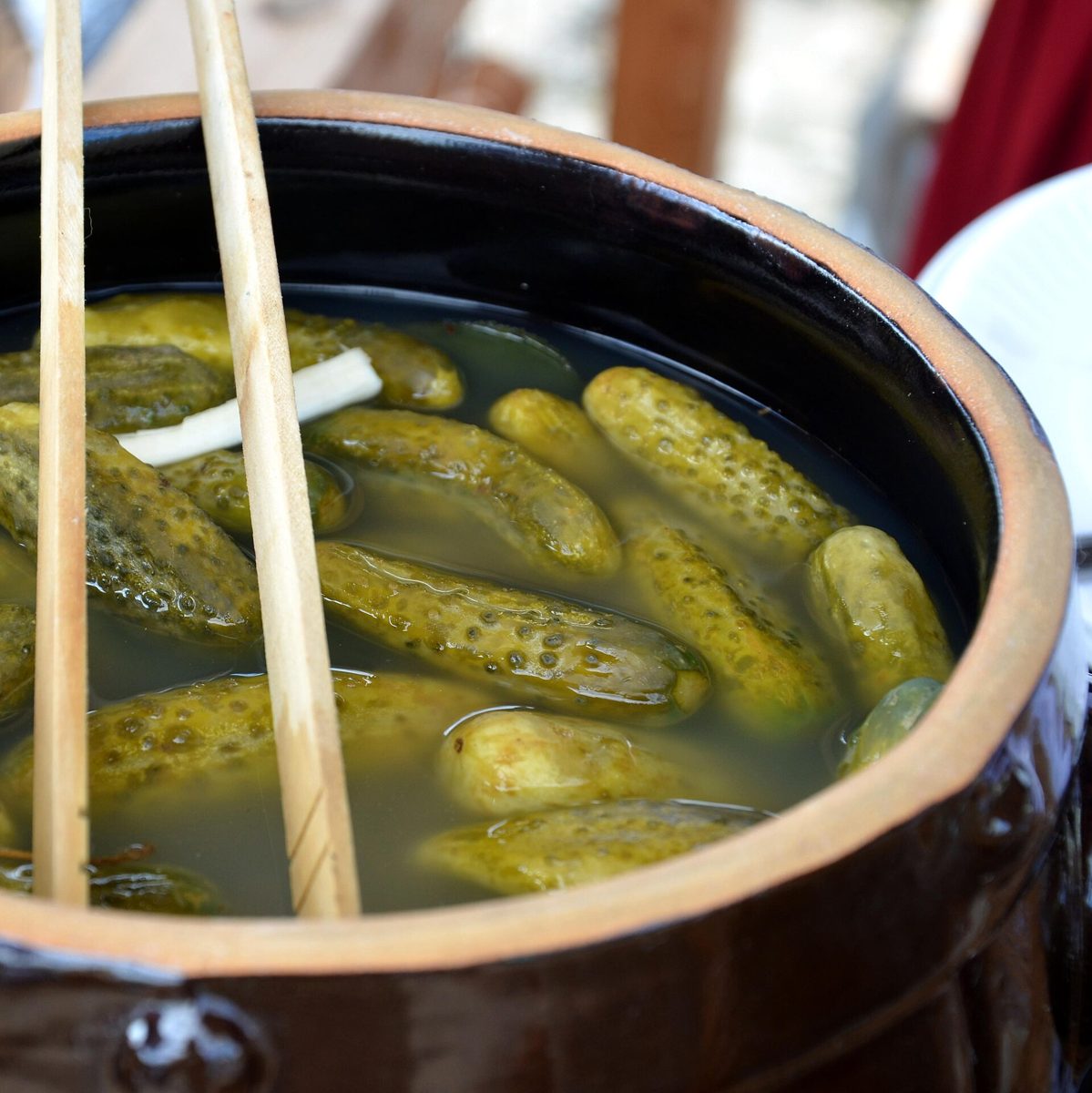
Pickled cucumbers are popular in Central and Eastern Europe. They are fermented in barrels made of hard wood that does not exude resin, in stoneware pots, or in jars; this is described in "Polish Cuisine" from 1967. It is not known exactly when cucumbers began to be pickled in Poland: the sources we found do not provide a date.
The deep-rooted presence of pickled cucumbers in Polish cuisine is evidenced by the List of Traditional Products from the Ministry of Agriculture. Among them are Silesian pickled cucumbers from Lower Silesia (entry from 2008) and pickled cucumbers from the Noteć region in the Lubusz Voivodeship (entry from 2013). At home, they are served with dinner alongside potatoes, in sandwiches and salads, with vodka, or with herring in oil and onions, and pickled cucumbers are used to make cucumber soup.
Ingredients
Cucumbers
-
2 kg small field cucumbers (firm, straight, preferably picked the same day)
Abroad: USA and Canada: pickling cucumbers or Kirby cucumbers; Germany: Einlegegurken
Brine (2 l, for 4 jars of 1 l)
-
2 l water (boiled or filtered)
Abroad: tap water with chlorine: boil for 20 minutes or use bottled water -
60 g non-iodized rock salt (30 g per 1 l of water; weigh it)
Abroad: USA: canning salt or pickling salt; kosher salt only weighed
Spices (for 4 jars)
- 2 pcs heads of garlic (small or medium, cloves peeled)
-
1 bunch dill with umbels (large bunch)
Abroad: no umbels: dill seeds -
1 pc horseradish root (piece about 10 cm, or 4 inches)
Abroad: horseradish root; Germany: Meerrettich - horseradish leaves (a few, optional)
- leaves of oak, cherry, blackcurrant, or grape (optional, a few per jar)
- 4 pcs bay leaves (optional, 1 per jar)
- 2 tsp (10 ml) mustard seeds (optional)
Method, step by step
-
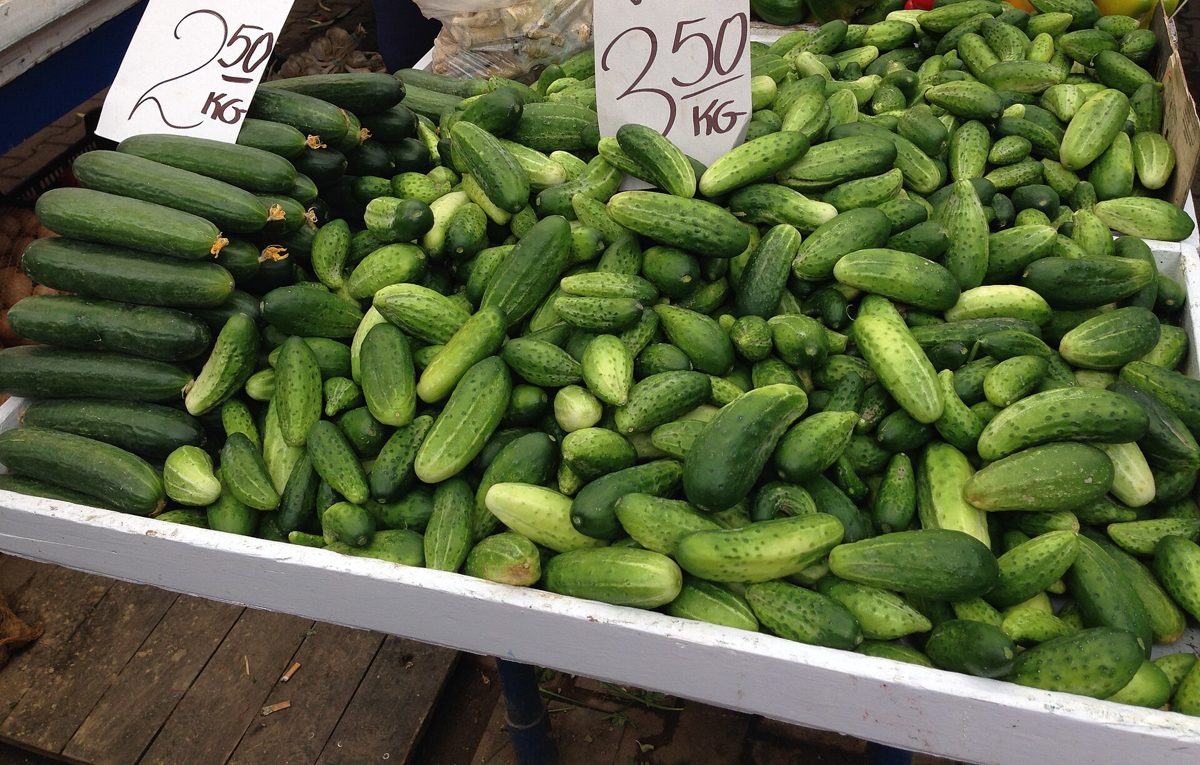
Choose small, firm, and straight field cucumbers without yellow discolorations and spots. Pickle them as soon as possible: NCHFP advises starting within 24 hours of harvest. Large, wide, and round cucumbers often turn out soft and hollow inside. Wash the cucumbers in cold running water; those that float to the surface may be hollow inside, so set them aside for other dishes.
-
Cut off a slice about 2 mm (1/16 inch) thick from each cucumber at the end where the flower was, that is, from the end opposite the stem: according to NCHFP, there may be an enzyme there that softens cucumbers. Peel the garlic, peel the horseradish root and cut it into thin strips, and rinse the dill and leaves in cold water.
-
Sterilize the jars and lids with boiling water. Only use undamaged jars and lids.
-
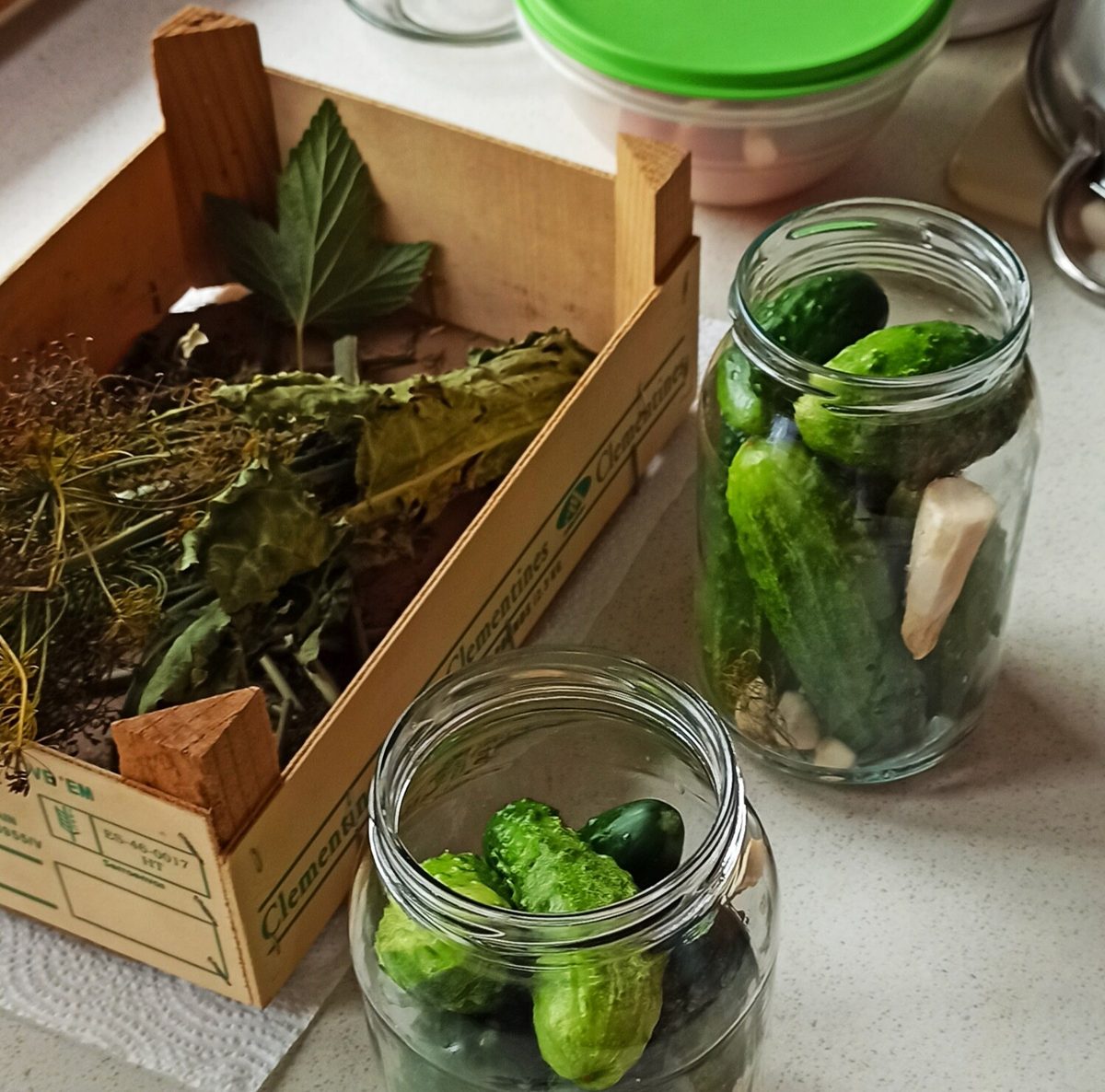
Place some dill, garlic, horseradish, and leaves at the bottom of each jar, and if using, add a bay leaf and a bit of mustard seeds. Pack the cucumbers vertically, as tightly as possible. On top, place the remaining dill and a layer of the smallest cucumbers laid horizontally: they will hold the rest under the brine.
-
Boil 2 l of water and dissolve 60 g of salt in it. Pour the hot brine over the cucumbers to the top, about 500 ml per jar. Gently shake each jar to release air bubbles. The cucumbers must be completely covered with brine.
-
Tightly screw the jars and place them on a tray at a temperature of about 20°C (68°F) for 3 days. During this time, the brine will start to foam, hiss, and may leak a little: do not open the jars, just wipe them. The lids should seal within 2–3 days.
-
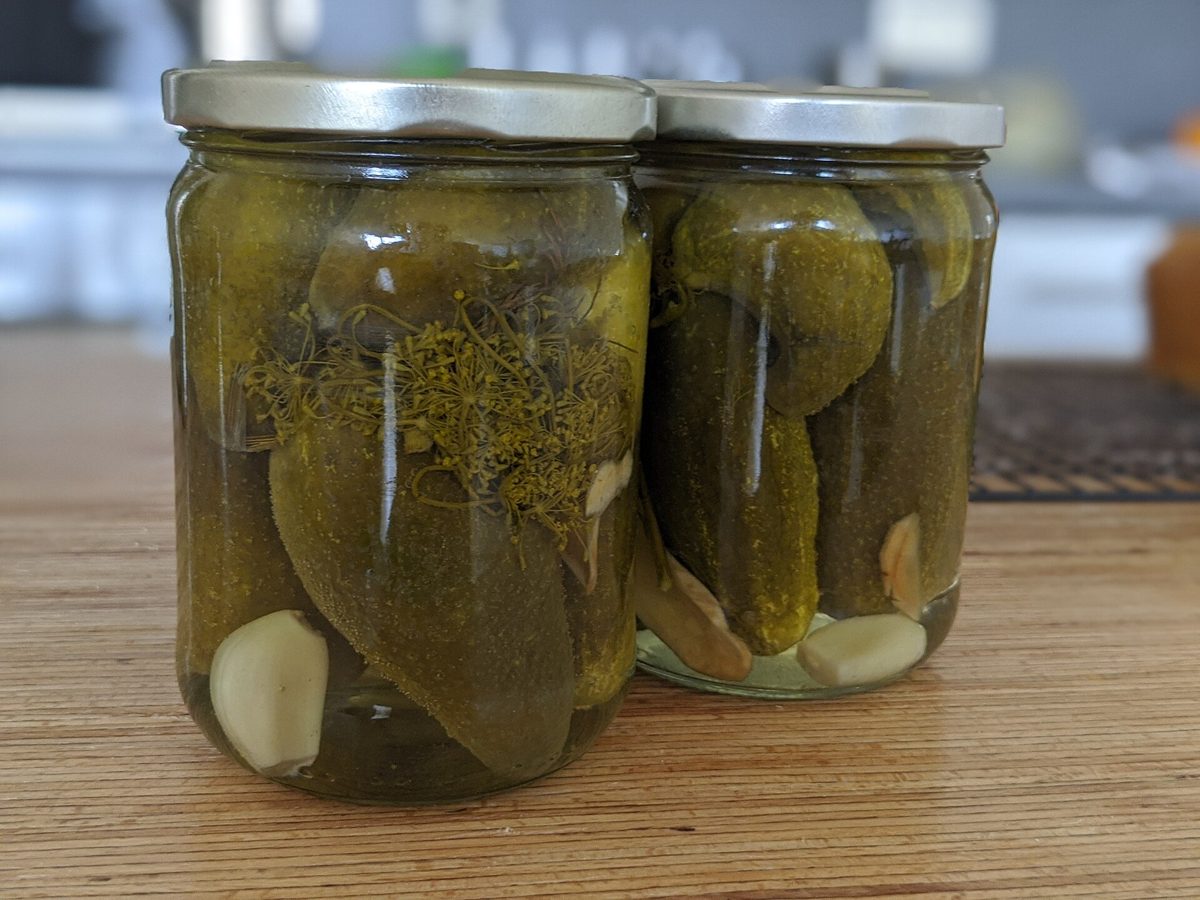
Transfer the jars to a cool cellar or pantry, preferably at a temperature of 8–10°C (46–50°F). According to AniaGotuje.pl, the cucumbers are ready after about 2 weeks, at the latest after 20 days; NCHFP at 21–24°C (70–75°F) states 3–4 weeks, and in a cooler place, fermentation takes longer.
-
Check the jars every few days. If the brine has fallen and the cucumbers are sticking out, add more brine in the same proportion (30 g of salt per liter of water), keep the jar in the refrigerator, and eat it sooner. Discard cucumbers that are soft, slimy, or have an unpleasant smell.
Photos
Comments (0)
No comments yet. Be the first!