
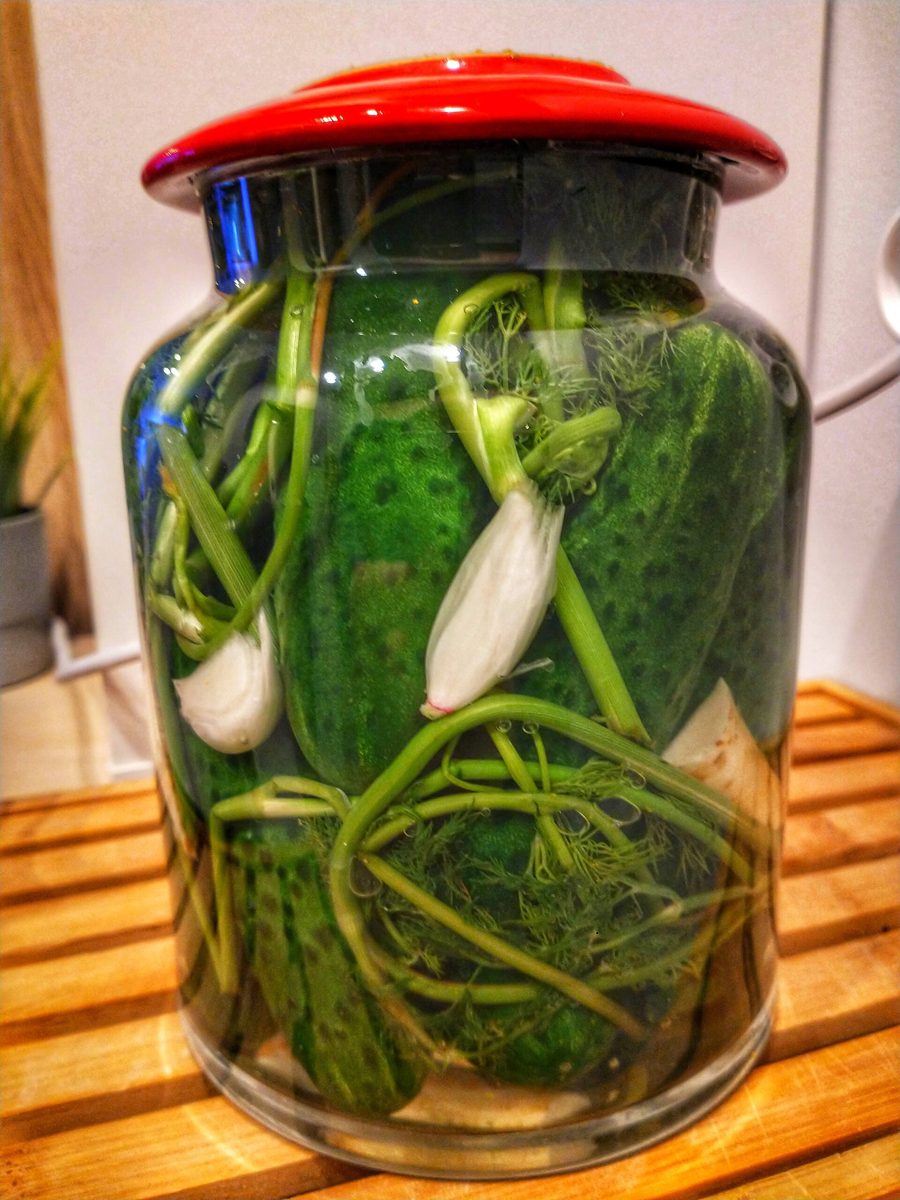
The story behind the recipe
Ogórki małosolne are cucumbers that are fermented for only a few days. Available sources describe them alongside pickled cucumbers: it’s the same process, which is natural lactic fermentation in salted water with dill, horseradish, and garlic, but much shorter. The name suggests that there is little salt: according to Murator, 1–1.5 tablespoons are used per liter of water, while for pickled cucumbers, it’s 2 tablespoons. No vinegar is added to the brine, which the author of the blog Polish Your Kitchen considers a distinguishing feature of Polish cucumbers.
This is a delicacy of a short season. Polski Daily states that ogórki małosolne are made only when the cucumbers are young, and the season is very brief. In Karol Okrasa's recipe for Lidl's Kuchnia, it is mentioned: "A short season for a great product." The author of the blog Coffee and Vanilla associates them with childhood and summer when the cucumbers are small and the dill is blooming.
It is unclear when exactly the term "małosolne" began to be used in Poland: we did not find a recipe under this name in old cookbooks. However, it is known that cucumbers left in the brine longer turn into regular pickled cucumbers after a week or two, as noted by the Polish Foodies service.
Ingredients
For 1 jar of 3 l or 2 jars of 1.5 l each
-
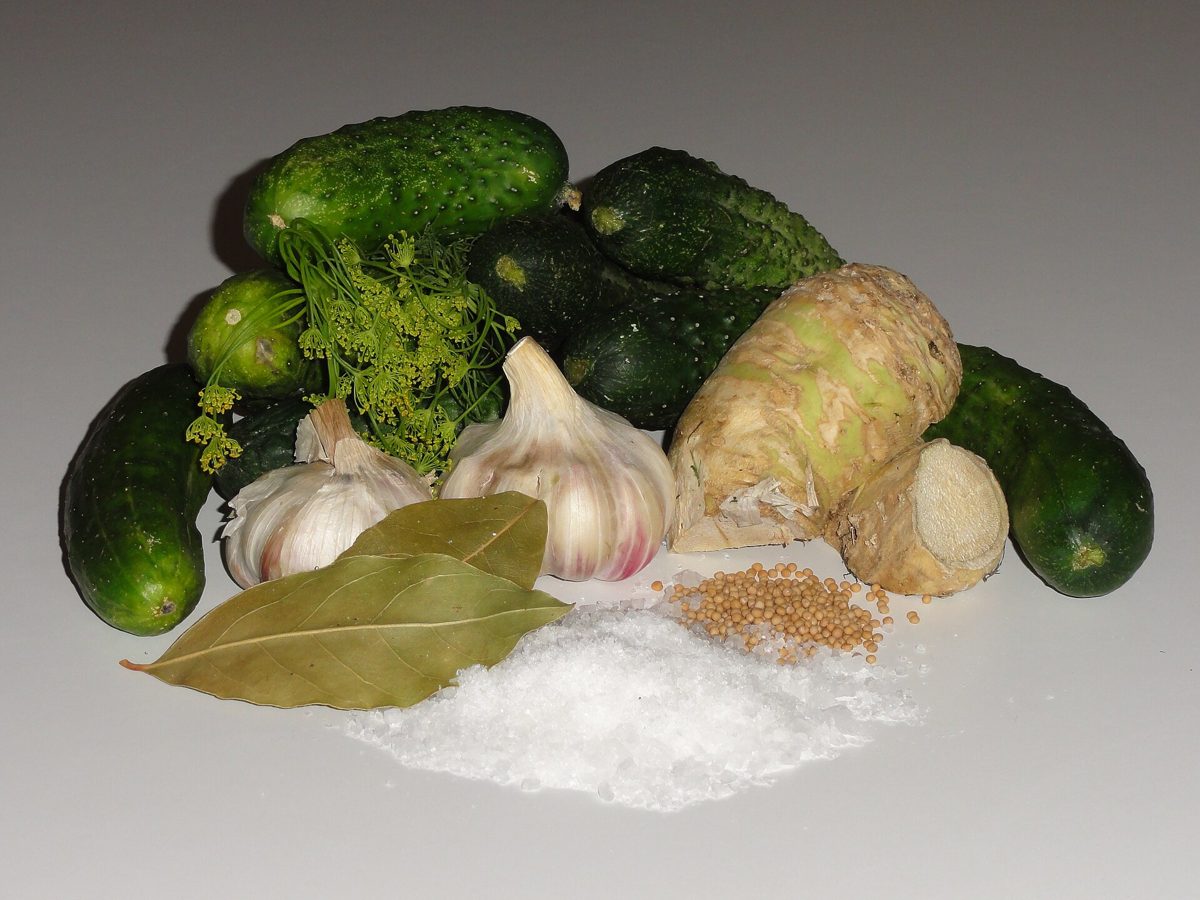
1 kg small cucumbers (firm, fresh, of similar size)
Abroad: USA: Kirby cucumbers or pickling cucumbers; Germany: Einlegegurken - 1.5 l water (spring, filtered, or boiled, not chlorinated tap water)
-
1½ tbsp (about 27 g) non-iodized coarse salt (1 tablespoon per liter of water)
Abroad: USA: pickling salt or canning and pickling salt; Germany: nicht jodiertes Salz, without anti-caking agents - 5 pcs dill sprigs with umbels (with stems)
- 6 cloves garlic (peeled, cut in half)
-
1 pc piece of horseradish root (about 15 cm (6 inches) long, peeled and cut)
Abroad: USA and UK: horseradish root; Germany: Meerrettich - leaves of black currant, cherry, oak, or grapevine (a handful, not necessarily)
-
1 tsp (5 ml) mustard seeds (not necessary)
Abroad: USA and UK: yellow mustard seeds; Germany: Senfkörner
Method, step by step
-
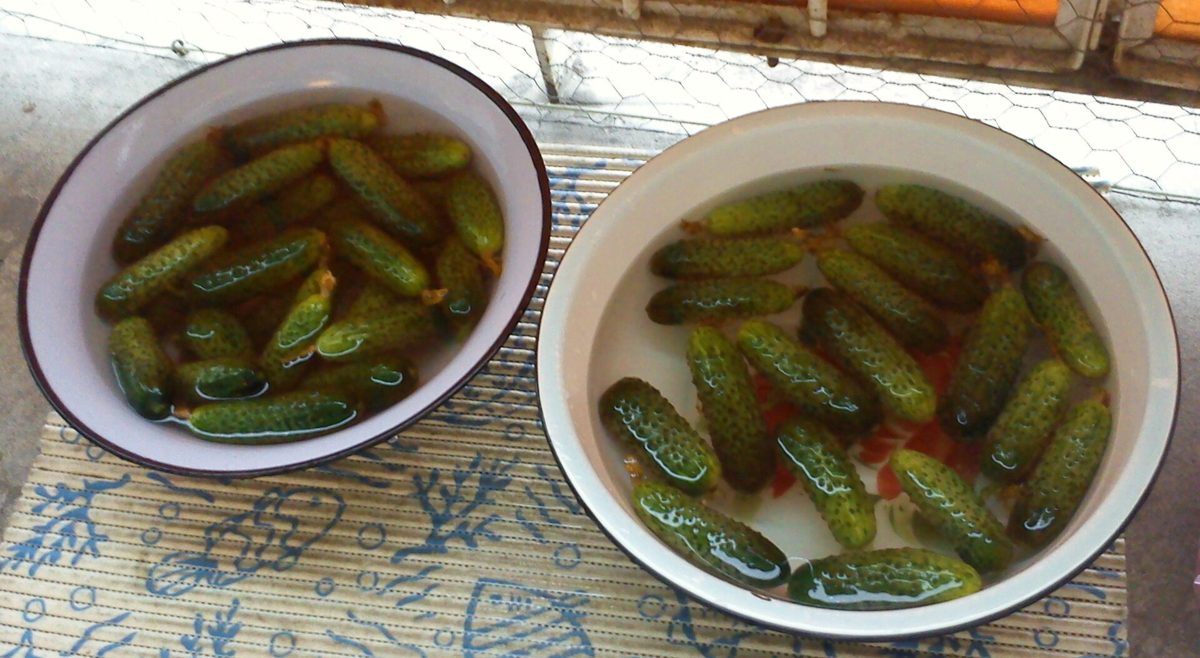
Wash the cucumbers and soak them in a bowl of cold water for about 3 hours to make them firm. Then rinse them thoroughly and cut off the ends.
-
Prepare the additions: peel and cut the garlic in half, peel and slice the horseradish, rinse the dill. Thoroughly wash and sterilize a 3 l jar or two 1.5 l jars.
-
Boil 1.5 l of water with 1.5 tablespoons of salt, stirring until the salt dissolves, and cool to about 20°C (68°F). If you prefer a quicker version, pour boiling water over the cucumbers, as Smaker suggests.
-
Place some dill, horseradish, and leaves at the bottom of the jar. Arrange the cucumbers tightly upright, filling the gaps with garlic, horseradish, and the remaining dill. Add mustard seeds if using.
-
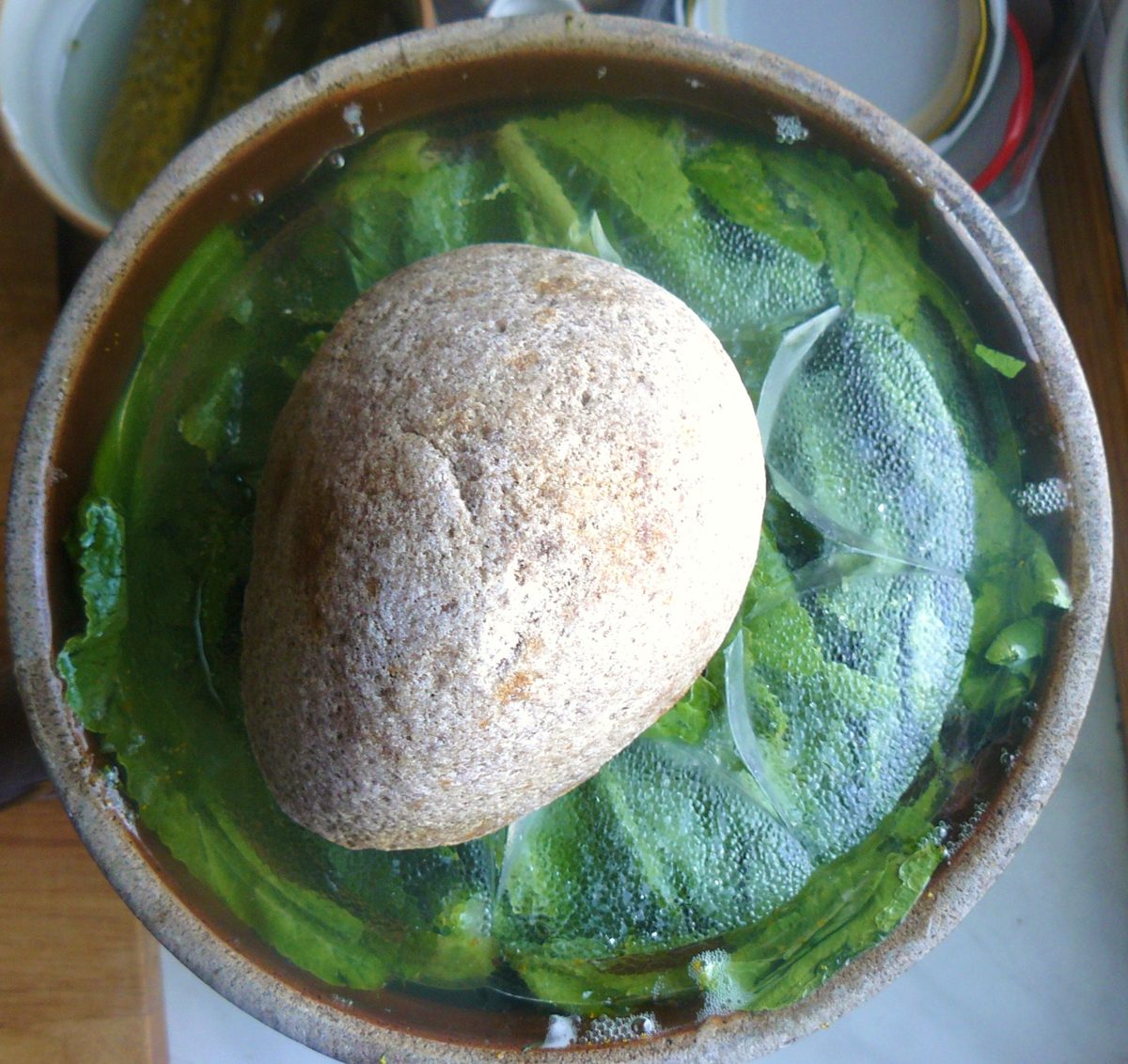
Pour the brine over the cucumbers so that they are completely covered. If you run out of brine, make more in the same proportion: 1 tablespoon of salt per liter of water. In a wide pot or crock, press the cucumbers down with a plate and a stone or a jar filled with water.
-
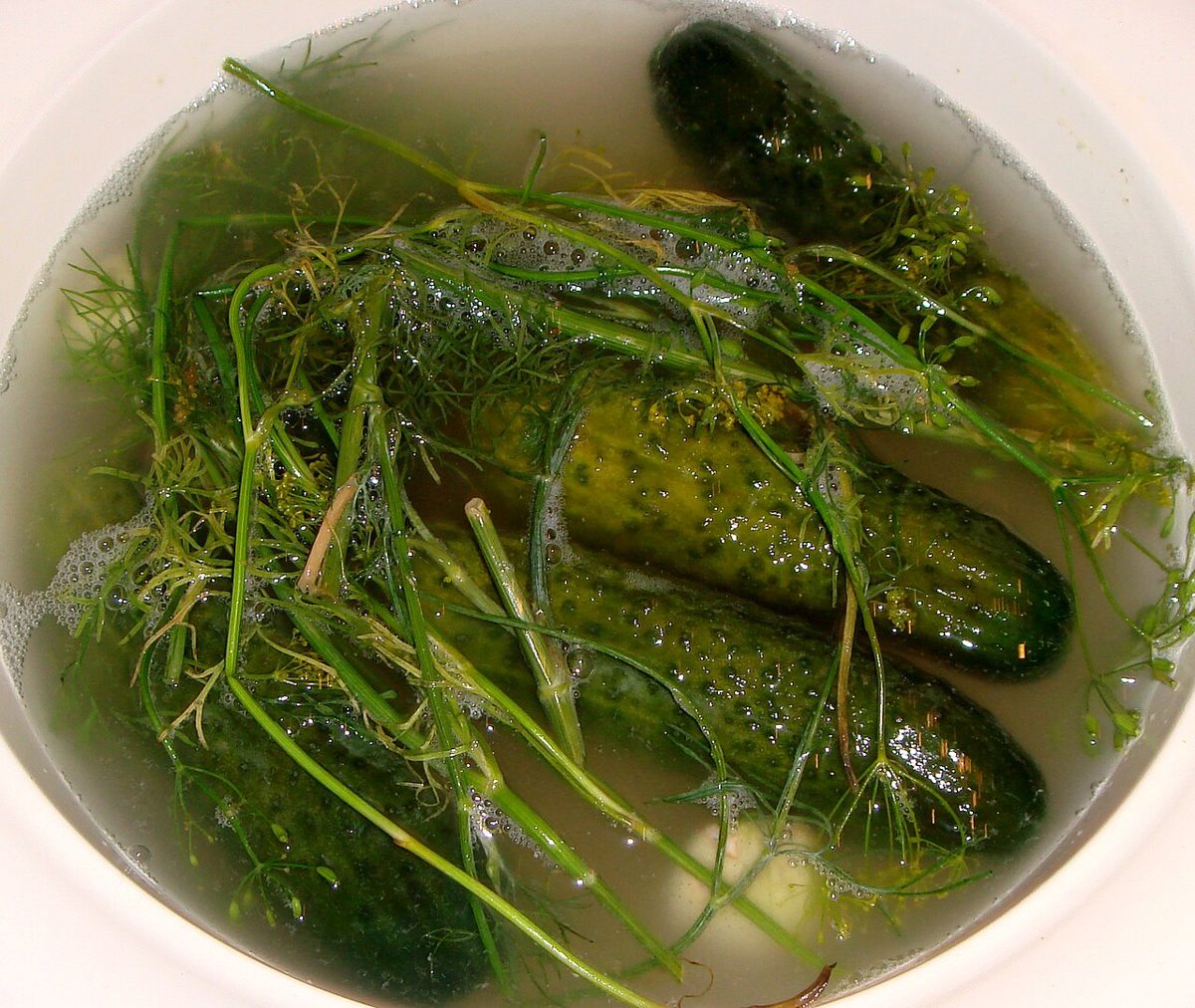
Cover the jar with cheesecloth and secure it with a rubber band or cover it with a lid that allows air to pass through. Place it in a shaded area at room temperature. The warmer it is, the faster the cucumbers will ferment.
-
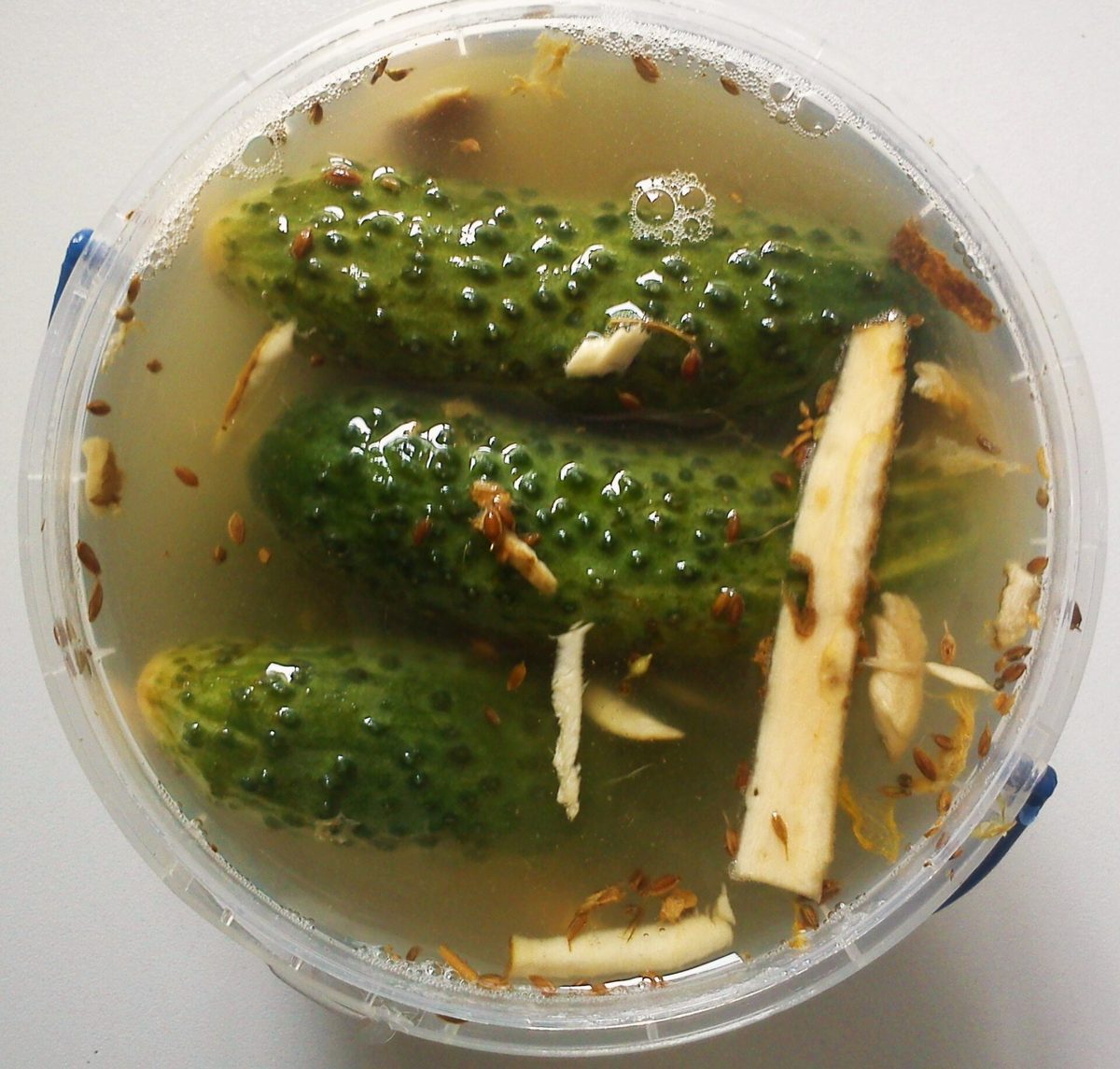
After a day, start tasting. The cucumbers are usually ready after 2–3 days when the brine becomes cloudy and slightly foamy. Check the taste daily and stop fermentation when the cucumbers are slightly sour.
-
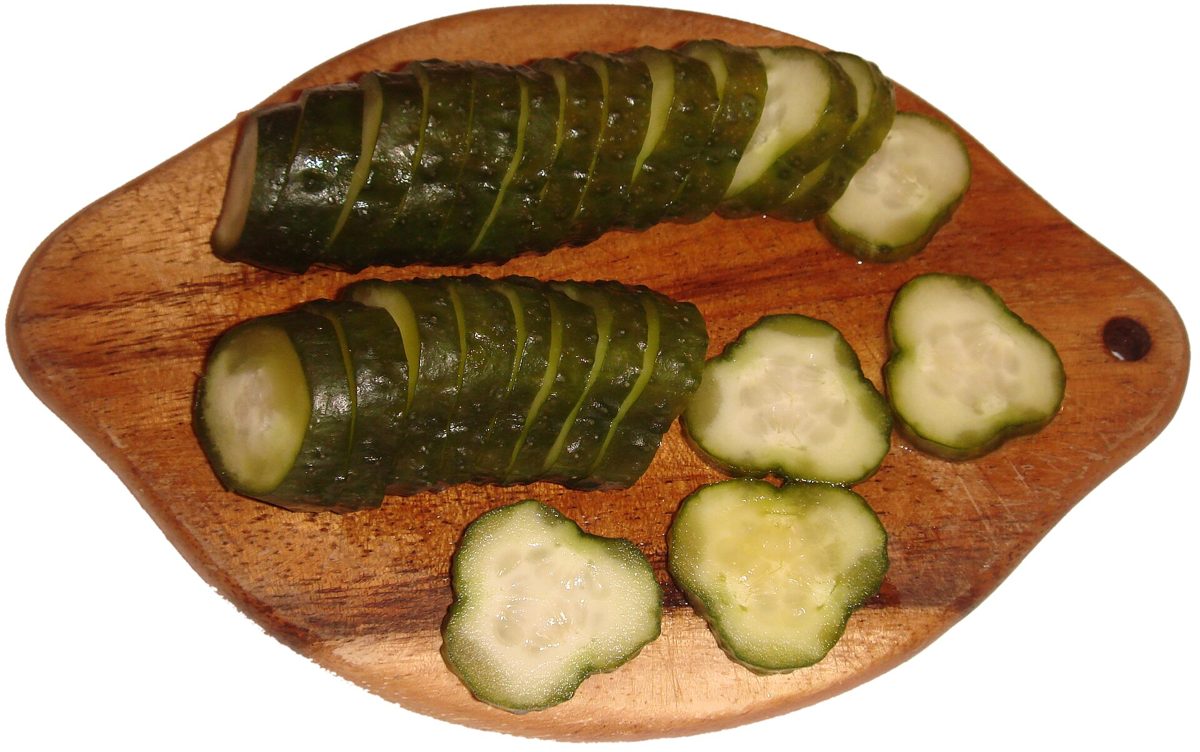
Transfer the finished cucumbers to the fridge (4–6°C, or 39–43°F) and consume within a few days. In warmth, they will continue to ferment and become sour like pickled cucumbers.
Photos
Comments (0)
No comments yet. Be the first!