
On September 19, 1940, in Warsaw, the Germans organized a round-up in Żoliborz. Most people tried to hide. One man deliberately allowed himself to be detained. He had documents under the name Tomasz Serafiński and one goal: to get to the German concentration camp Auschwitz, build a conspiracy there, and inform the world about what was happening inside. His name was Witold Pilecki.
He spent in the camp, as he wrote himself, "nine hundred forty-seven days and nights," and then escaped through the camp bakery. He survived the Warsaw Uprising and German captivity. He died in 1948 in Warsaw, shot under a communist court's sentence. His grave has not been found to this day. This guide tells his story based on sources from the Auschwitz Museum, IPN, and the Pilecki Institute, with lesser-known details and an honest separation of facts from legends.
Note on sources: many stories about Pilecki circulate in embellished versions. When something comes only from family memories or sources differ, we state it directly. Some anecdotes are known only to his son Andrzej and are marked as his account.
Jump to:
- Youth: from Karelia to Vilnius
- Landowner, painter, and community activist
- September 1939 and the Secret Polish Army
- The round-up he voluntarily went to
- Number 4859 and the conspiracy in the camp
- Reports to London
- Escape through the bakery
- The real Tomasz Serafiński
- Reports on gas chambers
- Uprising, captivity, and Italy
- Arrest, trial, and execution
- Family and search for the grave
- Rehabilitation and memory
- Myths and exaggerations
- What we do not know for sure
The boy from Karelia who founded scouting in Russia
Witold Pilecki was born on May 13, 1901, in Ołońce in Karelia, in northern Russia. His father, Julian, was a forester, a graduate of the forestry institute in St. Petersburg. The family came from Nowogródczyzna and lost most of their estate after the January Uprising. IPN, biography of Pilecki, years 1901–1921.
In 1910, his mother moved with the children to Vilnius, where Witold attended a commercial school and joined a secret scouting group. His father, who stayed in Karelia, sent each child a postcard with a rhyme written especially for them every week. World War I found the family on vacation, and Witold ended up in Orzeł in Russia. There he founded his first scouting troop. The Museum of the Pilecki Family Home in Ostrów Mazowiecka.
As a teenager, he fought in the self-defense of Vilnius and in a cavalry unit, and in August 1920, he defended the outskirts of Warsaw in the war against the Bolsheviks. He graduated from high school only in May 1921. IPN. The museum in Ostrów Mazowiecka preserves over a hundred of his letters to his first love, Kazimiera Dacz, found years later in an attic. The Museum of the Pilecki Family Home.
Landowner, painter, and "devil" from Sukurcze
After the war, Pilecki studied as a free listener at the Faculty of Fine Arts of Stefan Batory University in Vilnius but interrupted his studies due to lack of funds. In 1926, he took over the family estate in Sukurcze in the Lidzkie district, now in Belarus. He founded an agricultural circle and a dairy. He wrote poems and painted, and two of his paintings ended up in the parish church in Krupa. IPN, biography, years 1921–1939.
His son Andrzej recalled in a recording for IPN that locals called his father "the devil" because he had boundless energy. He established the dairy so that farmers would not have to sell milk to intermediaries for pennies. When a part broke in a borrowed machine, he opened an old forge and forged it himself. Andrzej Pilecki's account, IPN oral history archive.
In 1929, he met Maria Ostrowska, a teacher from Ostrów Mazowiecka, while helping to paint decorations for a school play. He courted her for two years. They married on April 7, 1931. In 1932, their son Andrzej was born, and in 1933, their daughter Zofia. The Museum of the Pilecki Family Home. The Sukurcze estate did not survive the war and was razed to the ground. The Pilecki Institute in Berlin.
September 1939 and the Secret Polish Army
In September 1939, Pilecki fought in the 19th Infantry Division near Piotrków Trybunalski, and after its defeat, in the 41st Reserve Division. When the division was dissolved on September 22, he did not go into captivity or flee abroad. IPN, biography, September 1939. His horse was killed near Piotrków. The Museum of the Pilecki Family Home.
Andrzej Pilecki shared two stories from those weeks that he heard from others. In Warsaw, his father was approached in German by a man in a bowler hat, and his father struck him with the flat of his saber. Later, while riding in uniform to Ostrów, he galloped across a bridge over the Brok River next to a guardhouse where Germans were playing cards and "only saw the horse's rear end." Andrzej Pilecki's account for IPN. These are family memories that cannot be confirmed in documents.
On November 9, 1939, Pilecki co-founded the underground Secret Polish Army in Warsaw and became its chief of staff. Auschwitz Museum, the story of Witold Pilecki. According to his son, he later repeated: "No one has ever released me from my oath." His wife and children hid in areas occupied by the Soviets to avoid deportation to the east, and in April 1940, she managed to reach her parents in Ostrów Mazowiecka. IPN.
The round-up in Żoliborz, which he went to voluntarily
The conspirators knew little about the camp in Auschwitz, to which the Germans began sending Polish prisoners from June 1940. Pilecki volunteered to change that. The mission had four goals: to build a conspiracy in the camp, to pass information outside, to rescue prisoners, and to prepare for a possible uprising in the camp. Auschwitz Museum.
He found the documents under the name Tomasz Serafiński in the Warsaw apartment of Dr. Helena Pawłowska, where the real Serafiński was staying after the capital's capitulation. Auschwitz Museum about the drawing of Pilecki and Serafiński. On September 19, 1940, at his sister-in-law's apartment in Żoliborz, he allowed himself to be detained in a round-up. With the second transport from Warsaw, which included 1,705 prisoners, including Władysław Bartoszewski, he arrived at Auschwitz. He received number 4859. Auschwitz Museum.
British historian M. R. D. Foot, a specialist in the resistance movement, wrote in 1975: "Think for a moment about what Witold Pilecki did: he allowed himself to be arrested by the Germans in the conscious hope that he would be sent to Auschwitz, achieved that goal, and then achieved two more, even more difficult ones." Foreword by M. R. D. Foot to Józef Garliński's book. Foot placed Pilecki among six heroes in his book "Six Faces of Courage" about the bravest people in the resistance movement. Publisher about the book "Six Faces of Courage".
Number 4859 and the conspiracy behind the wires
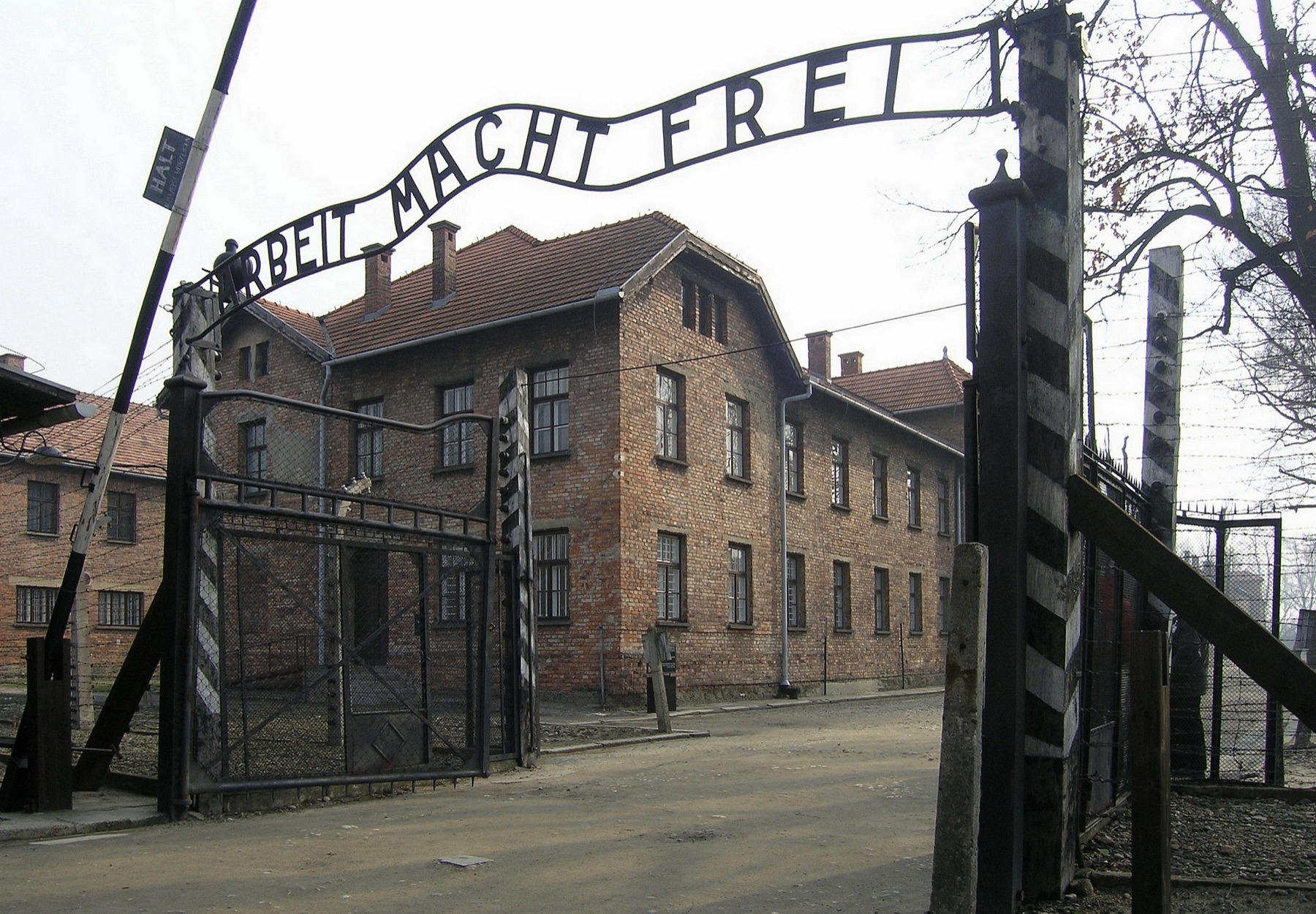
In the camp, Pilecki posed as a tanner. At first, he refused to beat fellow prisoners on the block leader's orders and was punished by being sent to the hardest work details. Nevertheless, he began to build a network: first secret "fives," where members did not know people from other groups, then platoons and battalions. Auschwitz Museum. By the spring of 1943, the Union of Military Organizations had about 800 sworn members. Anna Zechenter, Przystanek Historia (IPN).
How the camp conspiracy operated
- Hospital as a refuge: Doctor Władysław Dering admitted members of the organization to the hospital, protected them from selections, and hid the cards of people destined for death. About 200 people reported to the hospital daily, but there were only about ten places.
- Duplicate keys: conspirators made duplicate keys to the reporting box in block 15 and destroyed reports before the SS men could read them.
- Work assignments: Lt. Mieczysław Januszewski influenced who would go to lighter work details in the camp's labor office.
All three examples are described in educational material from the Auschwitz Museum. On November 11, 1941, Pilecki, still a prisoner, was promoted to lieutenant for his activities in the camp. However, the command of the Home Army did not approve the plan for an armed attack on the camp. Auschwitz Museum on the 67th anniversary of Pilecki's death.
The first report reached London in March 1941
As early as October 1940, a few weeks after his arrival, Pilecki sent out his first report. It was smuggled out by a prisoner released from the camp. The message reached the commander of the Union of Armed Struggle, Gen. Stefan Rowecki, and via Stockholm arrived in London by March 18, 1941. Auschwitz Museum, IPN, "Pilecki escapes from hell".
It is important to note what these first reports concerned. In 1940–1941, Auschwitz mainly imprisoned Poles, and the mass extermination of Jews in gas chambers began later. Pilecki's early messages described the conditions in the camp and the fate of Polish prisoners. We will discuss what his later reports said below.
Escape through the bakery on Easter Monday
In the spring of 1943, Pilecki faced the threat of exposure. He decided to escape with Jan Redzej and Edward Ciesielski. They chose the Easter period when some SS men were on leave. They arranged for a night shift in the camp bakery outside the main fence. On the night of April 26 to 27, 1943, from Easter Monday to Tuesday, they got outside. IPN, "Pilecki escapes from hell".
Sources describe the moment of escape differently. IPN mentions breaking down wooden doors. The Museum of the Pilecki Family Home states that the escapees cut the alarm wire and opened the outer doors with a prepared wrench. The Museum of the Pilecki Family Home. It is possible that both versions refer to different doors.
The escapees walked along the railway embankment, then along the Soła and Vistula rivers, through the area of Wieliczka towards Bochnia, where they made contact with the Home Army. IPN. According to his son, they covered about 120 km on foot. Pilecki summarized it in one sentence: "I left at night just as I arrived, so I was in that hell for nine hundred forty-seven days and nights." The number is correct: from September 22, 1940, to April 27, 1943, it is exactly 947 days. He also wrote about his stay with bitter irony that he "paid a very small price for such a long stay in this sanatorium." The Museum of the Pilecki Family Home.
The real Tomasz Serafiński paid for someone else's escape
After his escape, Pilecki went to Nowy Wiśnicz and stayed with a man whose name he used in the camp. The real Tomasz Serafiński was a reserve officer and deputy commander of the AK facility in Nowy Wiśnicz. He lived in the house "Koryznówka," where Jan Matejko liked to spend his holidays. Pilecki stayed there for over three months and wrote the first version of his report. Auschwitz Museum.
However, the false identity came at a price. On December 25, 1943, the Germans arrested the real Serafiński as a fugitive from Auschwitz. He was tortured in Bochnia and in the Kraków prison Montelupich. He owed his release to his wife Ludmila, who explained the mistake to the Kraków Gestapo. He was released after three weeks but never fully regained his health. There.
In the summer of 1943, Jan Stasiniewicz drew a double portrait of both men in Koryznówka. On the back, Pilecki signed as "Witold Tomasz Serafiński" and noted the dates of arrest and escape. In 2019, Serafiński's daughter donated the drawing to the Auschwitz Museum. Museum director Piotr Cywiński stated that it is one of the very few items associated with Pilecki. Auschwitz Museum, announcement from 2019.
Reports that described the gas chambers
After his escape, Pilecki wrote three main reports. The first was created in June 1943 in Nowy Wiśnicz, the second, known as "Report W," in August 1943 in Warsaw, and the third, the most extensive, in 1945 in Italy. All three describe the gassing of people. In the report from Wiśnicz, Pilecki wrote that Jews were "gassed without records by the thousands," and Soviet prisoners were gassed in block 11. Demagog, analysis of Pilecki's reports. The claim that Pilecki did not know about the gas chambers is therefore false.
The 1945 report is over 100 pages long. It was handed over to Gen. Tadeusz Pełczyński, and confirmation of its authenticity is kept by the Study of the Polish Underground in London. A copy reached the Auschwitz Museum in 1979, and the full text was published for the first time only in 2000. Przystanek Historia (IPN). The report was also published in English as "The Auschwitz Volunteer: Beyond Bravery," which allows this story to be shown to children raised abroad.
Andrzej Pilecki recounted that his father wrote the 1945 report at night in the Italian San Giorgio, and in the morning read it to his friend, Jan Mierzanowski, on a pedal boat, who suggested corrections. Andrzej Pilecki's account for IPN.
From the Warsaw Uprising to Murnau and Italy
After his escape, Pilecki served in the Kedyw of the Home Army Command. The Pilecki Institute, "Our Patron". On August 1, 1944, he went to the Warsaw Uprising as a private, despite a ban on participating in combat. He commanded the defense of the redoubt at Starynkiewicz Square, known as "Witold's Redoubt." Jan Redzej, his companion in the escape from Auschwitz, was killed on August 5, 1944. Auschwitz Museum.
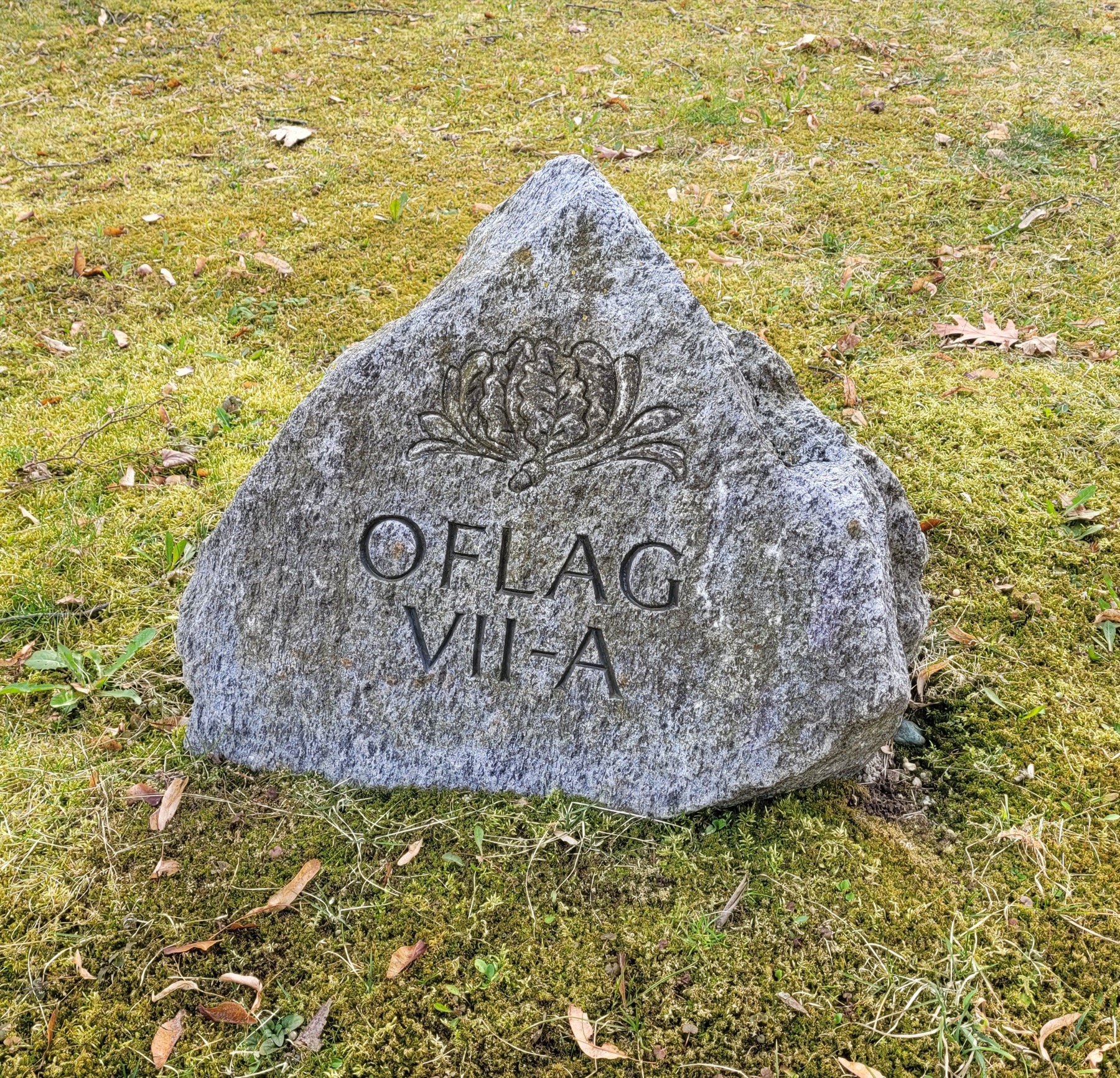
After the fall of the Uprising, Pilecki ended up in German captivity: first in Lamsdorf, then in the Oflag in Bavaria, Murnau. Auschwitz Museum. On April 29, 1945, the Oflag was liberated by the Americans. In July 1945, Pilecki reached the 2nd Polish Corps in Italy and met Gen. Władysław Anders. The Museum of the Pilecki Family Home.
One of the strangest anecdotes comes from Italy. According to Mierzanowski's account, relayed by Andrzej, an eagle in a cage pierced Pilecki's hand with its claw. Pilecki simply said, "Calm down," waited for the bird to let go, and wrapped his hand with a handkerchief. Andrzej Pilecki's account. This is a third-hand account, so treat it as a family story.
Return to the country, investigation, and sentence
At the end of 1945, Pilecki returned to Poland as "Roman Jezierski" and built an intelligence network for the 2nd Corps. Auschwitz Museum. On May 8, 1947, he was arrested by the communist Ministry of Public Security. The interrogators were exceptionally brutal, and the torture is confirmed by the accounts of fellow prisoners and two priests. IPN, biography, years 1947–1948.
In this part of the story, there is a detail that particularly moves. Józef Cyrankiewicz, a former Auschwitz prisoner and then prime minister, did not intercede for his fellow prisoner. According to IPN, he wrote to the chairman of the judicial panel to omit Pilecki's camp activities and treat him as an "enemy of the people." There.
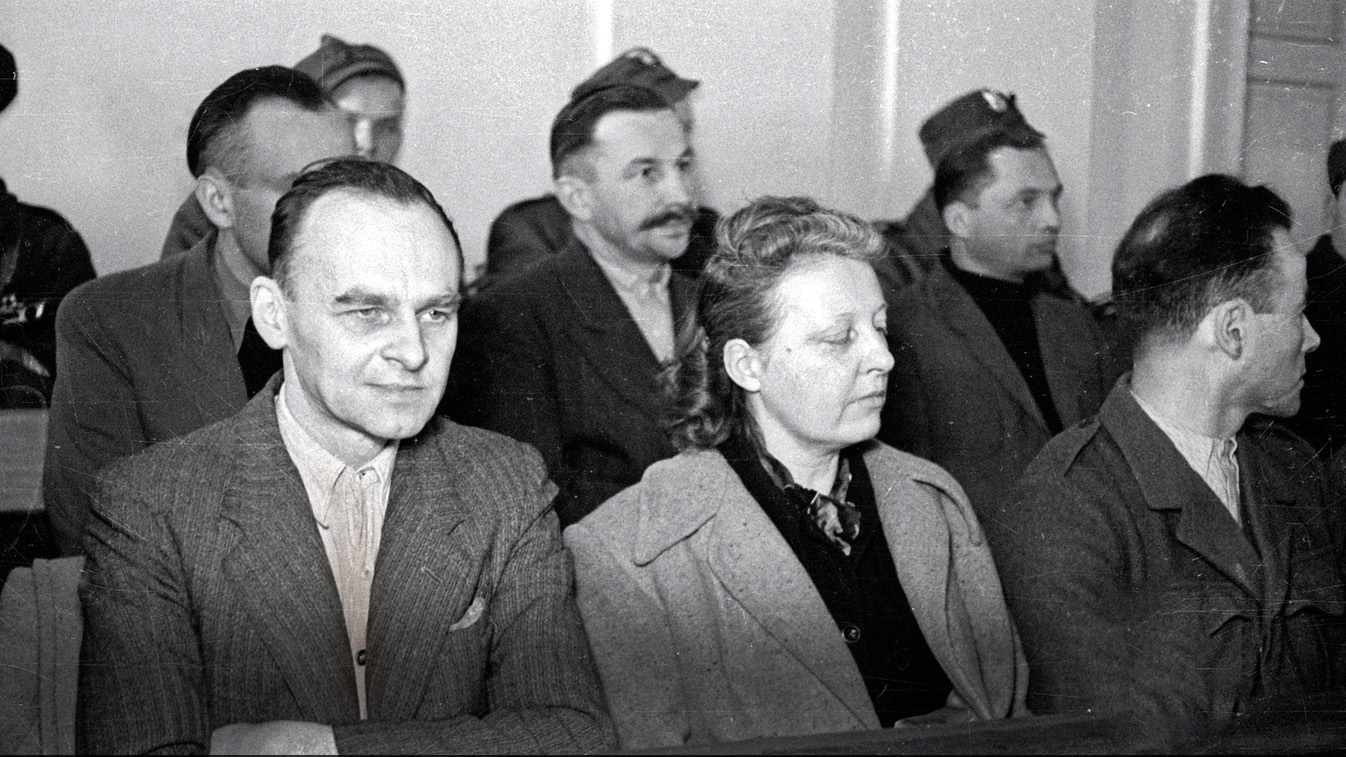
The trial of "Witold's group" began on March 3, 1948, before the Military District Court in Warsaw. On March 15, three death sentences were issued: for Pilecki, Maria Szelągowska, and Tadeusz Płużański. The latter two had their sentences commuted to life imprisonment. A plea for clemency was made by a lawyer, his wife, and friends from Auschwitz, but Bolesław Bierut did not grant the right of pardon. IPN, announcement on the 74th anniversary of the sentence.
On the evening of May 25, 1948, Pilecki was shot in prison on Rakowiecka Street in Warsaw. He was 47 years old. Auschwitz Museum. During the last visit, he reportedly whispered to his wife: "Auschwitz was a trifle compared to this." This wording is provided by IPN. Przystanek Historia (IPN). In other publications, the sentence appears without the words "compared to this." Dzieje.pl (PAP). We have not found a written account from Maria Pilecka herself, so the exact wording remains uncertain.
The family waited for him for decades
His relatives did not know for a long time what had happened. Andrzej Pilecki recalled that at home they said: "Maybe they have him in Łubianka, or maybe they are torturing him, but he is alive." Later, he posted hand-prepared information about his father on church boards, including near St. Stanislaus Kostka Church in Żoliborz. He brought a more than 20-kilogram paving stone with an inscription to the Warsaw "Łączka," but it disappeared after two days. Andrzej Pilecki's account for IPN.
The family only learned for sure about his death during the rehabilitation trial in 1990. The Museum of the Pilecki Family Home. Pilecki's children also paid for their father's surname: Andrzej and Zofia could not study and had difficulties finding work. The Pilecki Institute in Berlin.
The grave has still not been found
Pilecki was most likely secretly buried in "Łączka," which is a section of the Military Cemetery at Powązki, where the communists hid the bodies of the executed. IPN. IPN has been conducting exhumations there since 2012. In 2017, the last stage of work was completed, and the remains of about 100 people were found, but Pilecki was not among those identified. Some remains were destroyed in 1980 during the construction of new graves. IPN then began searching in the area of the former prison on Rakowiecka. Dzieje.pl (PAP) on the last stage of work at "Łączka". In a 2022 announcement, IPN stated that Pilecki's body had not been found, and the perpetrators had not been judged. IPN, announcement from 2022.
Rehabilitation, award, and the Institute named after him
- 1990: The Supreme Court overturned the sentence and acquitted the convicted. IPN gives the date of the ruling as October 1, 1990. IPN.
- 2006: President Lech Kaczyński posthumously awarded Pilecki the Order of the White Eagle, the highest Polish decoration.
- 2013: Pilecki was posthumously promoted to colonel. Auschwitz Museum.
- The Pilecki Institute: The Witold Pilecki Institute of Solidarity and Valor received his name with the consent of his children, Zofia Pilecka-Optułowicz and Andrzej Pilecki. It also has a branch in Berlin. The Pilecki Institute.
- 2023: On the 75th anniversary of his death, President Andrzej Duda paid tribute at the execution wall on Rakowiecka together with Pilecki's daughter. IPN, 75th anniversary of death.
- London: Pilecki is also remembered abroad. The Polish Embassy in London organizes commemorations, and British author Jack Fairweather wrote a book about him, "The Volunteer." Polish Embassy in London.
If you are in Poland, you can visit the Museum of the Pilecki Family Home in Ostrów Mazowiecka. The Museum of the Pilecki Family Home.
Myths and exaggerations surrounding Pilecki
| Claim | Verdict | What sources say |
|---|---|---|
| The only person who voluntarily went to Auschwitz | Almost | The Pilecki Institute cautiously states he is the only known person who allowed himself to be captured and taken to the camp voluntarily. The Pilecki Institute in Berlin. Correctly: "the only known one." |
| Pilecki was the first to inform the world about the Holocaust | Exaggeration | His first reports from 1940–1941 concerned the camp, which at that time mainly imprisoned Poles. Fairweather speaks of the first warning about the crimes in the Auschwitz camp. Polish Embassy in London. News about the extermination reached the West through other channels as well. |
| Pilecki did not know about the gas chambers | False | All three reports from 1943–1945 describe gassing, including of Jews. Demagog. |
| The Allies considered his reports exaggerated | Unconfirmed | It is certain that the AK command did not approve an attack on the camp. We have not found a British document that assessed the reports as exaggerated. |
| Foot called him "one of the six bravest men in the world" | Simplification | This formulation appears in Polish sources. It is certain that Foot made Pilecki one of six heroes in his book "Six Faces of Courage" and described his feat in the foreword from 1975. |
| The Secret Polish Army was the first conspiracy organization | Unconfirmed | Even Pilecki's son cautioned: "I don't know if it was exactly the first." Andrzej Pilecki's account. |
What we do not know for sure
- The exact wording of the words about "trifle." IPN and PAP provide slightly different versions, and we have not found the original account from Maria Pilecka.
- How the bakery doors were opened. Sources describe breaking down the doors or opening them with a key after cutting the alarm wire.
- When and whether all reports from 1943 reached London. Fairweather claims that all of Pilecki's reports reached there, but we have not seen documents confirming this.
- Where Pilecki's remains are. The latest IPN announcement we have found dates from 2022 and states that they have not been found.
- Anecdotes from family memories: the saber in Warsaw, galloping across the bridge over the Brok, and the eagle in Italy. These are accounts passed down by his son, partly from second and third-hand sources.
Comments (0)
No comments yet. Be the first!