
In 1980, an advertisement appeared in the Warsaw press: a state entertainment company was looking for young women for a "female ballet troupe," requiring a height of 168 to 172 cm. Crowds applied. The selected, almost exclusively blondes, left for contracts in Italy. Upon arrival, it turned out that the "revue" referred to nightclubs near Milan and Florence, and "dance" meant sitting with clients in booths, some of which were ordinary brothels.
In the spring of 1981, during the "Solidarity" carnival, the weekly "Antena" revealed the case. The press dubbed it "Dziwex." It was the largest known case of human trafficking in post-war Poland at that time. This guide describes how this mechanism operated, what the women who spoke out experienced, why no one was imprisoned for it, and how to recognize the same pattern today.
Full documentation of the case: a detailed timeline, description of the mechanism, testimonies, numbers, trial, and source materials have been collected at dziwex.com. We recommend it to anyone who wants to learn more about the case.
About this text: this is the story of real women. We do not provide the names of the women, as they appear in publications only by first names or initials. We base our work on the report by Helena Kowalik, the article by Marcin Dzierżanowski, research by historian Anna Dobrowolska, and documentation from dziwex.com. An honest description must accommodate three facts simultaneously: some women experienced violence and coercion, some said they knew what they were getting into and do not regret it, and the court in 1984 did not recognize that human trafficking had occurred.
Go to:
- The origin of the name "Dziwex"
- PRL and the hunger for dollars
- How the mechanism worked
- What happened in the clubs
- Women's testimonies
- Who profited from this
- How many women were involved
- How the case came to light
- The trial and verdict
- What happened next
- The same pattern today
- Where to seek help
- What we do not know
A word that spoke for itself
"Dziwex" was not the name of any company. The word first appeared in 1981 in the weekly "Antena." Helena Kowalik, "Blondynki do konsumpcji", Wprost, 2014. It was created by combining the vulgar word "dziwka" with the suffix "-ex," which was used in the names of state foreign trade enterprises in the PRL, such as Pewex. Historian Anna Dobrowolska points out that such a combination may indicate a negative attitude towards women. Marcin Dzierżanowski, "Afera 'Dziwexu', czyli Polki na eksport", My Company Polska, 2023. In this guide, we use this name solely as a historical reference to the case, not as a designation for the women harmed by it.
PRL, the hunger for dollars, and the dream of leaving
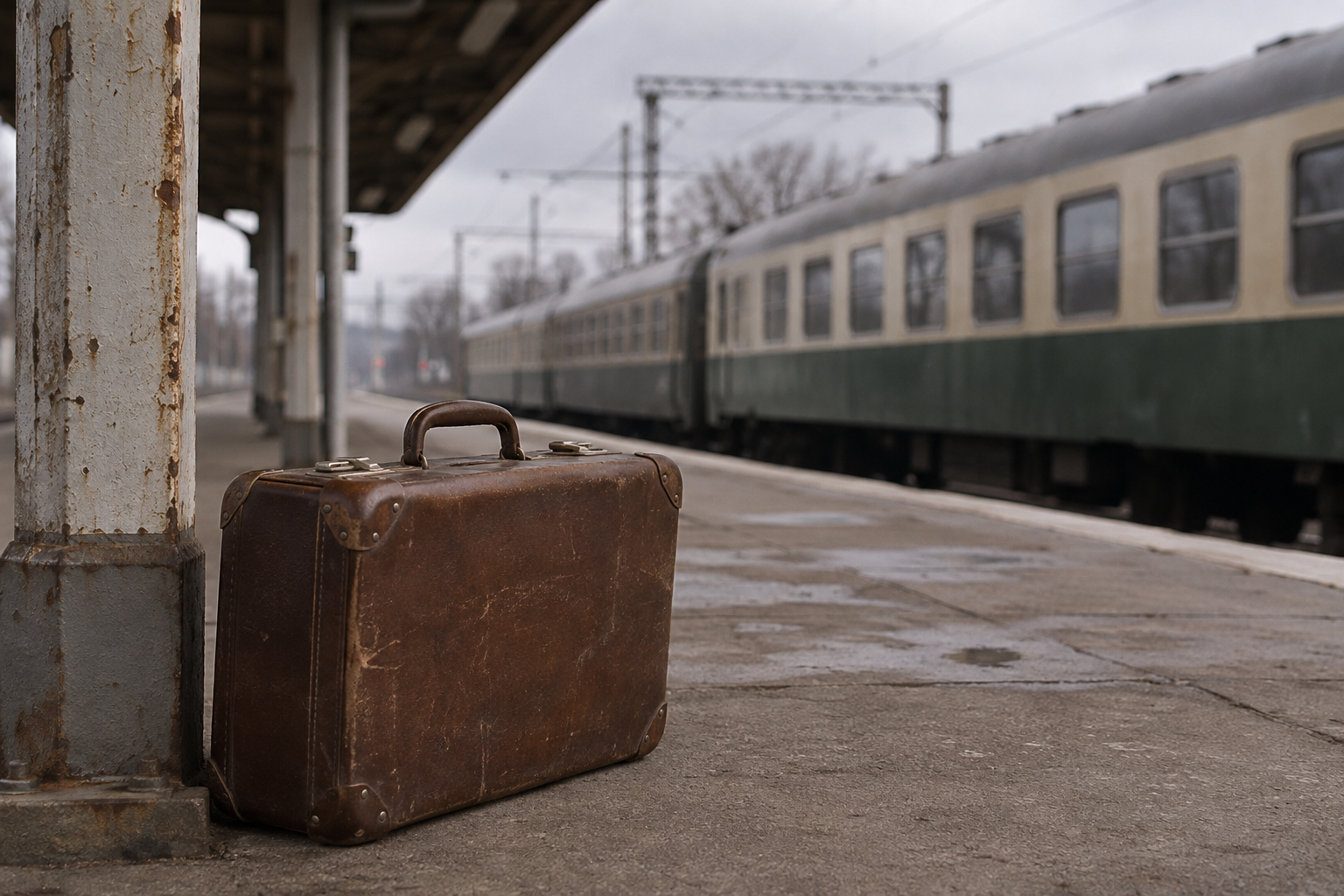
By the late 1970s, the PRL desperately needed hard currency. State artistic agencies sent musicians, performers, and dance groups abroad, with part of their earnings going to the state. The director of the United Entertainment Enterprises (ZPR) explained that by exporting Polish groups, the company earned fees for foreign artists brought to Poland. Wprost. Going abroad for a contract was only possible through a state agency. Wojciech Mann recalled: "Without Pagart, no one could leave for a foreign contract." Passports were collected before departure and returned after returning. Onet Kultura, 2011.
For young people, going to the West meant money and a world they could not see in their country. Anna Dobrowolska, citing historian Dariusz Stoła, states that in the 1980s, 70 to 85% of respondents declared a willingness to emigrate. Anna Dobrowolska, doctoral thesis, University of Oxford, 2021. The title of her scientific article on the case is a quote from one of the women: "Everyone dreams of leaving." Journal of Women’s History, summary of Anna Dobrowolska's article.
Advertisement, "commission," and contract: how the mechanism worked

- Advertisement. In 1980, the District Cultural Center in Ochota, together with the ZPR's Artistic Events Bureau, announced recruitment for a "female ballet troupe for stage purposes." Candidates had to be at least 18 years old, have a "proportional body build," and be between 168 and 172 cm tall. Similar advertisements later appeared in cities such as Kraków, Łódź, and Rzeszów. My Company Polska.
- Qualifications. According to Dzierżanowski, candidates were evaluated in Warsaw by a commission of choreographers and Italian impresarios. Appearance mattered, not skills. Journalist Krystyna Świątecka wrote: "Only external conditions counted. Qualifications did not matter." After a few days of fictitious training, women received fake certificates. Ibid.
- Almost all blondes. According to Kowalik, "only blondes" were recruited. Wprost.
- Contract. The contract was drawn up at the ZPR office. It included a clause about "optional consumption." Ibid. Some women left with official passports as ZPR employees, while others traveled with private passports as tourists, through a second Italian agency. My Company Polska.
- Confiscated passports. "Antena" reported that women's passports were "taken away from them right away." One woman, Ewa G., recounted that the club owner only returned her passport after the contract ended. Wprost.
According to "Antena," teams were formed so that an "attraction," such as an acrobat or illusionist, would be accompanied by a "background," meaning a group of women. Hence the title of a later television report, "Attraction with Background." My Company Polska. The groups had names like Mette Show, Lady Shic, or Yoko Show. Wprost.
"Consumption," booths, and the champagne meter
Women ended up in provincial clubs around Milan and Florence. "Antena" reported that under names like Rosa Pantera, Blue Notte, Omnibus, or Moulin del Topo, there were brothels. According to Kowalik's report, the work involved sitting at tables and persuading clients to buy expensive drinks, served in booths separated by partitions. For participating in "consumption," a woman received about 100 lira, the equivalent of a pack of cigarettes. If a client decided to proceed, he would take the woman to a booth. He did not pay her directly, but had to buy champagne, and a "meter" would start running from the entrance behind the partition. Wprost.
A police officer recounted to reporter "Kulis" Maciej Piotrowski about the regulations. Women only left their rooms for work at 10 PM, sat "on display" in the venue, and spoke to clients through waiters. For defiance, the owner would add two or three prostitutes to the group. After a few days, women saw that the new colleagues were earning more, "and they usually did not resist anymore." Ibid. This is an example of economic pressure that did not require violence to operate.
What the women who returned recounted
The testimonies of women are known from the press from 1981 to 1984, cited by Helena Kowalik. They vary greatly.
- Magda, 20 years old: was in a group of five girls who were greeted at the airport by an Italian impresario. They did not know what "consumption" meant in practice. Three of them became pregnant. She said that in other groups it was worse: one had her cheek shot, and two "disappeared without a trace."
- Mariola from Rzeszów, eight months in Italy: in the first venue, there was no dance floor, only "booths like for horses." She refused to go to the booth and "often got slapped for resisting." Eventually, the owner agreed that she would only drink with clients. Clients groped her.
- Ewa G. went with her husband and immediately recognized it was a brothel. She refused, sitting alone for hours with water. She only regained her passport after the contract ended.
- The manager of one of the teams had "the best memories" and said that no one forced her to do anything.
- A woman interviewed by reporter Jan Lewandowski did not understand why the press was digging this up. She saw a piece of the world and earned money for an apartment. Otherwise, she said, she would have been standing behind a counter at a train station until retirement.
All these testimonies are cited in Helena Kowalik's report in Wprost. Anna Dobrowolska writes that many women were forced into sexual services, but also warns that the press of that time blurred the line between voluntary and forced work and is not a reliable source about the experiences of the women themselves. Dobrowolska, doctoral thesis. The most drastic descriptions from 1981, about armed guards and gunfire, come from newspaper articles, not from women's testimonies, and should be treated as such.
Polish women from clubs of one of the Italian agencies sent a letter through the PRL consul in Milan to the ZPR and the editorial office: "We found out that we are working in a brothel, under the guns of mafia guards. This is a huge insult to us." According to Kowalik, the letter was hidden in the bottom of a drawer in the editorial offices. Wprost.
33 dollars for a dancer, a million for the intermediaries
According to Kowalik, ZPR paid each woman 15% of her earnings, which amounted to 33 dollars a day, through the Polish consulate in Milan. Wprost. Dzierżanowski writes that "reportedly" ZPR collected 220 dollars for a day's work of one woman, and a woman's daily earnings were roughly equivalent to a monthly salary in Poland. My Company Polska. The amount of 220 dollars has only one source and is provided with a caveat.
For a night outside the venue, a client paid the club owner between 200,000 and 300,000 lira, of which the woman received 5%, Mariola recounted. According to "Antena," Polish recruiters received 500 dollars for each recruited blonde plus bonuses for each day of her work. The militia estimated that recruiters earned at least a million dollars. One of the arrested ZPR employees admitted on television that he took bribes in dollars from Italians. Wprost.
Three hundred or one thousand five hundred women
No one has established the exact number. Jan Śpiewak wrote in "Antena": "There is already evidence (...), that by 1980 about 300 so-called ballerinas were sent to Italy, and it is suspected that this number could be five times greater." Wprost. From this fivefold increase and later press estimates came the figure of about 1,500 women. My Company Polska. The militia interrogated 40 dancers who returned. It is unknown how many women remained in Italy. Documentation from dziwex.com compiles all known numbers.
"Antena," a letter in a drawer, and arrests at the Europejski Hotel

The case was revealed in the spring of 1981 by Jan Śpiewak in "Antena," in the article "Dziwex and the Mafia." Anna Dobrowolska dates the publication to April 1981, while other sources cite March. Dobrowolska, doctoral thesis. Śpiewak called the case "the largest human trafficking scandal in the history of Polish criminology." My Company Polska.
Such articles could be published thanks to the thaw after August 1980. The "Solidarity" commission of entertainment enterprise workers stated that the revelation of the case "became possible due to the changes occurring in Poland after August 1980." Ibid. Reporter Jan Lewandowski recalled that previously, censorship blocked even data on alcoholism. Wprost.
The reaction was enormous. The price of an issue of "Antena" at the Różycki market in Warsaw increased thirtyfold. At the Europejski Hotel in Warsaw, two Italian impresarios were arrested. Paradoxically, after the articles, the number of visa applications from young women at the Italian embassy increased significantly. At a press conference, the police spokesperson criticized the press for treating the returning women "like prostitutes". The prosecutor stated that human trafficking "is not easy to prove, especially since the Italians are not eager to cooperate," and that there were "no foreign currencies" for investigators to travel to Italy. Ibid.
Three years of investigation and a verdict only for dollars
The investigation lasted three years. In 1984, the prosecutor charged ZPR employees with human trafficking, profiting from prostitution, and currency crimes. The trial was closed to the public. One of the Italian impresarios died before the trial, and the other did not appear because Poland had no extradition treaty with Italy. Wprost.
The charges of human trafficking and profiting from prostitution were dropped. According to Kowalik, no Polish investigator visited the clubs, and the court relied on the testimonies of witnesses and defendants, who had an interest in denying that "consumption" meant prostitution. During the trial, some witnesses retracted their testimonies. The only one who saw the booths, reporter Maciej Piotrowski, answered that the partitions were "rather low" when asked about their height. In its justification, the court wrote that the publicity surrounding the case made it difficult to uncover the truth, and the media uproar was a punishment for the defendants more severe than the verdict. Ibid.
Ultimately, the defendants were only convicted of currency crimes. The head of the export and import department of ZPR received a two-year suspended sentence and a fine, while junior officials received a year suspended and fines. No one went to prison. Ibid. The defense attorney in the trial, Stanisław Zabłocki, later wrote in his memoirs that "no one forced anyone to do anything." My Company Polska. It is worth noting that these are the words of the defense attorney, not a court finding.
The law also did not make matters easier. The penal code from 1969 did not contain a provision on human trafficking, as it was deemed an outdated crime in Poland. The prosecutor resorted to an old provision from the introductory regulations of the code, which penalized the trafficking of women "even with their consent." Józef Koredczuk, University of Wrocław, 2021.
A cabaret song and a return to the same club
According to Kowalik, after the trial, one of the Italian agencies severed ties with ZPR, but others took its place. In the summer of 1985, the same club Omnibus hosted a Polish dance group brought in by another state agency, Pagart. Wprost. What their work was like is not specified in the sources.
The case entered pop culture. The cabaret Tey performed the song "Dziwex," sung by Rudi Schuberth, with lyrics by Zenon Laskowik and Krzysztof Jaślar. The chorus went: "Dziwex, dziwex, a golden business, girls are going to Italy for work." Tekstowo.pl. The story of the case was later described by Anna Dobrowolska in her book "Professional Girls: Prostitution and Sexual Work in the PRL" (Krytyka Polityczna Publishing, 2020). Histmag, book review.
The same pattern operates today
The mechanism from 1980, that is, a seemingly legitimate intermediary, a contract for "dancing" or "working in a hotel," and a confiscated passport, still operates today. Documentation from dziwex.com collects warning signals that are worth knowing before accepting a job abroad. dziwex.com, "How to Prevent This":
- the employer cares more about your appearance than your skills;
- the pay is suspiciously high compared to the work;
- the intermediary pays for travel and accommodation, then turns it into a debt to be worked off;
- someone offers to "hold" your passport;
- the contract is in a foreign language or with someone other than the actual employer;
- you are under time pressure and cannot talk to someone who has already worked there.
Never give anyone your passport or ID. Before leaving, leave your loved ones the employer's address and a copy of the contract. In Poland, human trafficking is a crime under Article 189a of the Penal Code, punishable by 3 to 20 years in prison as of October 1, 2023. The victim's consent does not change the fact that it is a crime. Penal Code, Article 189a.
Where to seek help in Poland and abroad
| Country | Where to call | Notes |
|---|---|---|
| Poland | KCIK, National Intervention and Consultation Center for Victims of Human Trafficking: +48 22 628 01 20 | Help and consultations for victims of human trafficking. gov.pl/web/kcik |
| Poland | La Strada Foundation: +48 605 687 750 | Organization helping victims of human trafficking. strada.org.pl |
| Poland and EU | Emergency number 112 | In case of immediate danger. |
| USA | National Human Trafficking Hotline: 1-888-373-7888, SMS 233733 | Available 24/7, confidential. humantraffickinghotline.org |
| United Kingdom | Modern Slavery & Exploitation Helpline: 08000 121 700 | modernslaveryhelpline.org |
| Germany | Helpline "Violence against Women": 116 016 | Available 24/7, anonymously, also regarding human trafficking. hilfetelefon.de |
| Canada | Canadian Human Trafficking Hotline: 1-833-900-1010 | Available 24/7, confidential. canadianhumantraffickinghotline.ca |
| Australia | Emergency number 000 | In case of immediate danger. Reports can also be made through the federal police website. afp.gov.au |
We verified the numbers on official websites in November 2026. Abroad, you can also contact the nearest Polish consulate.
What we do not know for sure
- How many women there were and how many did not return to Poland.
- The exact date of publication in "Antena": March or April 1981.
- The amount of 220 dollars per day for ZPR: only one source provides this, with the caveat "reportedly."
- The origin of the word "Dziwex": it is sometimes referred to as a police code name, but we found no source to confirm this. Reports indicate that the word first appeared in "Antena."
- The fate of the accused after 1984 and the outcome of Italian proceedings in this matter.
Comments (0)
No comments yet. Be the first!