
In the Basilica of St. Bridget in Gdańsk, an amber altar nearly 13 meters high has been under construction for over twenty years. According to its creator, it is to be larger than the famous Amber Room, one of the most valuable lost treasures of World War II. The Room itself, although associated with Russia, was mostly created by Gdańsk masters.
This guide combines three stories about "Baltic gold": about the altar, which is still unfinished, about the Room, which has been sought since 1945, including in Poland, and about amber itself. You will learn how old it is, why the Germans call it "the stone that burns," how to check if you are buying genuine amber, and what rules apply when collecting it on the beach.
We clearly mark speculation: many theories have arisen around the Amber Room. We write about them, but we note that these are hypotheses. The Room has not yet been found.
Jump to:
Amber altar, under construction since 2001
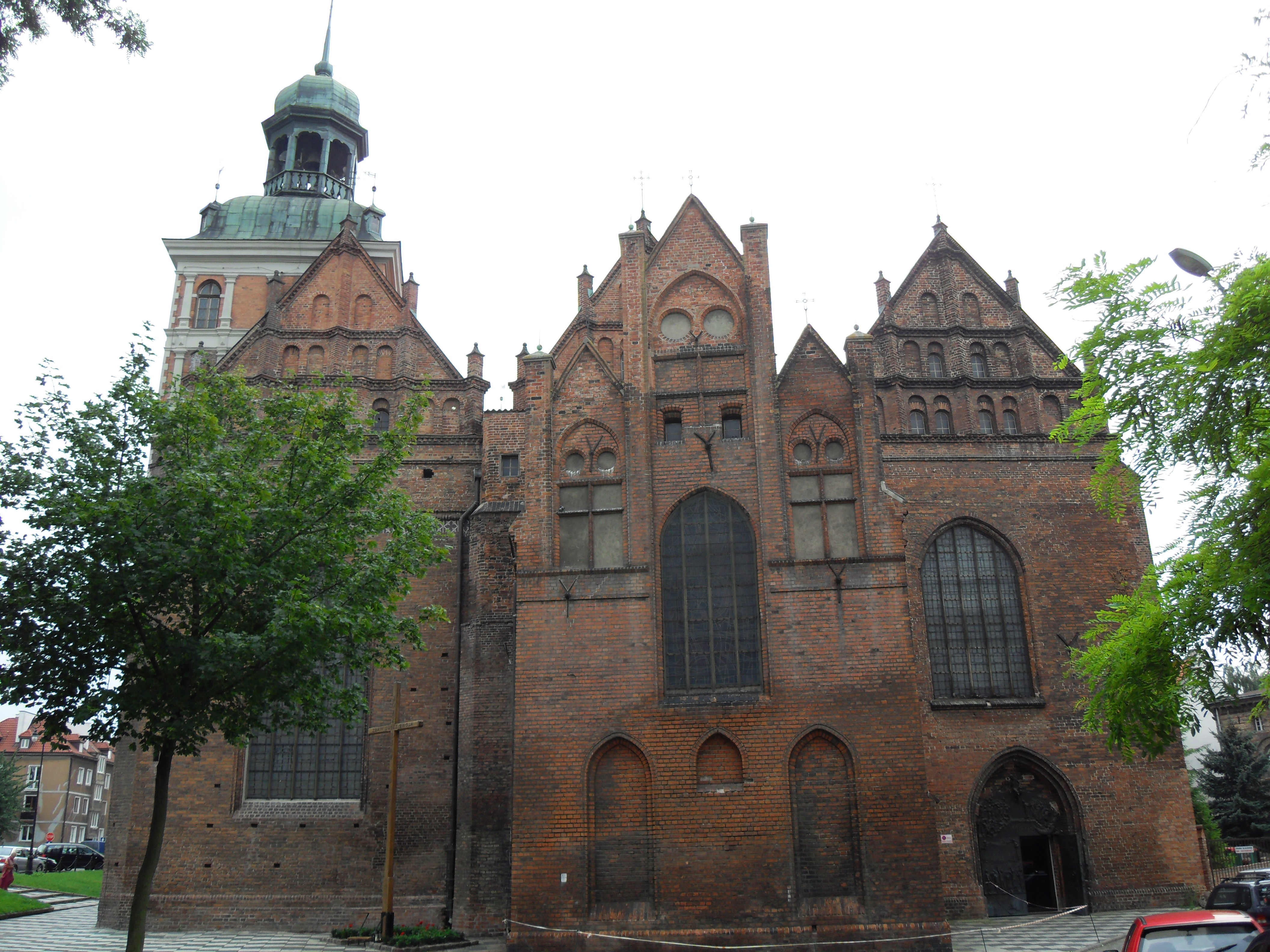
The idea originated in 2000, and construction began in 2001. The initiators were the parish priest of St. Bridget, Father Henryk Jankowski, and Gdańsk amber craftsmen. The altar was designed by Professor Stanisław Radwański, a former rector of the Gdańsk Academy of Fine Arts, and amber craftsman Mariusz Drapikowski, who also created most of the elements. It is nearly 13 meters high and covers an area of 120 m². It is a metal structure embedded in the presbytery and gradually filled with amber elements. PAP (dzieje.pl), 2017.
At the center of the altar is a painting of Our Lady of the Guardian of Workers, painted by Father Franciszek Znaniecki shortly after December 1970. PAP (dzieje.pl), 2025. The dress of Our Lady is made of amber. The altar is a votive offering from Gdańsk amber craftsmen for regaining freedom in 1980 and 1989, and its creator also speaks of gratitude for the pontificate of John Paul II. Amber Route about the altar. The altar also includes an amber monstrance. Pomorskie Prestige about the altar and monstrance.
Still unfinished
The altar was consecrated on December 16, 2017, on the 47th anniversary of December '70, during a mass attended by the apostolic nuncio. It was not ready at that time, and plans included installations at the base imitating fields of grain with amber grains. PAP (dzieje.pl). On February 9, 2025, a Volhynian cross was installed in it: a wooden cross from a Polish grave in Volhynia, reconstructed by Drapikowski, consecrated on the 82nd anniversary of the crime in Parośla. PAP (dzieje.pl), 2025.
In August 2025, the Amber Route reported that the central part of the altar, the amber dress of Our Lady, and part of the structure and sculptures could be viewed, but the entire altar was still unfinished. Once completed, the altar is to be the largest amber work in the world. Amber Route, 2025. We found no information about the completion of the altar in 2026 or reliable data on how much amber has already been used.
Basilica of St. Bridget, Solidarity, and the dispute over the parish priest
The Church of St. Bridget is closely linked to the history of Solidarity. Its long-time parish priest, Father Henryk Jankowski, was called the chaplain of Solidarity and in 1980 held masses for striking shipyard workers. During his life, he was also criticized, among other things, for anti-Semitic remarks in his sermons, for which he received a one-year ban on preaching in 1997, and for promoting wine with his image. In 2004, he was removed from the position of parish priest. He died in 2010. Kraków Post, 2010.
In December 2018, "Gazeta Wyborcza" published a report with allegations of long-term sexual abuse of children by Father Jankowski. The allegations concern a deceased person and have not been verified by a court. On March 7, 2019, the Gdańsk City Council stripped him of honorary citizenship, decided to remove his statue from the basilica, and to rename the square. OKO.press, 2019. We mention this because his name is associated with the beginnings of the altar.
Amber Room in brief: Gdańsk craftsmanship and the mystery of World War II
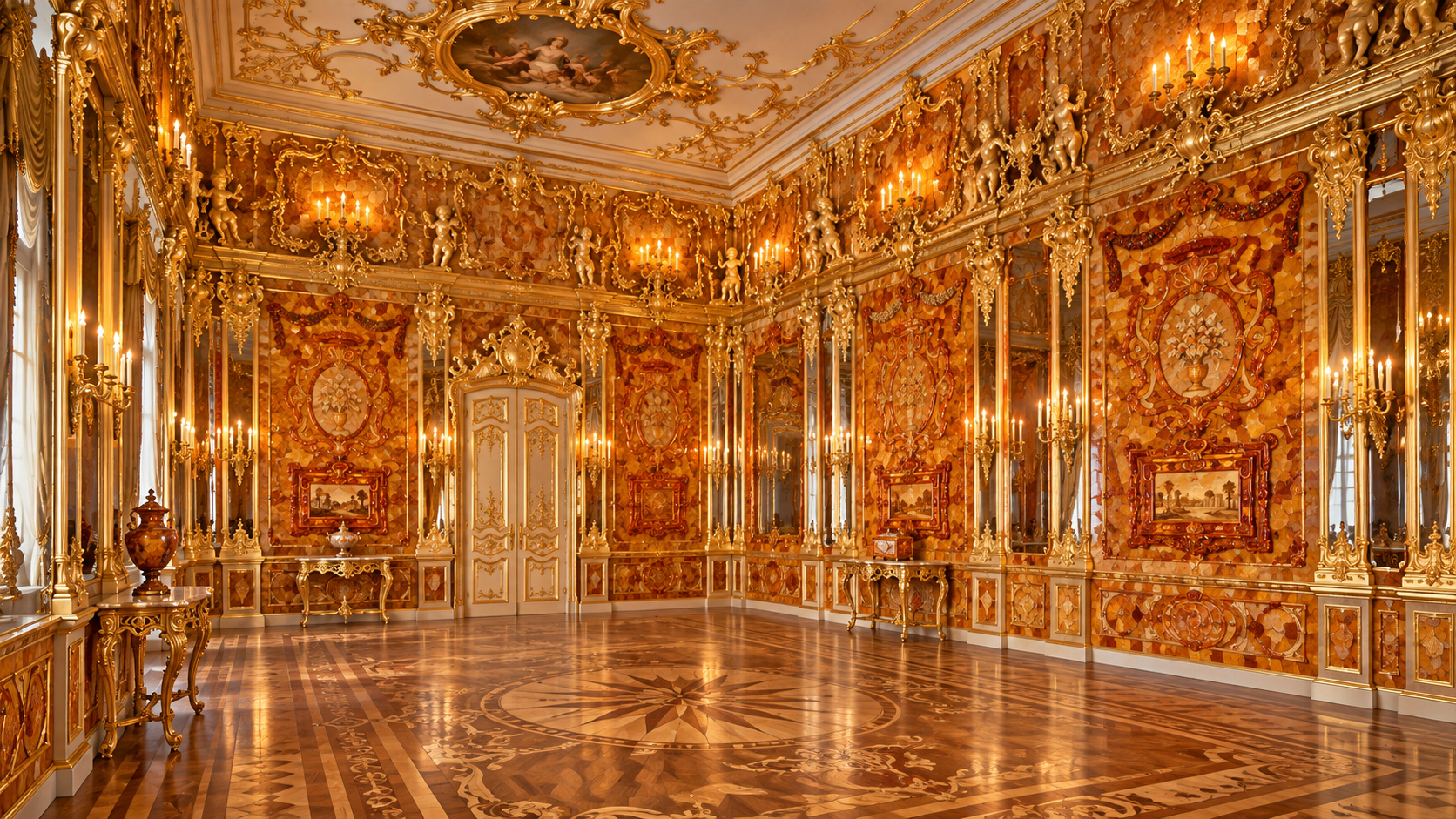
The Amber Room is associated with Russia, but it was created in Prussia. In 1701, it was commissioned by the Prussian King Frederick I. The first panels were made by Danish master Gottfried Wolfram, and after his departure in 1707, the work was completed by Gdańsk masters Gottfried Turau and Ernst Schacht. According to an inventory from 1713, they completed about 95% of the walls. Russell Shor, “Gems & Gemology” (GIA), 2018.
In 1716, Prussia gifted the Room to Tsar Peter I. In 1755, it was moved to the Catherine Palace in Tsarskoye Selo near St. Petersburg, where it was expanded until 1770. The room there measured 96 m² and was illuminated by 550 candles. In 1941, German soldiers dismantled it in 36 hours, packed it into crates, and transported it to Königsberg. In the spring of 1942, it was exhibited in the local castle, and the director of the Königsberg collections, Alfred Rohde, wrote that the Room had "returned to its homeland." British air raids in August 1944 destroyed some of its elements. The Art Newspaper, 1992. The last certain traces date back to early 1945. The best-documented hypothesis states that the Room burned down in the castle in April 1945, but this cannot be verified anymore, as the ruins of the castle were demolished. The Room was then sought in Russia, Germany, Poland, and at the bottom of the Baltic Sea, and only two original elements were found: a Florentine mosaic and a chest of drawers, which returned to Russia in 2000. Since 2003, a reconstruction has been on display in Tsarskoye Selo. Museum-Reserve Tsarskoye Selo.
The entire story of the Amber Room: how it was created and who made it, what it looked like, how it was stolen, what happened to it in Königsberg, theories about its fate, searches in Mamerki, Dziemiany, and the “gold train” from Wałbrzych are described in a separate guide: Amber Room: how it was created, how it was lost, and where it was searched for.
Gdańsk, the capital of amber, and amber in space
Amber workshops have been operating in Gdańsk since the end of the 10th century. In 1477, the first guild of amber craftsmen was established here, and the golden age of Gdańsk craftsmanship occurred at the turn of the 16th and 17th centuries. After the wars of the 20th century, not a single old workshop survived. National Geographic Traveler, 2026.
In 2025, Gdańsk amber went to space. A piece from Sobieszewo Island was cut into two parts, and one of them was taken to the International Space Station by Polish astronaut Sławosz Uznański-Wiśniewski. After returning, both parts are compared to check if the stay in space changed the properties of the amber. There.
Amber Museum in the Great Mill
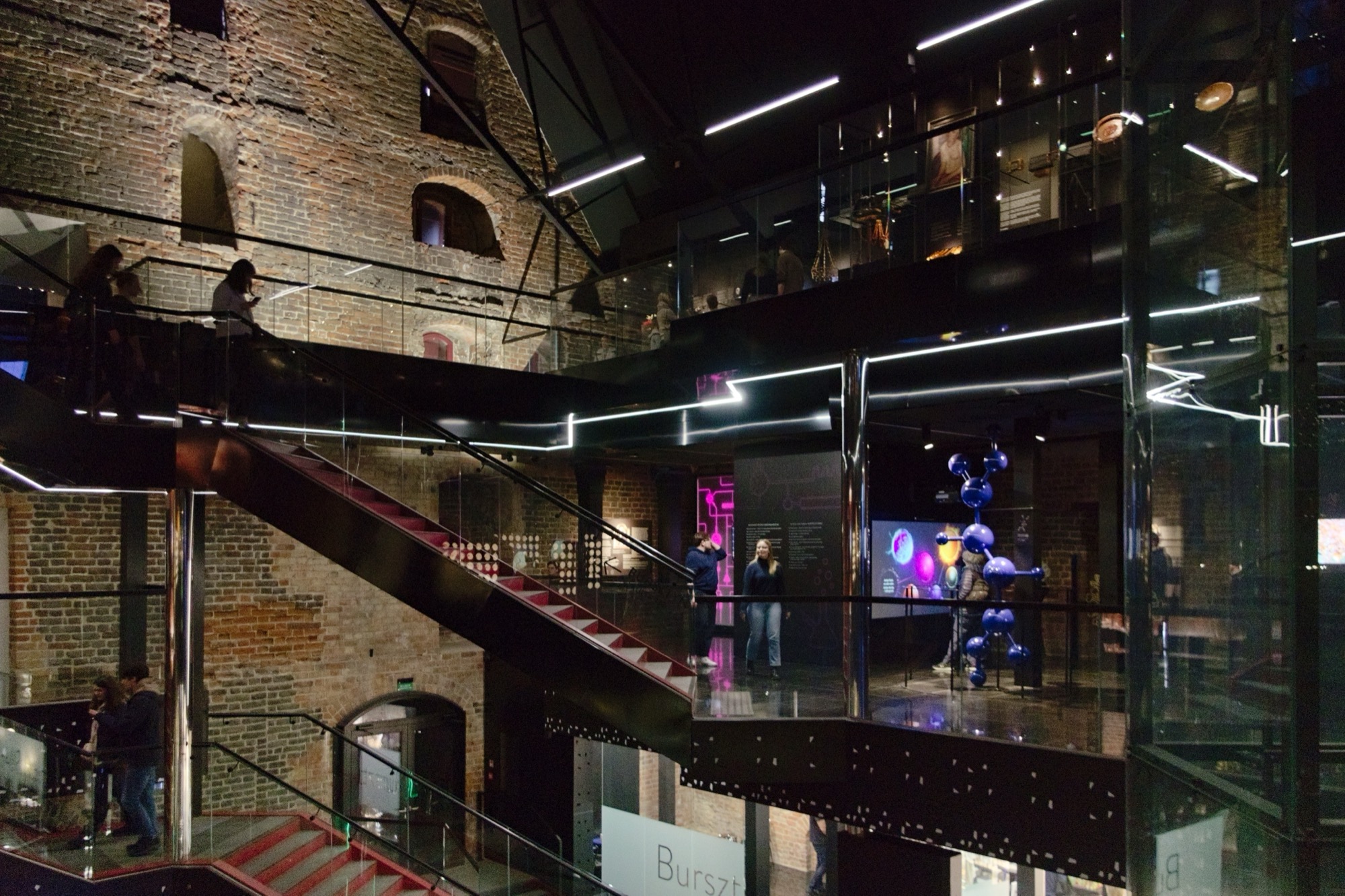
The Amber Museum, a branch of the Gdańsk Museum, has been operating since 2006, and since 2021 it has been located in the 14th-century Great Mill at 16 Wielkie Młyny Street. It has over a thousand exhibits, and it is advisable to reserve at least an hour for the visit. Gdańsk Museum, guide before your visit.
In the museum stands a piece of amber weighing 68.2 kg, which was presented as the largest in the world. It was weighed in 2022 in the presence of representatives of the Guinness World Records. However, there is a surprise: the piece comes from a coal mine in Sumatra, Indonesia, so it is not Baltic amber. The museum purchased it in 2021 for over 140 thousand zlotys, and it can be viewed without a ticket, in a display case by the cash register. Notes from Poland, 2022.
Another treasure of the museum is a lizard trapped in amber, found in 1997 on Gdańsk's Stogi Beach by amber collector Gabriela Gierłowska. It was the first lizard discovered in Baltic amber in over a hundred years. The previous one was described in 1875 by German researcher Richard Klebs. The specimen is over 40 million years old. Polish Geological Institute, folder “Amber”. According to National Geographic Traveler, the museum also has a gecko of an unknown species, the largest known inclusion of a tarantula measuring about 4 cm, and the only known specimen of an insect from the mantid family. In 2026, a cannon made of amber and gold from around 1660, one of two known objects of this kind, returned to Gdańsk. National Geographic Traveler, 2026. Every year, Gdańsk hosts international amber and jewelry fairs Amberif. AmberExpo, Amberif.
Resin from 40 million years ago that burns
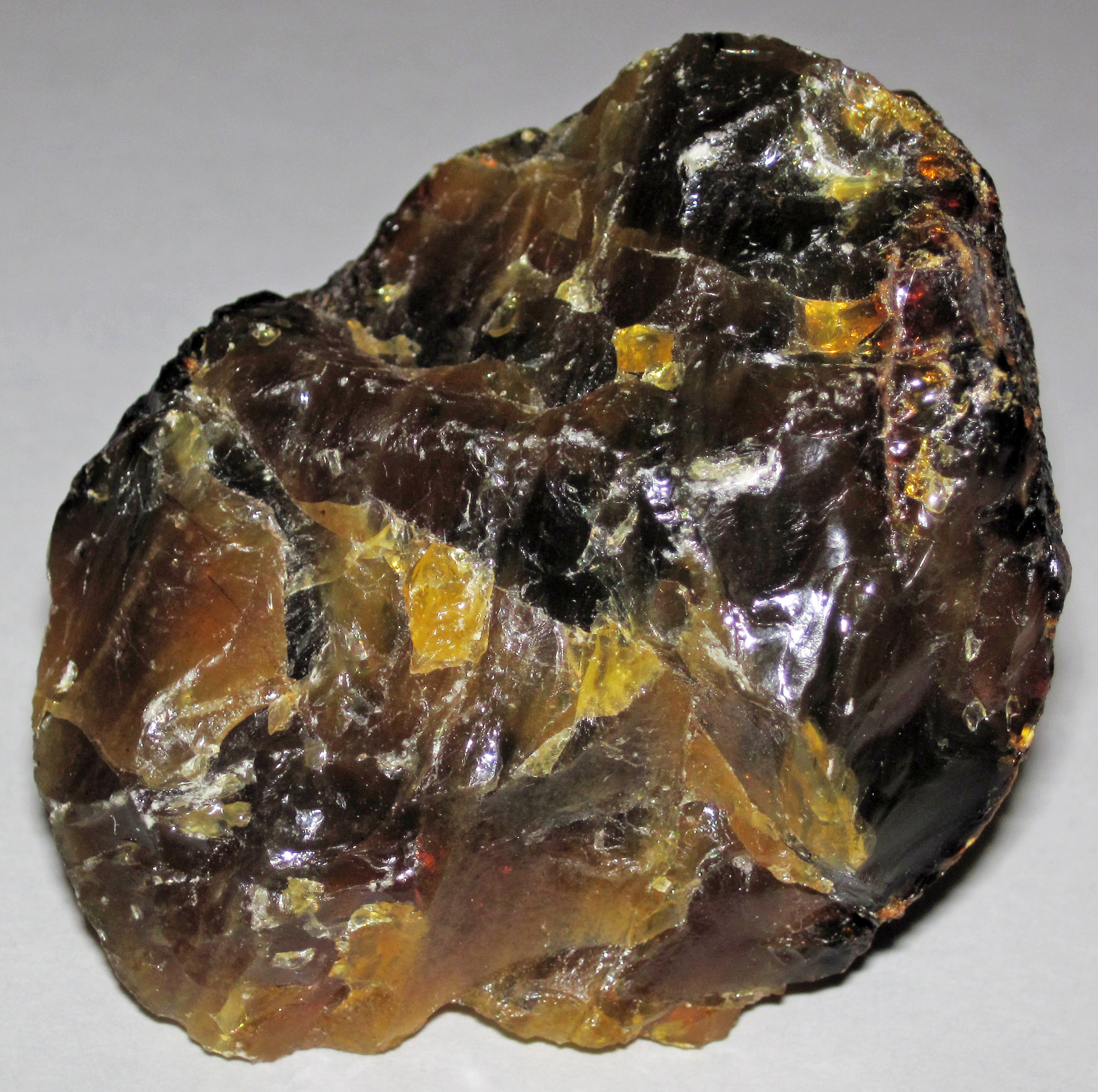
Baltic amber, scientifically known as succinite, formed from the resin of coniferous trees about 40 million years ago. The resin flowed down rivers to the sea, where it hardened over millions of years. There are over 100 known types of fossil resins called amber worldwide, with the oldest being about 300 million years old. Polish Geological Institute.
- Light as water: the density of amber is 0.9–1.1 g/cm³, similar to the density of water.
- Soft: hardness of 2–2.5 on the ten-point Mohs scale.
- Electrifies: when rubbed, it attracts bits of paper.
- Burns: it burns with a sooty flame and smells of resin. Hence the German name Bernstein, meaning "the stone that burns."
- Identifying feature: Baltic amber contains 3–8% succinic acid. Other resins contain less or none at all.
- Scientific name: the word "succinite" was introduced in 1820 by German mineralogist August Breithaupt. The ancients called amber "succinum," meaning tree sap.
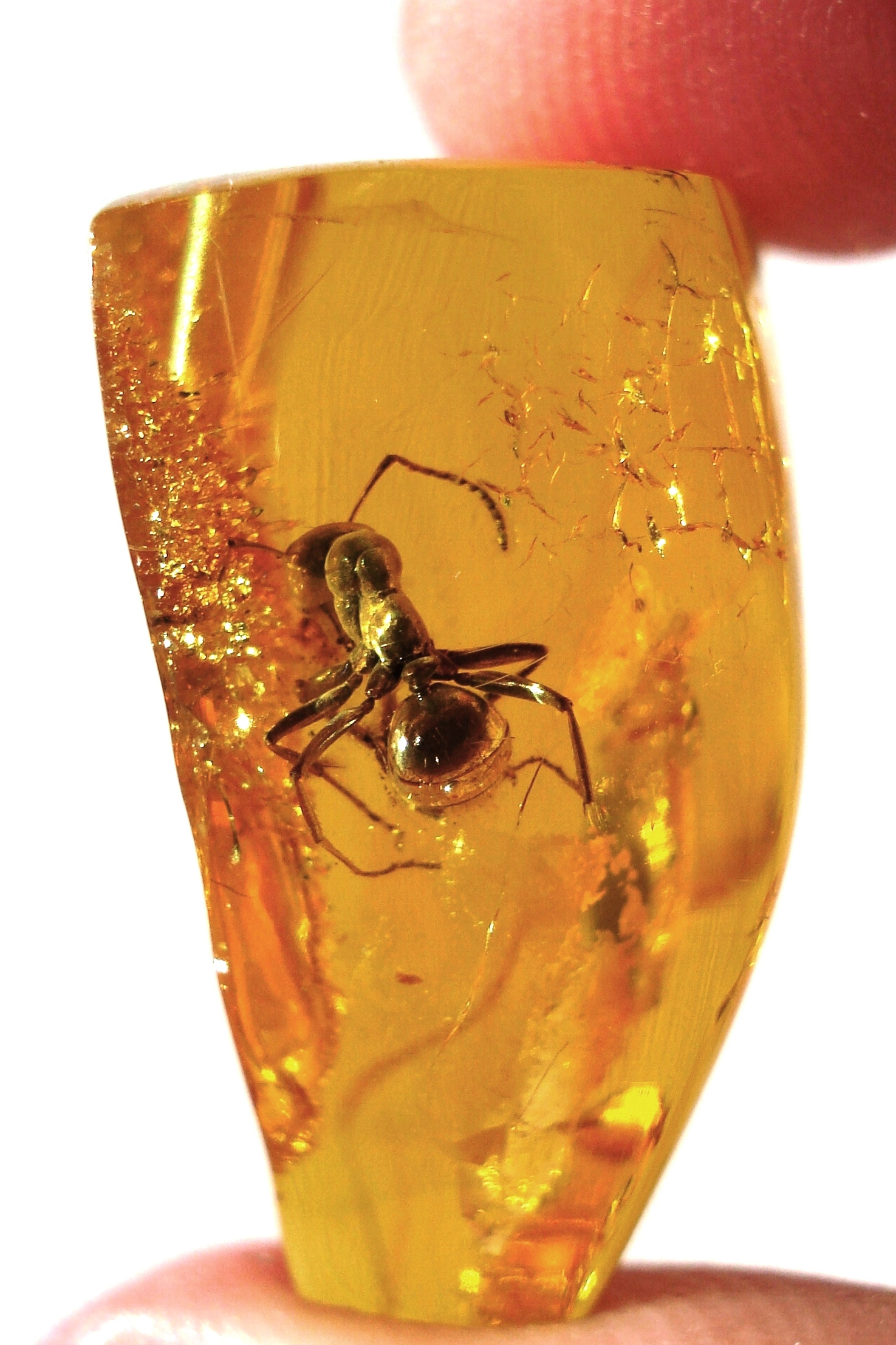
All this data comes from the Polish Geological Institute folder. Amber most often contains trapped flies, ants, beetles, and plant fragments.
How to recognize genuine amber and why no home test provides certainty
Amber is faked with glass, plastic, synthetic resins, and copal, which is young resin that has not yet turned into amber. There is also ambroid, which is genuine amber pressed from crumbs, which an honest seller should indicate. According to the Polish Geological Institute, amber can only be unequivocally identified in a laboratory using infrared spectroscopy. PIG-PIB.
| Test | How to do it | Result for amber | Limitations |
|---|---|---|---|
| Saltwater | Dissolve a few tablespoons of salt in a glass of water and drop the stone in. | Floats, while glass sinks. | Light plastics and copal can also float. Amber in silver settings will sink. |
| Electrifying | Rub the stone with wool for about 20 seconds. | Attracts bits of paper. | Some imitations can also electrify. |
| UV light | Shine a UV flashlight. | Usually glows bluish or milky. | Not all amber glows, and some imitations also fluoresce. |
| Touch | Hold the stone in your hand. | It is warm. | You can only distinguish glass, which is cold, this way. |
The rules for the tests are described in the card “How to recognize genuine amber”, prepared based on materials from PIG-PIB and the Amber Museum. Some guides recommend the hot needle test, but it destroys the specimen, so it is not worth doing. The most sensible approach is to combine several tests, and for more expensive purchases, ask for a certificate.
Copal, ambroid, and “blue amber”
The hardest to distinguish from amber is copal, as it is also natural resin, just much younger. According to the card prepared based on materials from PIG-PIB, copal fades in UV light, and when cut, it may stretch into threads. Card “How to recognize genuine amber”. Ambroid is genuine amber, but pressed from crumbs under heat and pressure. It is not a fake, but it has less value than a solid piece, so the seller should describe it honestly. Be cautious with offers of exotic “blue amber.” The American Gemological Institute (GIA) studied an item sold as blue amber, which turned out to be glass. It was primarily revealed by its weight: the density was about 2.5 g/cm³, while amber is about 1.08. Genuine blue amber glows strongly blue under ultraviolet light, while glass reacts weakly or not at all. Under a microscope, gas bubbles were visible. GIA, “Artificial Glass Imitating Blue Amber”. Such a fake would already be detected by a simple saltwater test, as glass sinks.
Collecting amber on the beach: what is allowed and what is not
Amber is easiest to find after a strong storm from the north, in the strip of seaweed washed ashore, preferably in the morning. Card “How to recognize genuine amber”. Seaweed is a protected habitat, so it should not be trampled.
The rules for collecting were explained in 2024 by the spokesperson for the Maritime Office in Gdynia. Amateur collecting for personal use does not require written permission from the office if it does not threaten the technical strip of the coast. RMF24, 2024. However, several rules apply:
- Collecting is only allowed on the beach and in shallow water near the shore, not on dunes, cliffs, in forests, or in national parks.
- Only hand collection is allowed. Sieves, motor pumps, washers, and digging equipment are prohibited.
- Do not disturb other beachgoers.
- Findings of historical value must be reported to the conservator of monuments. This was the case in 2022 with a medieval cross found on the beach near Sobieszewo Island, which was sent to the museum.
- Be careful of freshly deposited sand at expanded beaches. It can be loose and may pull you in to your waist.
There is information circulating online about a “limit of 10 kg without a concession.” We found no legal basis for it, so do not treat it as an obligatory rule.
Myths about amber and the Amber Room
| Claim | Verdict | What sources say |
|---|---|---|
| The amber altar in Gdańsk is already completed | False | In 2025, the altar was still unfinished. |
| The Amber Room was made by Russians | False | It was created in Prussia, and about 95% of the walls were made by Gdańsk masters Turau and Schacht. |
| The Room was found in Mamerki, in the golden train, or in the wreck of Karlsruhe | False | None of these searches led to the discovery of the Room. |
| The largest piece of amber in the world is Baltic amber | False | The piece from the Gdańsk museum comes from Sumatra. |
| Plastic never fluoresces under UV light | False | Some imitations also fluoresce. |
| The hot needle test is safe and reliable | False | It destroys the specimen, and certainty is only provided by laboratory testing. |
| You can collect up to 10 kg on the beach without a concession | Unverified | We found no such regulation. |
Comments (0)
No comments yet. Be the first!