
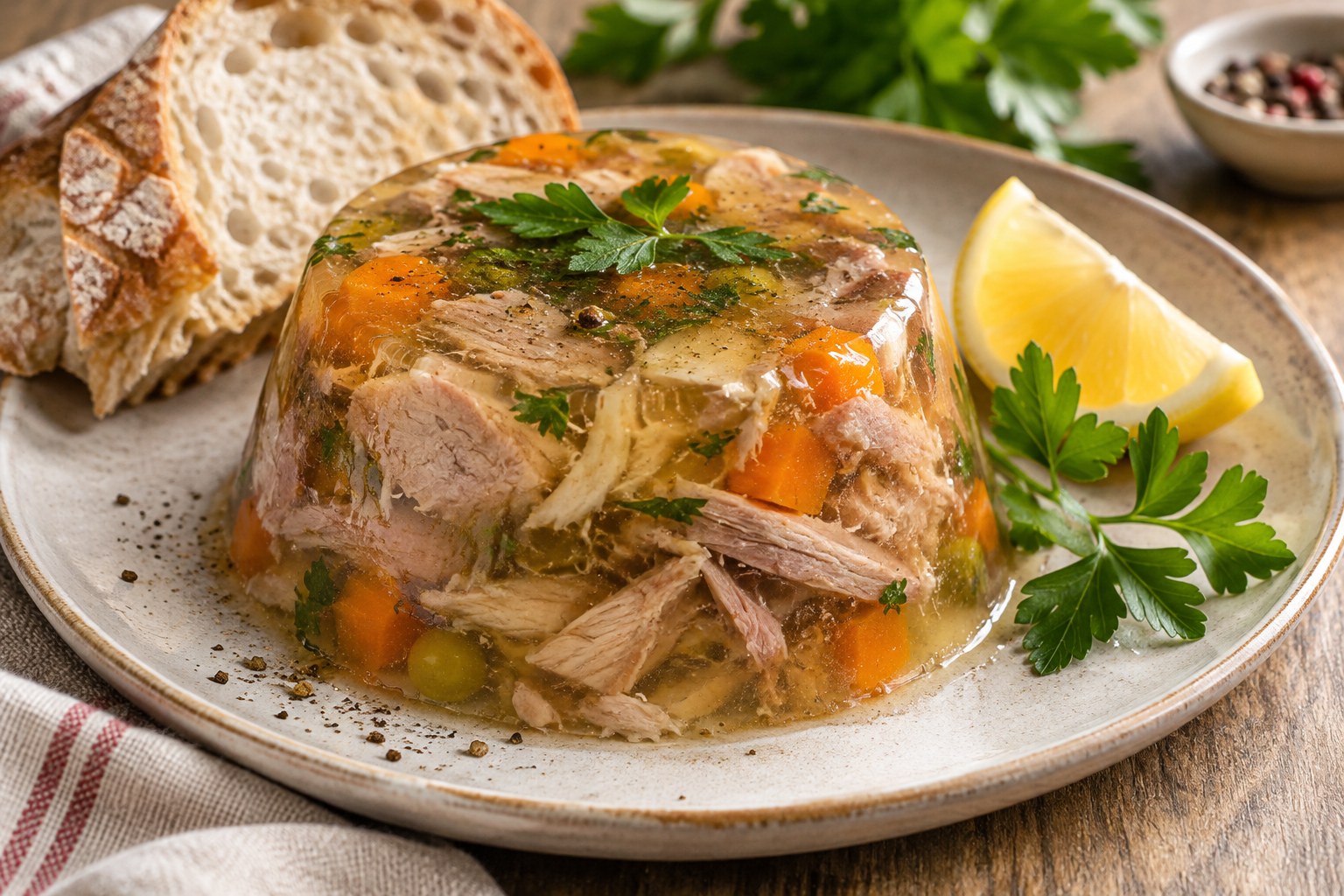
The story behind the recipe
Cold trotters have many names in Poland. In Greater Poland, they are called galart, from the German Gallert or Gallerte, meaning jelly. In Kashubia and Kujawy, it’s zylc, in former Galicia studzienina, in Łódź drygle, and in colloquial speech, meduza. In older cookbooks, the same dish appears as auszpik: Marya Leżańska in "Kucharz wielkopolski" from 1904 cooks it with veal trotters and advises to add one pork trotter for better texture.
Meat jellies have been part of Polish cuisine for centuries. According to accounts repeated by Wikipedia, meat jelly was served at the wedding of Sigismund I the Old and Bona in 1518, but it was made from capons, pulards, or fish, not pork. The studzienina from trotters was part of the pig slaughter dishes: the legs had to be used first because the skin spoiled the fastest, and in the countryside, there were no refrigerators for a long time. A description of studzienina from Górna states that at weddings in Subcarpathia, it was "almost a staple appetizer," and before the war, meat jellies made their way into bars as a snack with vodka, sold as "seta and galareta."
On the ministerial List of Traditional Products, there are four such jellies: zylc from Pomerania (2007), studzienina from Górna in Subcarpathia (2008), galart from Greater Poland (2009), and studzienina registered in 2023, brought from Kresy by the ancestors of the residents of Bogdanowice near Głubczyce. The latter description notes that studzienina was eaten at birthdays, name days, and weddings, most often at Easter and New Year's Eve. All four descriptions mention jelly served with vinegar or lemon juice, and the 2023 description emphasizes that traditional studzienina should not contain gelatin.
Ingredients
For Cooking
-
1 kg pig trotters (2 whole or 4 halves, halved by the butcher)
Abroad: USA: pig's feet; UK: pig's trotters; Germany: Spitzbein, Schweinefuß -
1 kg pork hock (preferably fresh, not cured)
Abroad: USA: fresh pork hock (ham hock is often cured and smoked); UK: pork knuckle; Germany: Schweinshaxe or Eisbein ungepökelt - 2 l cold water (enough to cover the meat by about 2 cm, or ¾ inch)
- 200 g carrots (2 pieces)
-
120 g parsley root (1 piece)
Abroad: parsnip -
120 g celeriac (about 1/4 bulb)
Abroad: celery root - 1 pc onion
-
4 pcs allspice (whole berries)
Abroad: allspice berries -
3 pcs bay leaves
Abroad: bay leaves - 1 tsp (5 ml) black peppercorns
- 1 tbsp (about 18 g) salt (flat; omit if the hock is cured)
For Jelly
- 4 cloves garlic (pressed through a garlic press)
- salt and ground pepper (to taste)
- 200 g green peas (canned, drained; can be omitted)
-
parsley (a few sprigs, can be omitted)
Abroad: flat-leaf parsley
For Clarifying (if the broth is cloudy)
- 2 pcs egg whites
-
1 tsp (5 ml) vinegar
Abroad: white vinegar, Branntweinessig
For Serving
- vinegar or lemon
-
horseradish, mustard, and fresh bread (to choose from)
Abroad: prepared horseradish; Germany: Meerrettich; Austria: Kren
Method, step by step
-
Inspect the trotters and hock, removing any remaining hair. If the trotters are whole, ask the butcher to halve them lengthwise so they fit in the pot. After handling raw meat, wash your hands, cutting board, and tools.
-
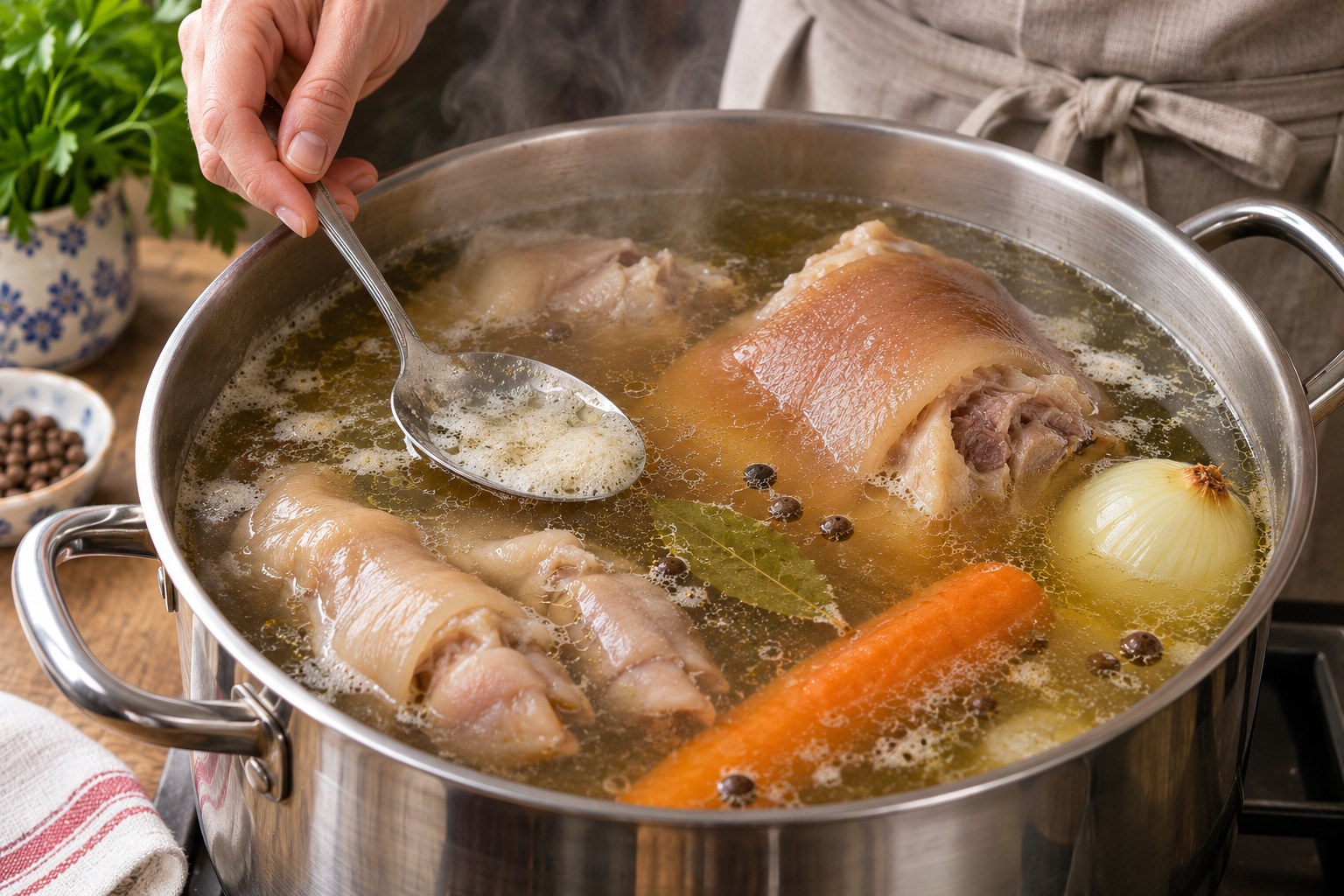
Place the trotters and hock in a large pot (about 6 liters) and cover with cold water so that it covers the meat by about 2 cm (¾ inch). Do not add more: too much water is the most common reason why the jelly does not set. Bring to a slow boil over low heat and skim off the foam with a spoon until it stops appearing.
-
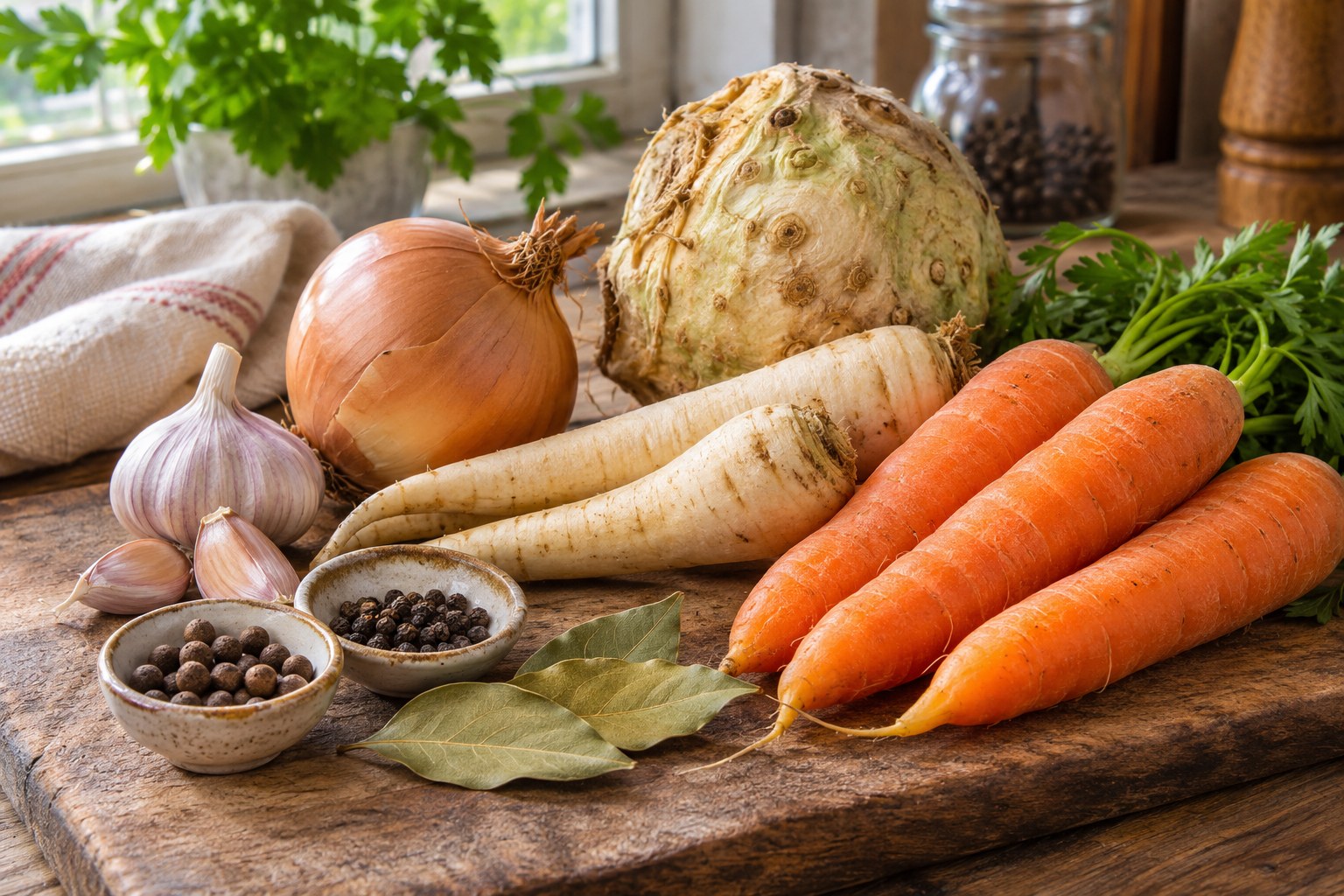
Once the water boils, reduce the heat to the lowest setting, cover the pot with a lid, and cook the meat for about 2 hours. The broth should only gently bubble, not boil: vigorous boiling makes it cloudy. During this time, peel the carrots, parsley, and celeriac, and cut them into large pieces, and halve the onion, charring the cut side on a dry pan until it darkens significantly.
-
After 2 hours, add the vegetables, charred onion, allspice, bay leaves, black peppercorns, and salt to the pot. Continue cooking covered on very low heat for another 1.5–2 hours, until the meat starts to come off the bone by itself, and the skin is completely soft. Only such long cooking extracts what will set the jelly from the trotters.
-
Remove the meat with a slotted spoon onto a large cutting board or platter and set aside to cool. Also remove the carrots and set them aside; you can discard the remaining vegetables.
-
Strain the broth through a sieve lined with several layers of cheesecloth. Once it cools, skim the fat off the top with a spoon. You will do this most accurately after cooling when the fat solidifies on the surface. If the broth is cloudy, clarify it: add 2 whipped egg whites and a teaspoon of vinegar, bring to a boil, and strain again through cheesecloth.
-
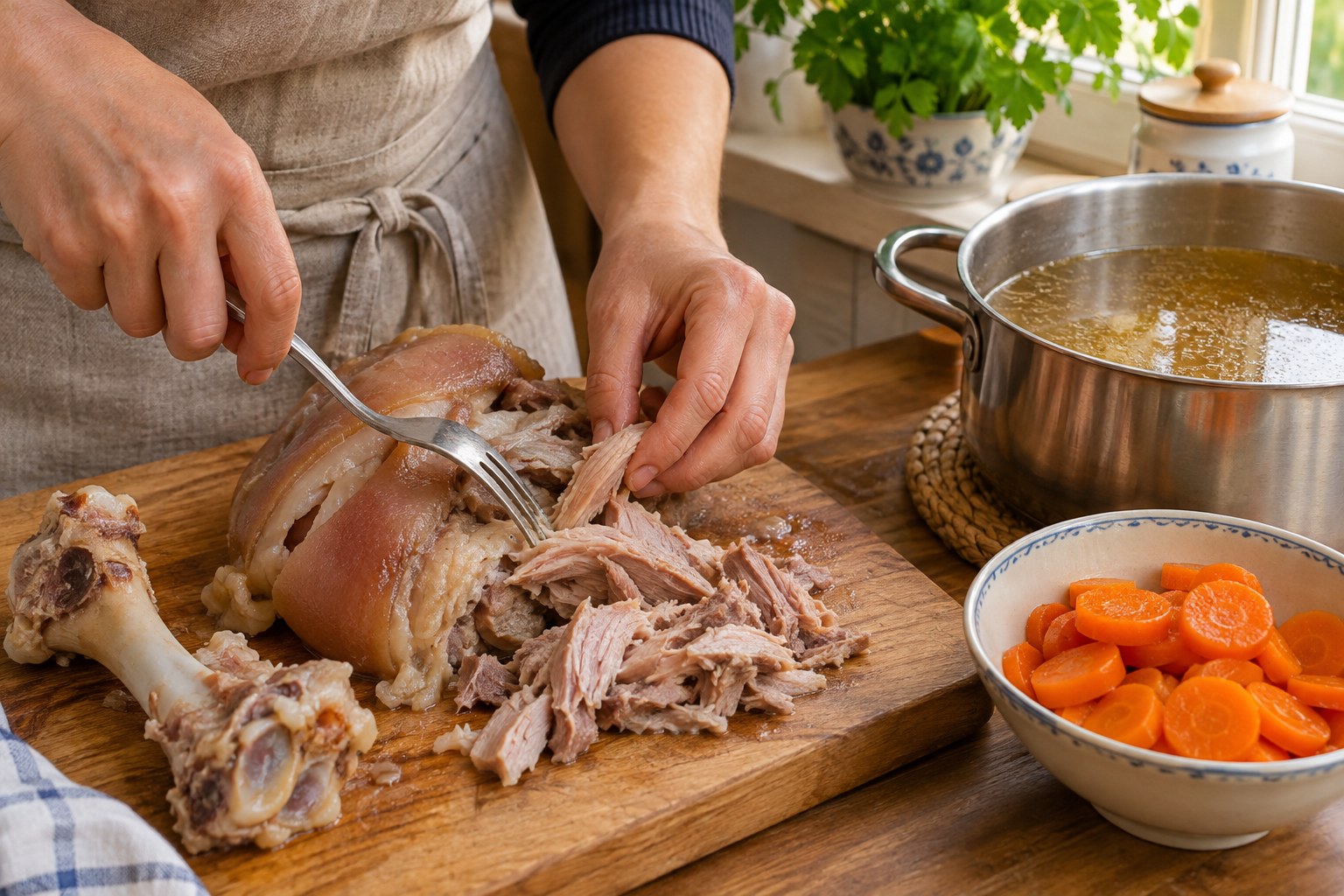
Separate the meat from the bones. Cut it into small pieces, along with the skin and soft cartilage, and trim off any excess fat. Slice the carrots into rounds or half-moons.
-
Heat the broth, add the pressed garlic, and season with salt and pepper to taste. Pour a spoonful of the broth into a small bowl and chill in the refrigerator: if the sample sets, the broth is ready. If it remains liquid, you can reduce it or add gelatin according to the package instructions.
-
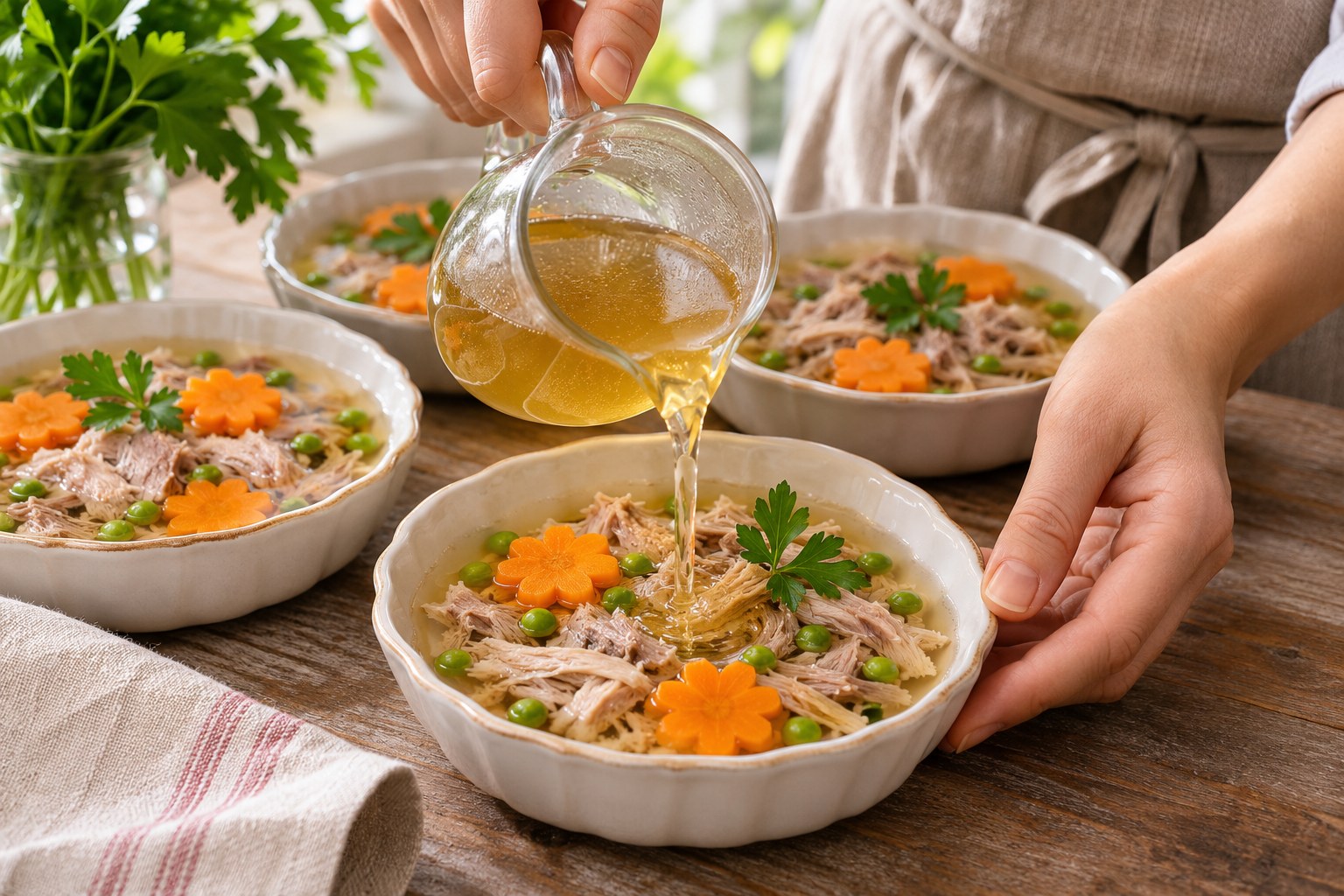
At the bottom of bowls, jars, or a loaf pan, layer the carrot slices, peas, and parsley leaves, then add the meat. Pour the broth over everything so that it covers the meat.
-
Pour the jelly into shallow dishes to cool quickly. Once it stops steaming, place it in the refrigerator no later than 2 hours after preparation. Chill for several hours, preferably overnight, until it sets. Serve cold, unmolded from bowls onto a plate or sliced from a loaf pan, with vinegar or lemon juice, bread, and horseradish or mustard.
Comments (0)
No comments yet. Be the first!